

Big Lagoon State Park is a useful choice when you want to fish the Pensacola area with a light spinning outfit rather than haul a surf cart across an open Gulf beach. The park sits on the mainland side of Big Lagoon, near Perdido Key. Its shoreline calls for short, accurate casts, attention to shallow-water cover, and a willingness to move when an attractive stretch of bank has no feeding activity.
Start with a 7-foot medium-power spinning rod, a 2500-3000 reel, 10-15 lb braid, and a 20 lb leader. Live shrimp and a small paddletail give you two different ways to search for redfish and spotted seatrout. Florida State Parks also lists seasonal flounder and bluefish catches here. These are reasonable targets, not a promise that every species will be within casting range on your visit.
Where to fish the lagoon shoreline
The important distinction is the water in front of you. Big Lagoon is an inshore setting, and the park does not put you on the open Gulf surf at Johnson Beach. A heavy pyramid sinker and a long-distance pompano outfit can be awkward here, especially when you need to retrieve a lure over shallow bottom.
Enter at 12301 Gulf Beach Highway, Pensacola. The park currently lists day-use hours of 8 a.m. to sunset and a standard vehicle entrance fee of $6; check the park’s fee schedule for your vehicle and party. That opening time matters: do not plan a walk-in dawn session before the gates open.
Ask the ranger which shoreline access points are open for fishing that day. Use established routes to the lagoon rather than cutting through marsh or vegetation. Keep fishing away from swimmers, boat-launch activity, and any posted exclusion. A boardwalk intended for walking is not automatically a fishing platform.
From an open stretch of bank, look for three things: a change in bottom color, a visible edge between sand and vegetation, and small baitfish moving along the shoreline. Dark water can mean depth, grass, or shadow; watch it before assuming it is a channel. Fish from firm shore instead of wading out to investigate an unfamiliar drop-off.
Fish to look for
These are some of the targets discussed below. Reference images show the species, not catches from this beach. Availability varies with season and conditions.
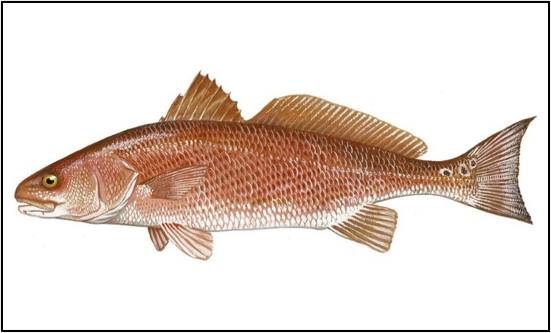
Sciaenops ocellatus
NOAA. Public domain (United States).
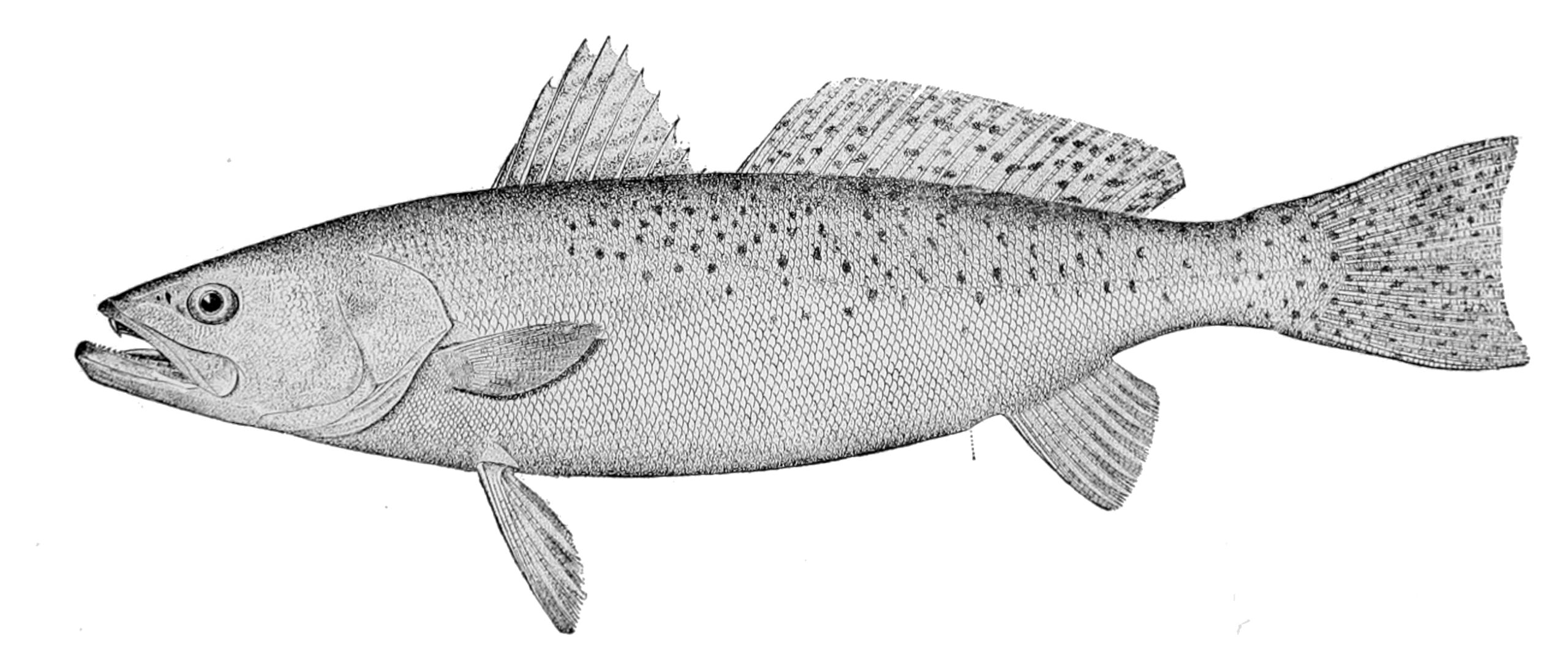
Cynoscion nebulosus
United States Fish Commission, 1910. Public domain (United States).
Work the edges for redfish and spotted seatrout
For redfish, make the first cast along the shoreline rather than straight out. A fish following a shallow edge may be much closer than the deepest-looking water. Place a shrimp or lure beyond the area you want to fish, then bring it through without repeatedly splashing into the same small pocket.
Spotted seatrout call for a slightly different presentation. Keep a soft plastic swimming above the bottom instead of dragging it continuously. A 3-inch paddletail on a 1/8-ounce jighead is a practical starting point in shallow, modest current. Move to 1/4 ounce only if depth, wind, or flow prevents you from controlling the lighter jig. The rod’s lure rating still applies.
If you can see open sand next to cover, a slow shrimp presentation near the bottom also gives you a chance at flounder. Do not bury the hook point inside a large bait. With a circle hook, reel steadily into a bite instead of making a hard overhead hook-set.
Bluefish are a different problem: teeth can sever a light leader. Repeated clean cutoffs are a reason to change tactics or use a short bite-resistant section for bluefish specifically, rather than replacing every delicate trout presentation with heavy wire.
A light tackle kit that earns its space
| Item | Practical starting choice | Why it fits this shoreline |
|---|---|---|
| Rod | 7-foot medium, fast-action spinning rod | Controls small lures and accurate bank casts |
| Reel | Saltwater-capable 2500-3000 size | Comfortable to hold while covering shoreline |
| Main line | 10-15 lb braided line | Good bite detection without unnecessary bulk |
| Leader | 24-36 inches of 20 lb mono or fluorocarbon | Separates braid from the bait and tolerates light abrasion |
| Live-bait rig | Small non-offset circle hook, roughly size 1 to 1/0 | Match the hook to the shrimp; leave its point exposed |
| Artificial bait | 3-inch paddletail; 1/8- and 1/4-ounce jigheads | Lets you search different depths with little equipment |
| Landing gear | Rubber-mesh net and long-nose pliers | Helps keep a fish supported during unhooking |
Reel size labels vary by manufacturer. Buy for the rod’s balance and line capacity, not the printed number alone. Around rough material, inspect the last few feet of leader frequently; retie as soon as it feels nicked. A thicker leader does not make it sensible to cast into an obstruction you cannot fish around.
Shrimp first, then change the presentation
For a first visit, buy a modest quantity of lively shrimp and carry a small aerated bucket. Hook a shrimp lightly through the tail or horn area without piercing its dark vital organs. In gentle flow, use little or no added weight. Add a small split shot above the leader only when necessary to keep the bait in the intended zone.
A popping cork is worth trying where the water is deep enough to suspend the shrimp clear of the bottom. Set the leader shorter than the actual water depth, give the cork an occasional small pop, and let the bait settle. If the cork rig keeps lying on the bottom, shorten it or switch to a lightly weighted bait.
When small fish strip shrimp immediately, put the natural bait away for a few casts and search with the paddletail. A steady retrieve with brief pauses is a better starting point than violent rod movements. Carry one natural color and one brighter color; finding active fish matters more than carrying twenty near-identical lures.
Plan around water movement and the park gate
Treat tide predictions as a planning aid, then look at the lagoon itself. Wind can change water level and clarity, and a nearby station does not describe every shoreline corner. Watch the direction a leaf, foam patch, or loose weed moves before deciding which way to cast.
A reasonable first session is two hours after the park opens, with a second location in mind if the first bank is busy or unproductive. Spend the opening minutes observing. Fish one area with shrimp, then cover nearby legal shoreline with the paddletail. If there is no bait, no bite, and no useful water movement, relocate instead of adding more rods.
In warm weather, an evening visit can be comfortable, but leave time to pack up and exit before sunset. During a cold spell, slow the lure and give a promising depth change more attention. Do not interpret a seasonal fishing pattern as an open harvest season.
What to avoid at Big Lagoon
Do not cast across a boat lane, launch approach, or another visitor’s path. Keep hooks inside a tackle box while walking. Leave marsh vegetation and seagrass undisturbed, and do not use a tempting shortcut through a protected area to reach another patch of sand.
Bring drinking water, sun protection, insect repellent, and a small bag for line scraps. If thunder develops, leave the shoreline for an enclosed vehicle or substantial building; a picnic shelter is not a lightning refuge. Keep a net and pliers ready before the first cast so an unexpected fish does not become a handling emergency.
License and harvest checks before you keep a fish
Unless exempt, anglers need appropriate Florida saltwater fishing coverage. Florida residents may qualify for the free shoreline-only license; nonresidents do not qualify for that particular license. Catch-and-release fishing still requires coverage when no exemption applies.
Check the current FWC rules for each species and this region before keeping a catch. Flounder are particularly easy to get wrong in autumn: Florida’s recreational harvest closure currently runs October 15 through November 30. Carry a measuring device, identify the fish first, and release anything you cannot confidently identify or legally retain.
For this park, the strongest beginner plan is a manageable inshore outfit, a small selection of bait, and careful shoreline observation. Save the heavy surf gear for a separate trip to the open coast.
Plan a nearby fishing trip
Access and regulations checked September 24, 2026. Recheck park notices, weather, and FWC rules before your trip. Tackle recommendations are starting setups, not guarantees of catches.
Photo: Ebyabe. Original photograph, CC BY-SA 3.0. Unmodified image.