

The difference between a good day and a great day chasing redfish in Florida often comes down to one thing: understanding the conditions. Any angler can get lucky when a hungry fish swims by, but consistently finding and catching them requires a plan. These proven redfish fishing tips are built on reading the environment and knowing how redfish will react. It’s about turning variables like tide, temperature, and wind into a predictable advantage, so you spend less time searching and more time fighting fish.
Decoding Conditions for Better Redfish Fishing Tips
Before you even think about what lure to tie on or which spot to hit first, you need to read the day. Redfish are creatures of habit and comfort. Their entire day, from where they hold to when they feed, is dictated by a few key environmental factors. Learning to interpret these signals is what separates anglers who consistently find fish from those who just hope to stumble upon them. Think of it as your game plan before you even leave the dock.
Temperature as the Primary Driver
Redfish are driven by water temperature. They are constantly seeking their comfort zone, which dictates their seasonal locations. In the winter, when cold fronts push through, look for them to seek refuge in warmer, more stable water. They’ll push into sun-warmed mud flats or drop into deeper residential canals and backwater holes, like those found in the Mosquito Lagoon, that hold heat better than the open flats. Conversely, during the oppressive heat of a Florida summer, they do the opposite. They’ll be tucked tight into the shade of a mangrove shoreline or holding near a cooler, oxygen-rich inlet during the midday heat. Spring and fall are prime time because water temperatures are ideal across the board, making redfish more aggressive, predictable, and willing to roam.
Tide Movement is a Dinner Bell
If temperature sets the seasonal stage, tide is the most critical daily factor. Think of tide movement as a dinner bell. An incoming tide floods grass flats and oyster bars, giving redfish the depth they need to push shallow and hunt for crabs, shrimp, and small baitfish. This is when you’ll find them cruising the edges of flats and pushing water as they forage. On the Homosassa flats, for example, a rising tide is the signal to target fish moving over the hard bottom. An outgoing tide, however, concentrates fish at ambush points. As water pours off a flat, it creates a conveyor belt of food. Redfish will stack up at the mouths of creeks, drains, and cuts, waiting for the current to deliver an easy meal right to them.
Using Wind to Your Advantage
Many anglers see wind as a nuisance, but seasoned fishermen see it as a strategic tool. Wind offers two major advantages. First, it pushes bait. A steady wind will concentrate baitfish against a wind-blown shoreline, and where the bait goes, the redfish follow. A shoreline with wind blowing directly onto it is always worth investigating. Second, a light chop on the water’s surface provides camouflage. It breaks up your silhouette and dampens the sound of your movements, making redfish less spooky and more willing to eat. This surface disturbance is a critical element for successful sight fishing for redfish, as it gives you a precious extra moment to make a cast before you are detected.
Water Clarity and Feeding Strategy
Water clarity dictates how a redfish hunts and, therefore, how you should fish for it. In the crystal-clear waters of the Florida Keys or parts of the Gulf Coast, redfish are primarily sight-feeders. They are extremely wary of any unnatural movement, heavy leaders, or loud lure presentations. Here, stealth and natural presentations are mandatory. In the stained or dirty water common in many back bays after a heavy rain, their strategy shifts. They rely more on their sense of smell and their ability to detect vibration through their lateral line. This is when lures that create a strong “thump” in the water or baits that put out a lot of scent become your most effective tools. Understanding this simple difference is fundamental to choosing the right lure.
Pinpointing Redfish on Florida’s Coasts
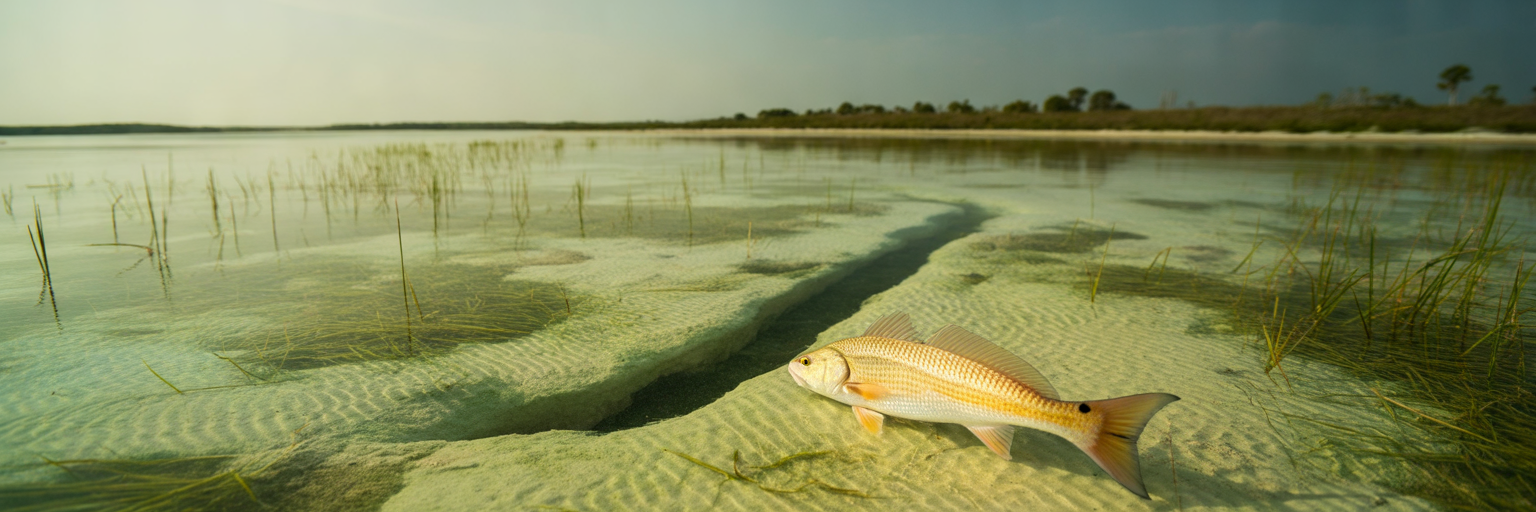
Once you understand why redfish behave a certain way based on the conditions, the next step is knowing where to find them. Florida’s inshore waters are a complex puzzle of different habitats. Learning to identify high-percentage spots is like having a map to the fish. Instead of casting randomly, you can focus your efforts on specific structures where redfish are likely to be holding and feeding. This is all about reading the water and recognizing the signs of a productive zone.
Mastering the Grass Flats
Think of grass flats as the primary cafeteria for redfish. But not all grass is created equal. The most productive areas for finding redfish on grass flats have specific features. Look for sandy potholes scattered throughout the grass, as these serve as perfect ambush points. Also, focus on the edges where thick turtle grass meets open sand or where scattered shell patches break up the bottom. These are natural highways and feeding zones for cruising reds. A fish moving across a uniform flat is just traveling, but a fish holding near one of these features is likely there to eat.
Working Oyster Bars Effectively
Oyster bars are both a magnet for redfish and a hazard for your tackle. They are honey holes because they hold immense amounts of food, from small crabs to baitfish. The key is to fish them methodically. Focus your casts along the up-current and down-current edges of the bar. Redfish will use the current break created by the oysters as an ambush point, waiting for the tide to sweep food past them. Be warned, oysters will shred your line in an instant. This is where a tougher fluorocarbon leader becomes essential. Fishing these abrasive environments requires durable gear, and having the right setup is key. You can find a complete guide to what you need in our resource on inshore fishing gear.
Targeting Mangrove Shorelines
On a sunny day, mangrove shorelines are prime real estate for redfish seeking shade and cover. The fish will tuck themselves deep into the tangle of roots, making precision casting a necessity. The goal is to land your lure or bait inches from the root tangles and under the dark, overhanging branches. This is especially true on a high tide, which allows redfish to push far back into the mangroves where they feel safe. An errant cast that is a foot or two off the mark will likely go unnoticed. The best casts are the ones that almost get you snagged.
Finding Fish Around Docks and Structure
Docks, pilings, and seawalls are man-made reefs that attract bait and provide cover. Redfish use the distinct shadow lines created by these structures as camouflage. The most effective technique is to skip lures far underneath the dock, reaching the darkest and most protected areas where fish feel secure. Work every piling and shadow line methodically, paying close attention to how the current wraps around the structure. These current eddies are natural ambush points where a redfish will sit and wait for a meal to drift by.
The Importance of Potholes and Drains
In the world of flats fishing, subtle depth changes are everything. A pothole that is only a foot deeper than the surrounding flat can be a refuge for an entire school of redfish on a low tide. They are easy-to-spot targets that should never be overlooked. Even more important are the creek mouths and drains that cut through a flat. On a strong falling tide, these spots become feeding funnels. Redfish will stack up at the mouth of these drains, forming a buffet line to intercept baitfish and shrimp being flushed out from the backcountry. If you can find a drain with moving water, you will likely find feeding redfish.
Matching Your Arsenal to the Conditions
With a solid understanding of conditions and locations, it’s time to open the tackle box. This is where you connect the “why” and “where” to the “what.” Choosing the right lure or bait is not about having a secret weapon, it’s about making a logical choice based on the situation in front of you. The goal is to present something that looks natural, gets to the right depth, and appeals to how the fish are feeding at that exact moment.
Live Bait: The Universal Language
When it comes to pure effectiveness, it is hard to argue against live bait. Live shrimp is the undisputed champion and likely the single best bait for redfish on a year-round basis. Its versatility is unmatched. You can fish a shrimp under a popping cork to create noise and attract fish from a distance, a deadly tactic in stained water or when searching a large flat. Alternatively, you can free-line a shrimp on a light leader for a stealthy, natural presentation to wary fish in clear, shallow water. For targeting larger, more discerning redfish, don’t overlook other options like pinfish, finger mullet, and small crabs, which can trigger strikes from trophy-class fish.
Soft Plastics for Versatility
Soft plastics are the workhorses of the redfish angler’s arsenal. They come in two primary forms for two different jobs. First, paddle-tail grubs rigged on a jighead are perfect for covering water and creating vibration. The thumping tail sends out signals that fish can feel in stained or dirty water. Second, weedless-rigged jerk baits, like a Z-Man Jerk ShadZ, are essential for fishing through thick grass and over oyster bars without constantly snagging. Their subtle, darting action perfectly imitates a wounded baitfish and is incredibly effective on spooky fish.
Topwater Lures for Explosive Strikes
Few things in fishing are more exciting than a redfish blowing up on a topwater plug. However, this is a conditions-dependent technique. Topwater lures shine in calm, low-light situations, making early morning and late evening the best times to throw them. The classic ‘walk-the-dog’ retrieve with a lure like a Heddon Zara Spook creates a rhythmic, side-to-side action that perfectly mimics a struggling baitfish. It is a visual and sound profile that an aggressive redfish often cannot resist investigating, resulting in some of the most memorable strikes you will ever experience.
Spoons and Hard Baits for Searching
The classic gold or silver spoon is a search-and-destroy tool. Its bright flash and wobbling action are visible from a long distance, making it the perfect lure for covering wide-open flats to locate scattered schools of fish. You can cast it a mile and retrieve it quickly to check large areas efficiently. Shallow-diving crankbaits or twitchbaits also have their place, especially for methodically working the edges of channels, drop-offs, and around structure where you need to control your depth precisely.
Fly Fishing Selections
For the fly angler, the game is about matching the local forage. Your fly selection should be practical and based on what the redfish are eating. When you see fish tailing and rooting on the bottom, a shrimp or crab pattern like a Merkin, Kwan, or EP Crab is the right choice. For fish you see cruising higher in the water column or actively chasing bait, a small baitfish pattern like a Clouser Minnow or an EP Minnow is a better option. Remember, in fly fishing for redfish, a good presentation and an accurate cast are far more important than the exact fly pattern you choose.
| Lure Type | Ideal Water Clarity | Primary Use Case | Retrieve Style |
|---|---|---|---|
| Weedless Soft Plastic Jerk Bait | Clear to Lightly Stained | Fishing over thick grass & oyster bars | Twitch, twitch, pause |
| Paddle-Tail Grub on Jighead | Stained to Dirty | Searching flats; fishing current | Slow and steady |
| Topwater ‘Walk-the-Dog’ Plug | Clear to Lightly Stained (Calm Surface) | Low-light conditions (dawn/dusk) | Steady, rhythmic rod twitches |
| Gold or Silver Spoon | All Conditions | Covering water quickly to find fish | Medium to fast, steady retrieve |
| Scented Shrimp Imitation | Stained to Dirty | Slowly working potholes and structure | Drag, hop, and dead-stick |
Approaching Shallow Water Redfish Undetected
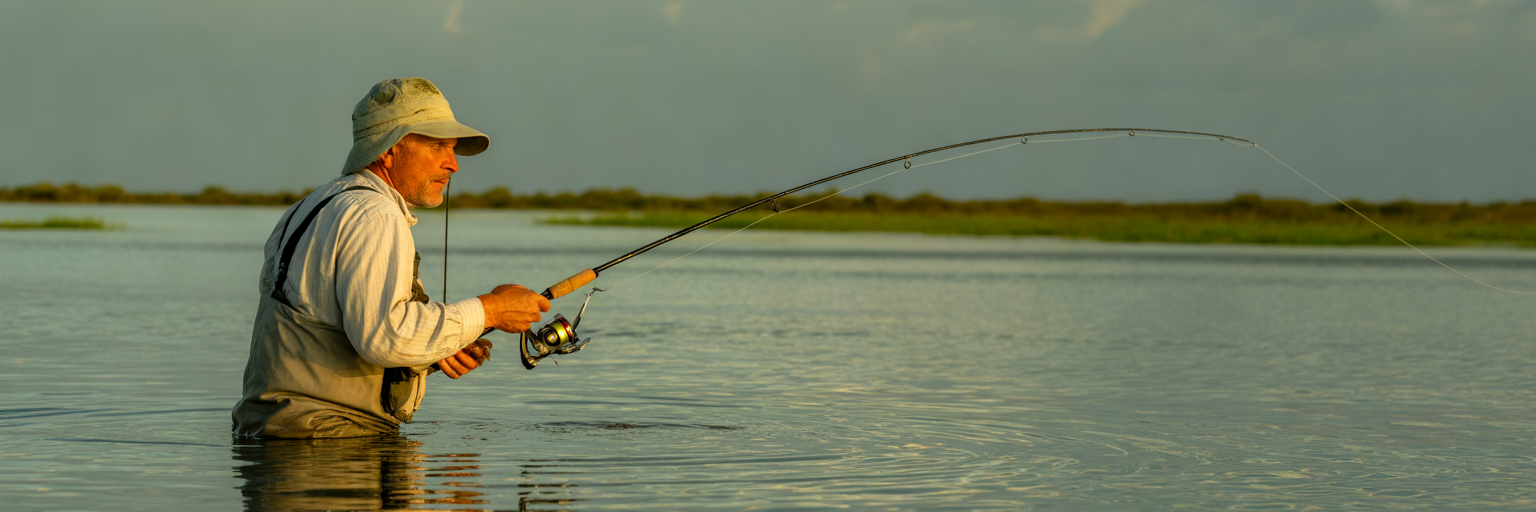
You can have the perfect tide, the best spot, and the right lure, but if you spook the fish on your approach, none of it matters. In the shallow waters where redfish live, stealth is not optional, it is everything. The difference between a novice and an expert is often measured in silence and observation. Learning how to catch redfish in Florida when they are in skinny water means becoming a predator yourself, using the environment to your advantage and closing the distance without alerting your target.
The Skiff and Push Pole Advantage
In water less than three feet deep, your push pole is your primary means of propulsion, not your trolling motor. Trolling motors, even the quietest ones, create a pressure wave and electronic signature that shallow, wary redfish can detect from a long way off. Poling a skiff allows for a completely silent approach. The proper technique involves poling the boat slowly and deliberately, keeping the sun at your back to avoid casting a shadow over the fish, and using the wind to set up a quiet drift. This is a non-negotiable skill for effective sight fishing for redfish from a boat.
Kayak Fishing for Ultimate Stealth
A kayak offers the ultimate stealth advantage. Its silent glide and minimal draft allow you to access water far too shallow for most boats, getting you into areas where redfish feel completely unpressured. The key to kayak fishing is stability and efficiency. Practice standing to get a better vantage point for spotting fish and learn to manage your paddle, rod, and gear so you can make a quick, quiet cast when an opportunity arises. A kayak puts you on the same level as the fish, making for an incredibly intimate and effective way to hunt them.
Wade Fishing for a Ground-Level Approach
When you wade fish, you become part of the environment. This ground-level approach gives you an unmatched level of stealth, but it requires a slow, methodical mindset. You must move at a snail’s pace, shuffling your feet along the bottom. This “stingray shuffle” is not just a suggestion, it is a critical safety measure to alert any stingrays to your presence. High-quality polarized sunglasses are your most important tool, allowing you to cut through the glare and spot the subtle signs of a fish from a low angle.
- Move at a snail’s pace. Every step matters.
- Always shuffle your feet to avoid a painful encounter with a stingray.
- Keep the sun at your back or to your side to improve visibility and hide your silhouette.
- Make long, low side-arm casts to keep your line and lure under the fish’s radar.
Effective Shoreline and Pier Tactics
The land-based angler can be just as successful by adopting a strategic mindset. Before you make a single cast from a shoreline or pier, spend time observing. Identify the key structure, whether it’s a small rock pile, a dock piling, or a trough running parallel to the beach. Watch for current seams and signs of bait. Most importantly, be mindful of your presence. Stay low to the ground when possible and avoid casting your shadow over the water you intend to fish. A redfish holding near the shore is already on high alert, and your shadow is often the first thing that will send it fleeing.
Rigging Adjustments for Water Clarity and Depth
The details matter. The connection between your main line and your lure is where many battles are won or lost before the cast is even made. Fine-tuning your terminal tackle based on water clarity, depth, and current is a masterclass in situational awareness. It is about making small, intelligent adjustments to your leader, hook, and weight that give you a distinct advantage and turn a tentative looker into a committed biter.
Leader Selection: Fluoro vs. Mono
Here is a straightforward rule for leader material. In clear water, 20-30 lb fluorocarbon is the standard. Its near-invisibility in water gives you a significant advantage with line-shy fish, and its superior abrasion resistance is critical when fishing around sharp oyster bars and barnacle-encrusted docks. In stained or dirty water where visibility is not a concern, monofilament is a perfectly acceptable and more budget-friendly choice. It has more stretch, which can be forgiving, but it will not stand up to abuse like fluorocarbon will.
Hook Choice and Presentation
Match your hook to your bait and technique. For live or cut bait, a circle hook is the best choice. It is designed to slide to the corner of the fish’s mouth, resulting in a safe hookset that is vital for a healthy release. When fishing soft plastics, a wide-gap worm hook allows you to rig the bait weedless for snag-free presentations in heavy cover. For open water with paddle-tails or grubs, a standard J-hook on a jighead provides a solid connection and quick hook penetration. Understanding these components is part of building effective setups, and you can learn more from our detailed guide on bottom fishing rigs.
Adjusting Lure Weight for Depth and Current
Your lure’s weight determines its running depth and how well you can maintain contact with the bottom. The formula is simple: use the lightest weight you can get away with. In shallow, calm water, a 1/8 oz jighead or even a weightless rig allows for a slow, natural fall that wary redfish find appealing. As you move to deeper water or encounter a stronger current, you must increase your weight. Switching to a 1/4 oz or 3/8 oz jighead will help you get the lure down to the strike zone and keep it there, instead of having it sweep away in the current.
Varying Retrieve Speed
Your retrieve speed should match the fish’s mood, which is often dictated by water temperature. In warm, summer water, redfish are more aggressive. A faster, more erratic retrieve can trigger an instinctual reaction strike. They do not have time to inspect the lure, they just have to eat it. In cold or dirty water, however, their metabolism slows down and they become more lethargic. A slow, methodical retrieve is key. Sometimes, the best retrieve is no retrieve at all. Dragging a scented bait along the bottom and letting it sit, a technique known as dead-sticking, is often the only way to get a bite from a sluggish winter redfish.
Decoding Redfish Feeding Behavior
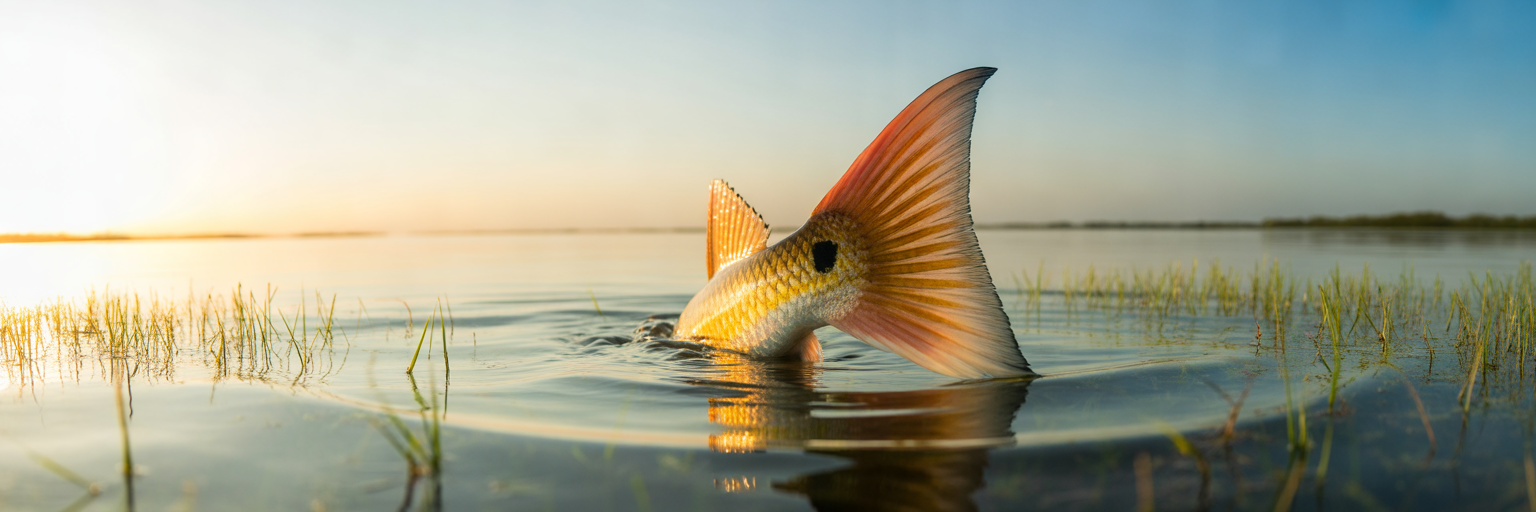
All the knowledge about tides, spots, and lures leads to this moment: recognizing a feeding fish and knowing how to capitalize. This is the payoff. Training your eyes to spot the subtle visual cues of a redfish is the final piece of the puzzle, especially for sight fishing for redfish. These are not just random disturbances on the water, they are specific signals that tell you exactly where a fish is and what it is doing. Learning to read this language is what turns a good angler into a great one.
Identifying the Classic ‘Tail’
The iconic image of a redfish tail waving gently above the surface is the most sought-after sight in shallow water angling. It tells you everything you need to know: the fish is in very shallow water, it is head-down, and it is actively rooting for crabs or shrimp on the bottom. This fish is preoccupied and catchable. However, it is also vulnerable to being spooked. A cast that lands too close will send it bolting. The approach must be delicate and the cast must be accurate, landing softly a few feet away from the fish.
Spotting ‘Nervous Water’ and Pushes
Often, the signs are much more subtle. Learn to look for “nervous water,” which is any V-wake or surface shimmer that is moving unnaturally, such as against the wind or current. This is often the signature of a single cruising redfish just below the surface. A “push” is a more pronounced version of this, a distinct bulge or wake created by a school of fish moving together in shallow water. Spotting these movements requires a trained eye and constant scanning of the water’s surface, but they are a dead giveaway to a fish’s location and direction of travel.
Reading Mud Plumes or ‘Muds’
A cloud of stirred-up bottom in otherwise clear water is a dinner invitation. Redfish create these “muds” or mud plumes when they aggressively root around on the bottom, digging for crustaceans. This is a sign of actively feeding fish. The critical instruction here is to cast to the leading edge of the mud. Do not cast into the middle of the cloud, that is where the fish has already been. Anticipate its direction of travel and place your lure in its path for an easy interception.
Watching for Panicked Bait
This is the easiest feeding sign to spot and often the most exciting. When you see shrimp scattering across the surface or a school of mullet jumping frantically out of the water, it means a predator is actively feeding below. This is a high-percentage opportunity that requires a quick reaction. The instruction is simple: quickly cast a lure that matches the size of the fleeing bait right into the middle of the chaos. An aggressive redfish in feeding mode will often strike out of pure instinct.
Making the Money Cast
Once you have identified a feeding sign, the final step is executing the “money cast.” This synthesizes all the previous points into one fluid motion. The golden rule of sight fishing is this: do not land the lure on the fish’s head. This will spook a redfish nine times out of ten. The goal is to lead the fish, casting several feet in front of it and beyond it. You want your lure to enter its cone of vision as if it is a natural meal trying to escape. This triggers the fish’s predatory instinct, prompting a chase and a strike.
Proper Redfish Handling and Florida Regulations
Catching the fish is only part of the equation. Being a responsible angler means being a good steward of the resource. Proper handling ensures that the redfish you release will survive to fight another day, keeping the population healthy for future generations. It also means knowing and strictly adhering to the law. This is not an afterthought, it is an essential part of what it means to be a Florida angler.
The Importance of Responsible Angling
A long, stressful fight, especially in Florida’s warm water, can exhaust a fish to the point of no return. The goal of catch-and-release is survival. This means using tackle that is heavy enough to land the fish quickly, minimizing its time out of the water, and handling it as little as possible. The protective slime coat on a fish is vital to its health, acting as a barrier against infection. Proper handling protects this slime coat and gives the fish the best possible chance of a full recovery.
Understanding FWC Slot and Bag Limits
As a baseline, it is important to know the general Florida redfish regulations. Typically, the harvest slot limit for redfish (also known as red drum) is between 18 and 27 inches, and the daily bag limit is one fish per person. Any fish smaller than 18 inches or larger than 27 inches must be released immediately. This slot is designed to protect young, juvenile fish and the large, prolific breeding females, ensuring a sustainable fishery.
Critical Reminder: Always Check Current, Local Rules
This is the most important point in this section. Regulations from the Florida Fish and Wildlife Conservation Commission (FWC) can and do change. Furthermore, rules often vary by specific management zones. The regulations in the Indian River Lagoon might be different from those in Tampa Bay or a National Park. There is no excuse for not knowing the current rules. Before you keep any redfish, you must verify the current rules for your exact location. As highlighted by the FWC, regulations are subject to change and can differ by region, so checking the official Red Drum page is a mandatory step for any responsible angler.
Best Practices for Handling and Release
When you release a fish, follow these steps to ensure its survival. This makes the information easy to remember and apply on the water.
- Use wet hands to handle the fish. Dry hands or a dry towel can remove the fish’s protective slime coat.
- Support the fish horizontally with one hand under the belly. Never hold a large fish vertically by its jaw or gills, as this can damage its internal organs.
- Minimize time out of the water. If you want a photo, have the camera ready before you lift the fish. A few seconds is all it takes.
- To revive a tired fish, hold it gently in the water by the tail. Move it in a figure-eight pattern or gently back and forth to pass water over its gills until it is strong enough to kick off on its own.