
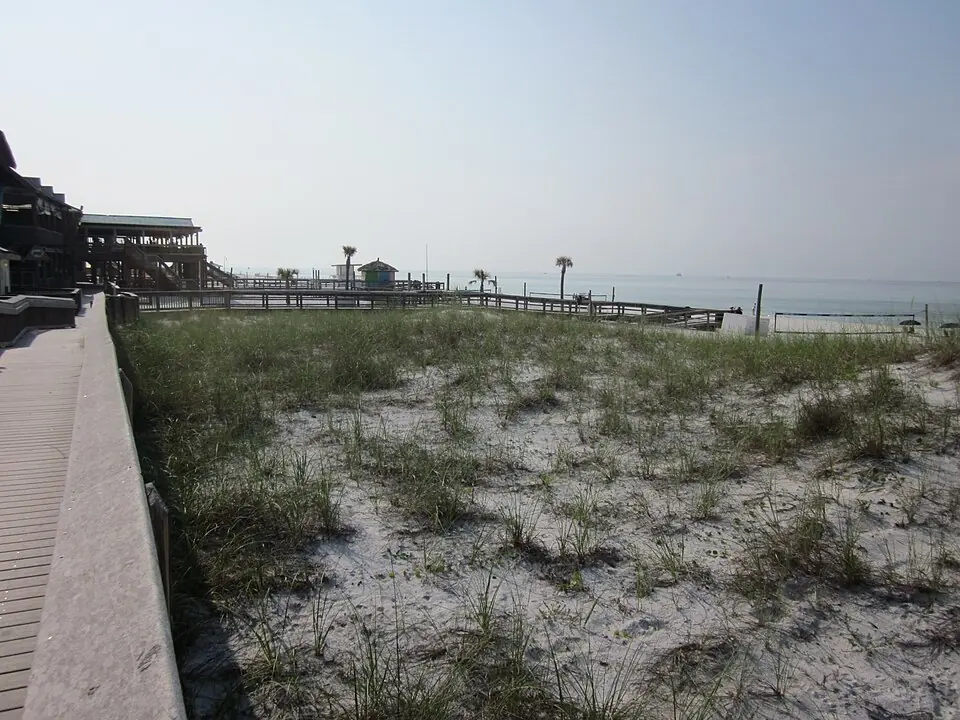
Regional context: White sand dunes and beach on Okaloosa Island. This photograph does not show the specific access described below. Photo: Infrogmation of New Orleans. CC BY-SA 3.0. Image source. Resized and converted to WebP.
Seashore Beachwalk gives you a public Gulf entrance at 530 Santa Rosa Boulevard on Okaloosa Island. It is Access 3 in the county's beachwalk system. For fishing, its value is a simple route to the surf with a few useful facilities close by.
Plan around a shared beach entrance
The county lists restrooms, picnic tables, grills, a beach toy borrow bin, and 24 regular parking spaces plus two accessible spaces. Listed hours are one hour before sunrise to one hour after sunset. Use the current signs as your final check.
This is a family beach access, so leave the walkway clear and expect swimmers. Carry your rod with the hook secured. Choose a permitted stretch of sand where a cast, drifting line, and hooked fish can all remain clear of other people.
Give the first trough a fair test
Small shrimp pieces are a useful starting bait for whiting. Put the first cast just into the nearer deep water rather than automatically aiming beyond the breakers. Watch for a darker band parallel to shore, then test it at a couple of distances.
If the bait comes back untouched, move the next cast. If it comes back stripped, reduce the bait size and check it sooner. Those two outcomes call for different adjustments. A smaller hook may help with small fish, but choose it to fit the bait and remove it carefully.
Fish to recognize before you cast
Two practical sandy-surf targets. Their presence varies with conditions and season.


Fish with a kit you can carry in one trip
A 9-foot surf rod and a 4000-size reel are enough for a basic session. Start with 15- to 20-pound mono, or 20-pound braid with a suitable mono leader. Carry sinkers within the rod's casting range and use only enough weight to hold.
Keep a small ruler with your pliers. Similar-looking fish do not always have the same rules. Identify the catch and check the current requirements before putting it in the cooler.
Keep the picnic area clean
Bag used bait and line instead of placing them beside a grill or table. Do not wash fish waste into a shower. Before leaving, look around the rod holder for dropped hooks. This access works well for a simple outing when the fishing gear stays contained and the beach remains easy for everyone to use.
Keep food and bait in separate containers
A picnic area makes it tempting to combine everything in one cooler. Use sealed, clearly separate bait storage and wash hands before handling food. Keep spare hooks away from snacks and towels. This small habit makes a mixed picnic-and-fishing trip much easier to manage.
A starting tackle list for Seashore Beachwalk
These are starting ranges, not a shopping requirement. Reel sizes vary by maker. Match the rod, line, and total casting weight, and adjust to the conditions you can safely fish.
| Tackle | Starting choice |
|---|---|
| Surf rod and reel | 9-10 ft spinning rod; 4000-5000 reel |
| Main line | 15-20 lb mono, or 20 lb braid with a suitable leader |
| Leader or bait rig | 20-30 lb mono for small-bait surf fishing |
| Bait and hook | Small shrimp piece or sand flea; roughly size 2 to 1/0 hook, matched to bait |
| Sinker | Only enough to hold; remain within the rod rating including bait weight |

Keep a measuring tool and pliers in the bag. Check current Florida Fish and Wildlife Conservation Commission license, season, size, and bag rules before keeping a catch. Access permission and a fishing license are separate requirements.
Access information checked September 24, 2026. Park notices, construction, weather, and local rules can change. Confirm the chosen entrance before travelling.