

St. Vincent Island is a wildlife refuge first and a fishing destination second. It can reward a careful shore-fishing trip, but it has no drive-on public beach approach from the mainland. Arrange transport, refuge access and the return before thinking about which bait to carry.
Featured image: Historical aerial image of St. Vincent Island, using 2010 USDA imagery. It is not a current navigation map. Photograph dated 2011. Current access may differ. Credit: USDA/FSA. Public domain. Image source. Resized and converted to WebP.
Plan with the refuge's current access rules
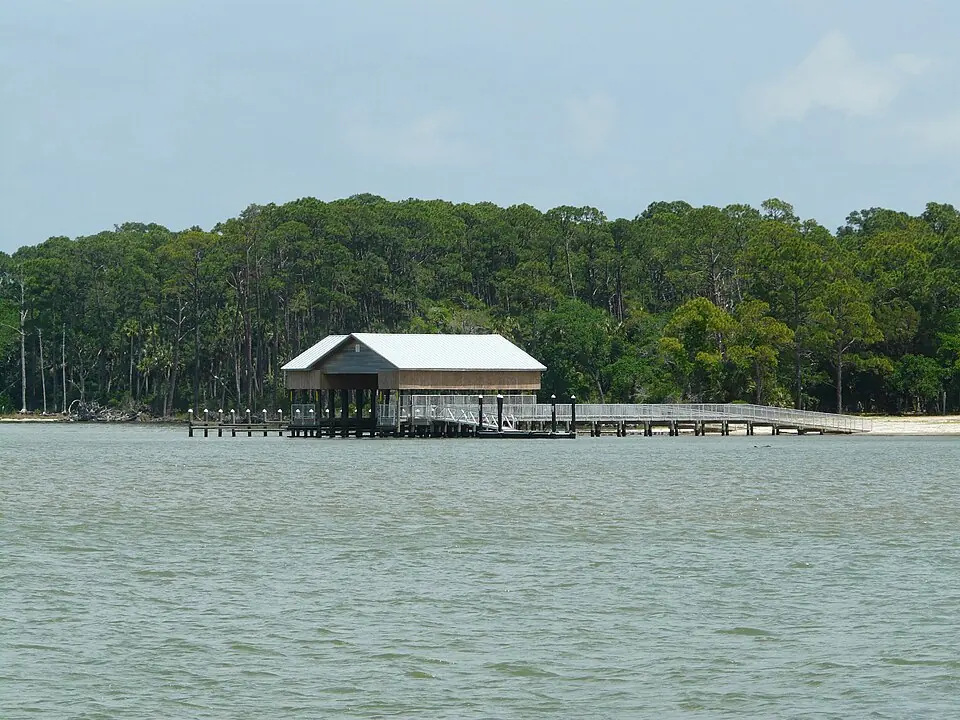
The U.S. Fish and Wildlife Service manages St. Vincent National Wildlife Refuge. Confirm open landing areas, seasonal closures and any hunt-related restrictions before departure. Do not assume a dock shown in an older photograph is operating or available for your boat.
Carry your own drinking water and supplies. Keep the trip within permitted visiting hours and arrange a firm return time. Use established routes and avoid nesting habitat. The narrow water crossing at Indian Pass is not an invitation to swim or wade over.
Choose beach water, not the fastest pass
On an open Gulf-facing stretch, look for nearshore troughs and areas where small waves pause over deeper sand. Stay on firm shore. Passes at the island ends can have fast current and abrupt depth changes, so a quiet beach session should not drift into an unplanned inlet expedition.
Whiting and seasonal pompano suit small shrimp baits or bait strips. Redfish may be another possibility around moving-water edges, but use tackle appropriate to the fish and conditions. Avoid presenting an oversized bait if you are equipped only for small surf fish.
Pack for the walk after the landing
An 8-9-foot two-piece rod, 4000 reel and 15-20 lb mono are practical to transport. Carry 25-30 lb leader, small hooks and only a few sinkers within the rod's casting limit. A compact dry bag keeps spare tackle and a phone protected during the boat ride.
Leave extra weight behind, not drinking water. Bring pliers and a means of measuring a fish before deciding to retain it. Avoid treble-hook lures dangling loose while boarding or walking.
Leave the island as you found it
Collect every length of line, even if it was there before you arrived. Give birds a wide berth and stop if wildlife repeatedly approaches your bait. Watch the sky and the water between you and the mainland. A reliable ride home matters more than a final cast on a remote beach.
A compact packing list
| Pack | Starting choice |
|---|---|
| Portable outfit | Two-piece 8-9-foot rod; 3000-4000 spinning reel |
| Main line / leader | 15-20 lb line; 25-30 lb leader |
| Bait backup | Small shrimp pieces and durable bait strips |
| Trip essential | Confirmed landing, return time and drinking water |
Fish to recognize
These references help identify possible targets in the habitats discussed above. They do not document catches at this beach or guarantee that a fish is present on your visit.


Plan another nearby fishing stop
- St. George Island Fishing: Beach, Bay and Park Guide
- Tahiti Beach Fishing: St. Vincent Island Access Guide
- Indian Pass Fishing: Beach Bait and Current Edges
Access research checked September 24, 2026, using U.S. Fish and Wildlife Service. Recheck closures and posted rules before traveling. Confirm your fishing license and current species-specific harvest rules with FWC before keeping fish.