
Indian Pass fishing calls for two different plans. The Gulf beach suits a simple bait rod. The inlet beside St. Vincent Island brings stronger current, boat traffic and a much smaller margin for error. Start on the open beach if you are learning to fish this part of the coast near Port St. Joe.

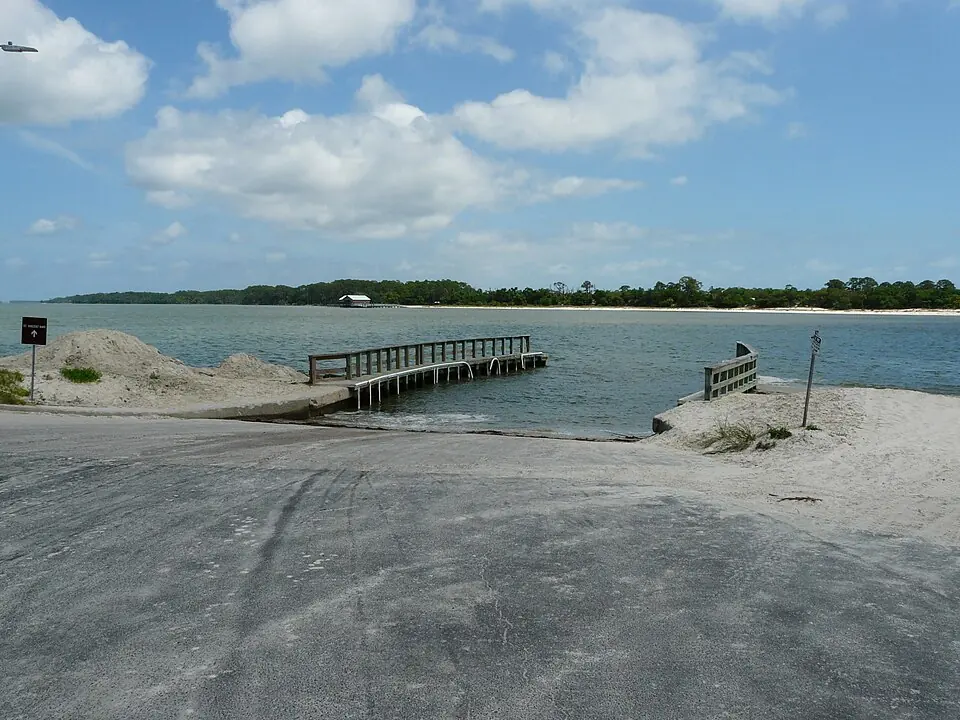
Featured image: Public boat ramp at Indian Pass. Keep launch lanes clear when planning a shore-fishing trip. Photograph dated 2025. Current access may differ. Credit: The Bushranger. CC BY-SA 4.0. Image source. Resized and converted to WebP.
Choose the beach before the inlet
Use a signed public access along the Indian Pass shoreline. A boat ramp is a launch site, not a place to spread rods across the water. Keep the ramp and boats' approach clear. The opposite shore is St. Vincent National Wildlife Refuge; it is a separate boat-access trip, not somewhere to reach by wading across the pass.
Walk the beach before unloading everything. Look for a darker strip between the sand and the first breaking bar. That nearshore trough can carry small fish and crustaceans. Fish from dry sand, with room on both sides for people to walk past your lines.
Let small baits find the feeding lane
Whiting are a sensible first target. Use a small piece of fresh shrimp with the hook point exposed. Pompano are another possibility when clean water and seasonal movement bring them along this shore. A sand flea or small synthetic bait strip makes a useful second offering.
Try one bait in the close trough and another farther out only if you can manage both rods. If grass collects on the line, bring it in and clear it. A bait buried in drifting weed is doing little work. Move a short distance to cleaner water before adding more lead.
Pack one surf outfit and a light backup
A 9-foot spinning rod with a 4000-size reel and 15-20 lb mono covers modest surf. Use a 25-30 lb leader and a small two-hook rig. Choose a sinker within the rod's casting rating that holds without rolling. Do not make a hard cast with heavy lead on light line without a suitable shock leader.
For calm shoreline lure fishing, carry a 7-foot medium rod, 3000 reel and 15 lb braid. A 3-inch paddletail on a light jig can cover water for redfish. This outfit is for manageable edges, not forcing a bait through the inlet's fastest flow.
Leave yourself an easy way back
An outgoing tide can expose sand that floods again later. Stay on the main shore rather than following a bar toward the channel. Check wind and lightning before committing to a long walk. Keep bait scraps and discarded line out of the beach access, and release unwanted fish promptly with wet hands.
A compact packing list
| Pack | Starting choice |
|---|---|
| Rod and reel | 8-9-foot surf spinning rod; 4000-size reel |
| Main line / leader | 15-20 lb mono; 25-30 lb leader |
| First bait | Small shrimp piece; seasonal sand flea or bait strip |
| Casting weight | Within the rod rating; only enough to control the rig |
Fish to recognize
These references help identify possible targets in the habitats discussed above. They do not document catches at this beach or guarantee that a fish is present on your visit.


Plan another nearby fishing stop
- Cape San Blas Fishing: Gulf Surf or St. Joseph Bay?
- Salinas Park Fishing: Gulfside or Bayside Tackle?
- St. Vincent Island Fishing: A Boat-Access Beach Plan
Access research checked September 24, 2026, using Gulf County tourism. Recheck closures and posted rules before traveling. Confirm your fishing license and current species-specific harvest rules with FWC before keeping fish.