
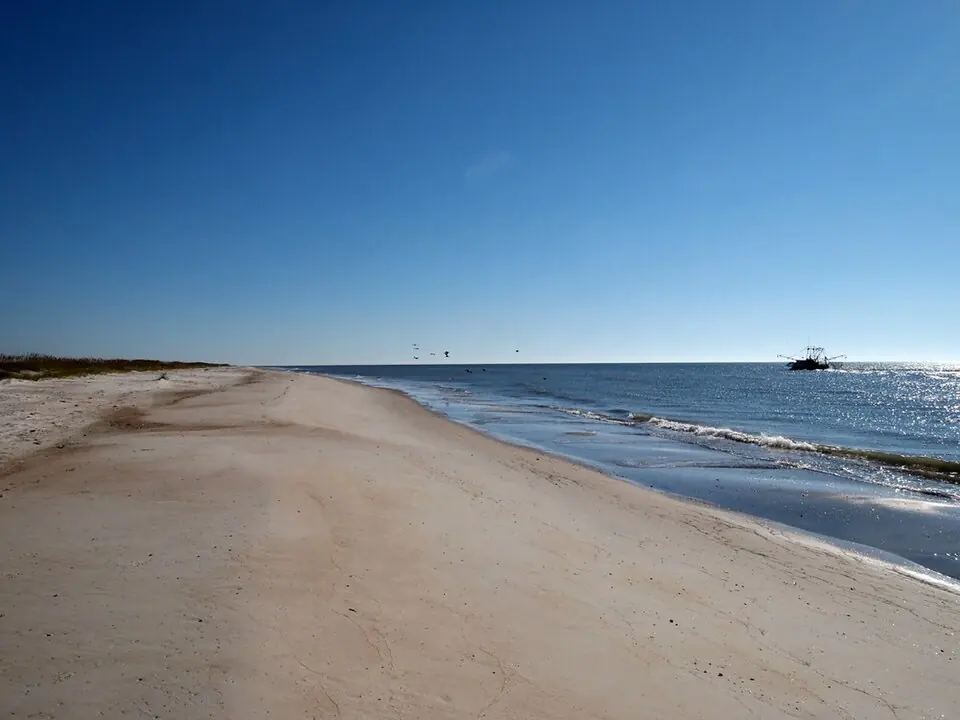
St. George Island gives anglers three useful starting choices: the public Gulf beach, the state park and the bay shore. Pick by the kind of trip you want. A family bait session needs a different access plan from a long walk toward East Pass.
Featured image: Gulf beach in St. George Island State Park, one of the island's managed fishing destinations. Photograph dated 2011. Current access may differ. Credit: Martin Haeusler. CC BY-SA 3.0. Image source. Resized and converted to WebP.
Choose a shore before choosing a rod
The central public beach is convenient for a short outing near island services. Fish only where local signs and other beach users leave a lawful, clear casting area. The state park offers managed beach access farther east, with an entrance fee and closing hours.
Unit Four Beach is a bayside option with a much smaller access footprint. It should not be treated as another Gulf surf beach. The East End Fishing Beach is more remote and needs a separate trip plan. Private development entrances and docks are not substitutes for public access.
Use small surf baits for a first visit
Whiting and seasonal pompano give beach anglers sensible targets. A short shrimp piece, sand flea or synthetic bait strip belongs on a small hook. Look for a nearshore trough or a break in a sandbar instead of relying on maximum distance.
An 8-9-foot rod, 4000 reel, 15-20 lb mono and 25-30 lb leader suit ordinary surf work. The sinker should stay within the rod's casting rating. Bring spare rigs so a tangle does not take up half the fishing window.
Downsize for bay grass and oyster edges
Redfish, spotted seatrout and black drum call for more attention to bottom type. Trout presentations should move above grass. A shrimp for drum can sit beside an oyster edge without being dragged through its sharpest part.
Use a 7-foot medium spinning rod, 3000 reel and 15 lb braid with a 20-25 lb leader. A float helps hold shrimp above shallow obstructions. Check leaders after contact with shell, and replace rough sections rather than hoping they survive the next fish.
Build a weather backup into the day
A rough Gulf does not guarantee a fishable bay; wind direction and water level still matter. Check both before moving. Keep the island ends for suitable conditions and appropriate experience. For a first visit, learning one accessible stretch well is more useful than rushing between four places with a rod still in its case.
A compact packing list
| Pack | Starting choice |
|---|---|
| Light surf option | 8-9-foot rod, 4000 reel, 15 lb mono, 25 lb leader |
| Inshore option | 7-foot rod, 3000 reel, 15 lb braid, 20-30 lb leader |
| Bait choice | Shrimp for sand or structure; small lures for open edges |
| Choose first | The permitted shoreline and target fish |
Fish to recognize
These references help identify possible targets in the habitats discussed above. They do not document catches at this beach or guarantee that a fish is present on your visit.


Plan another nearby fishing stop
- St. George Island State Park Fishing: Surf or Bay?
- East End Fishing Beach: St. George Island Trip Guide
- St. George Island Public Beach Fishing: Simple Baits
- Unit Four Beach Fishing: St. George Island Bay Tackle
- Carrabelle Beach Fishing: A Calm-Water Shore Plan
- St. Vincent Island Fishing: A Boat-Access Beach Plan
- Alligator Point Fishing: Public Access and Surf Bait
- Dog Island Fishing: Boat Access and Beach Tackle
Access research checked September 24, 2026, using Florida State Parks. Recheck closures and posted rules before traveling. Confirm your fishing license and current species-specific harvest rules with FWC before keeping fish.