
East End Fishing Beach is a planned outing, not a quick stop beside the car. This remote end of St. George Island State Park faces the influence of East Pass. The attraction is moving water and passing bait. The price is a longer approach and conditions that demand restraint.
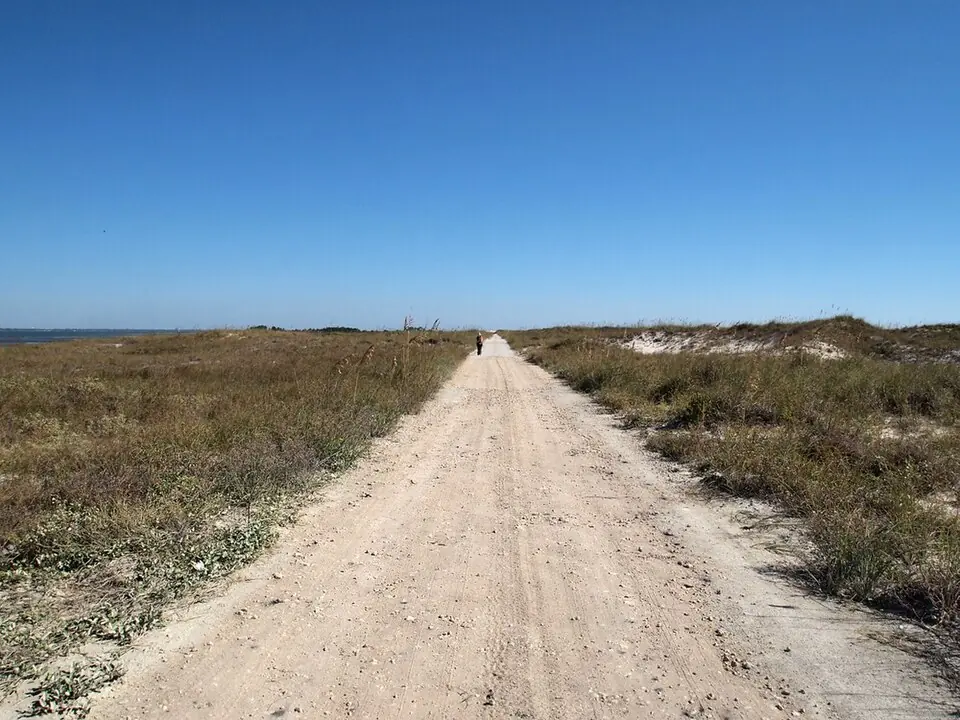
Featured image: Access-road context in St. George Island State Park. This is not a verified photograph of the East End fishing beach. Photograph dated 2011. Current access may differ. Credit: Martin Haeusler. CC BY-SA 3.0. Image source. Resized and converted to WebP.
Confirm how you can reach the East End
Ask the ranger station about the current access route, distance and any special arrangements before traveling beyond the regular day-use area. Do not assume a private vehicle can use a road because it appears on a map. Walking or cycling access still needs enough time, water and energy for the return.
Keep to approved routes and respect the boundary of any sensitive habitat area. Pack a small first-aid kit, sun protection and a charged phone in a dry case. Cell coverage and a phone battery should never be the whole emergency plan.
Fish an edge you can control
Watch the direction of the flow before casting. Look for a manageable seam beside faster water, rather than dropping a bait into the strongest current. Remain on firm shore. The deep water and current here make swimming or chasing a hooked fish into the pass a poor choice.
Redfish may use moving water near a pass. Small shrimp baits on a quieter sandy edge can also find whiting. When baitfish gather, a compact spoon or paddletail offers another option. Do not use an offshore species list as a forecast for a shore session.
Carry fewer rods and more water
For the calmer beach edge, a 9-foot medium-heavy spinning rod, 4000-5000 reel and 20 lb line provide a useful starting point. Use a 30 lb leader and inspect it regularly. Match sinkers and lures to the rod's printed rating. Strong current that needs more lead than the outfit can safely handle is a reason to move.
A second light rod is optional. Spare leader, hooks and enough drinking water are more valuable than several complete outfits on a long walk. Keep fish-handling tools close so releases do not become a search through bags.
Set a turnaround time
Leave enough daylight and energy to retrace the route. Wind against tide can make the pass rougher as the day changes. If conditions are deteriorating, pack up early. The ordinary state-park beach is a worthwhile fallback and does not require proving anything at the island tip.
A compact packing list
| Pack | Starting choice |
|---|---|
| Moderate outfit | 9-foot medium-heavy rod; 4000-5000 reel |
| Main line / leader | 20 lb line; 30 lb leader |
| Starting water | Manageable shore edge outside the fastest flow |
| Stop condition | Unsafe footing or current beyond the outfit's control |
Fish to recognize
These references help identify possible targets in the habitats discussed above. They do not document catches at this beach or guarantee that a fish is present on your visit.


Plan another nearby fishing stop
- St. George Island Fishing: Beach, Bay and Park Guide
- St. George Island State Park Fishing: Surf or Bay?
- Dog Island Fishing: Boat Access and Beach Tackle
Access research checked September 24, 2026, using Florida State Parks. Recheck closures and posted rules before traveling. Confirm your fishing license and current species-specific harvest rules with FWC before keeping fish.