

WindMark Beach fishing is a shallow-water exercise. This shoreline faces St. Joseph Bay, so the right question is often where enough water covers the feeding edge, not how far a surf rod can cast. A compact spinning outfit makes it easier to move and learn the shore.
Featured image: Red drum species reference, also called redfish. This is not a catch from this location. Credit: NOAA. Public domain (United States). Image source. Resized and converted to WebP.
Use the public North or South access
Gulf County tourism identifies public access areas at WindMark North and South. Use those entrances and their parking rather than assuming a resort path or dock is public. The South access is on Flat Water Street West. Keep the BeachWalk route open for cyclists and walkers.
Check the shoreline before carrying a cooler down. Low water can leave a broad, shallow approach. If the nearest useful water lies beyond soft mud or grass, stay ashore and return on a more suitable tide. Wading farther is not always the answer.
Search for a change in the bottom
Redfish and spotted seatrout are plausible targets around bay grass and sand edges. They do not spread evenly across every flat. Look for bait movement, a visible sand opening or a small depth change within casting range.
Cast a 3-inch paddletail across that edge. Begin with a light jig head and keep it above the grass. If you feel constant vegetation, reduce weight or switch to a weedless rig. A quiet retrieve is useful in calm, clear water where a large splash can scatter baitfish.
A small outfit covers more ground
Use a 7-foot medium spinning rod with a 2500-3000 reel, 10-15 lb braid and a 20 lb leader. Carry a few natural-colored soft plastics, one brighter color for stained water and a small float rig for shrimp. This is enough to test several presentations without carrying a surf cart along every access.
If using shrimp, suspend it high enough to avoid burying it in grass. Give the float room to drift without crossing other lines. Do not leave hooks or scraps beside the beach path.
Choose water level over a rigid schedule
A rising tide can put water over the shallow margin, while a falling tide may draw bait toward a drain. The actual depth and wind matter more than those labels alone. If the bay is too shallow or windblown, the open-Gulf options around Cape San Blas offer a different style of trip. Check those conditions before driving over.
A compact packing list
| Pack | Starting choice |
|---|---|
| Rod and reel | 7-foot medium spinning rod; 2500-3000 reel |
| Main line / leader | 10-15 lb braid; 20-25 lb leader |
| First presentation | Shrimp under a float or small paddletail |
| Bottom contact | Keep bait and lures above grass and shell |
Fish to recognize
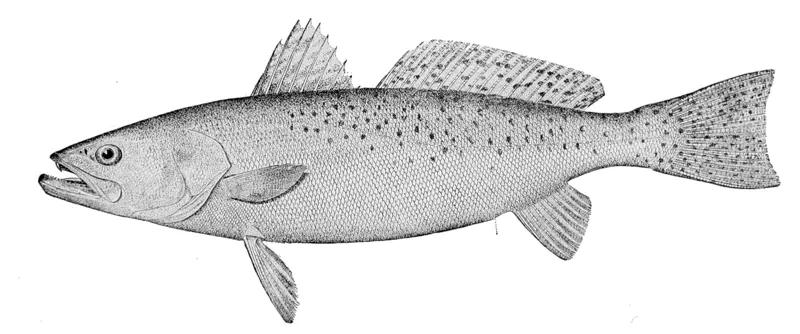
These references help identify possible targets in the habitats discussed above. They do not document catches at this beach or guarantee that a fish is present on your visit.
Plan another nearby fishing stop
- Cape San Blas Fishing: Gulf Surf or St. Joseph Bay?
- St. Joe Beach Fishing: Whiting, Troughs and Light Surf
- Salinas Park Fishing: Gulfside or Bayside Tackle?
Access research checked September 24, 2026, using Gulf County tourism. Recheck closures and posted rules before traveling. Confirm your fishing license and current species-specific harvest rules with FWC before keeping fish.