
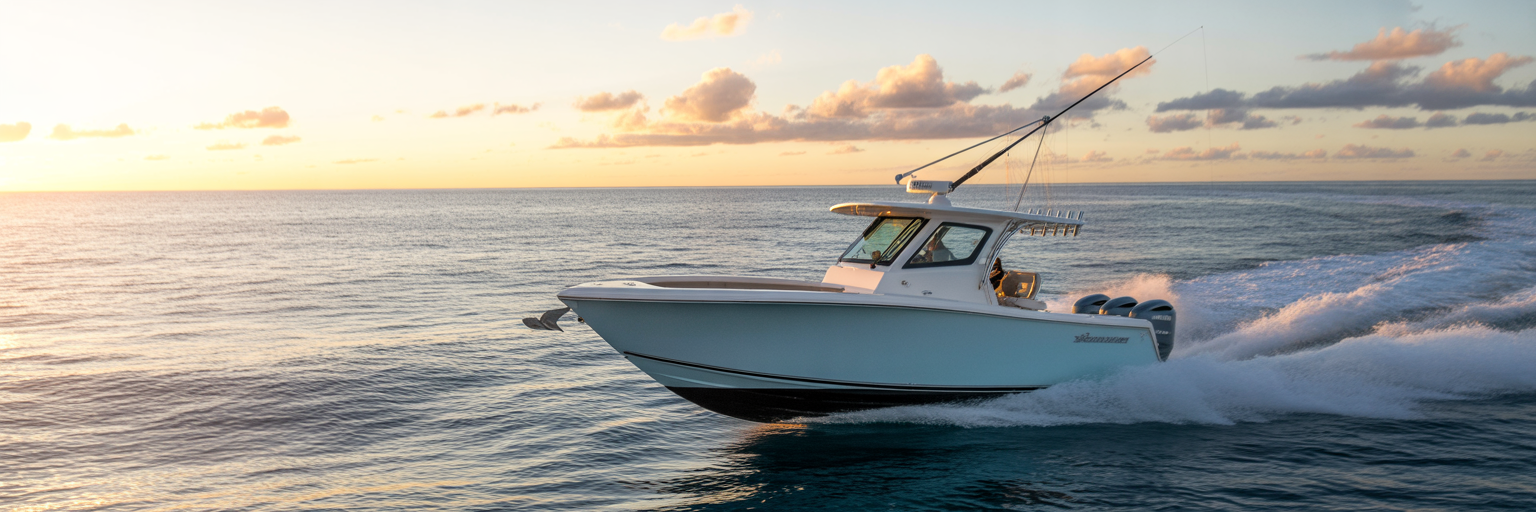
The Foundation of Florida Offshore Boat Safety
The deep blue water off Florida’s coast calls to every serious angler. It promises screaming drags from wahoo, lit-up mahi on the weed lines, and the brute force of tuna in the canyons. But that promise comes with a non-negotiable pact: absolute preparedness. This is the core of Florida offshore boat safety, and it starts long before you clear the inlet. Once land disappears over the horizon, you are your own first responder. Rescue is not minutes away; it can be hours.
The forgiving nature of a Tampa Bay flat, where help is a quick VHF call away, has no place 50 miles out in the Gulf Stream. Out there, you are the captain, the mechanic, and the medic. There is no pulling over to the shoulder when an engine sputters or a thru-hull fitting fails. The mindset must shift from casual boating to disciplined seamanship. This is not about bureaucracy or filling out forms. It is about getting your crew and yourself home safely after a day of fishing.
Every experienced offshore captain has a story, or knows someone who does, that stems from poor preparation. Running out of fuel because they didn’t account for a two-hour fight with a blue marlin. Having a battery die 60 miles from the dock, turning a state-of-the-art vessel into a drifting piece of fibreglass. Getting caught in a pop-up summer thunderstorm that was just a small blip on the inshore forecast but a monster offshore. These are not freak accidents; they are failures in preparation.
Think of your safety protocol as a core angling skill, just as vital as tying a Bimini twist or reading a bottom machine. You would never head offshore with a reel that has a faulty drag or a frayed leader. Your boat and its safety systems demand even more respect. Every check you perform and every piece of gear you stow is a link in a chain that connects a successful fishing trip to a safe return to the dock. There are no shortcuts when you are offshore. Every detail matters.
USCG Required Gear: Your Non-Negotiable Kit
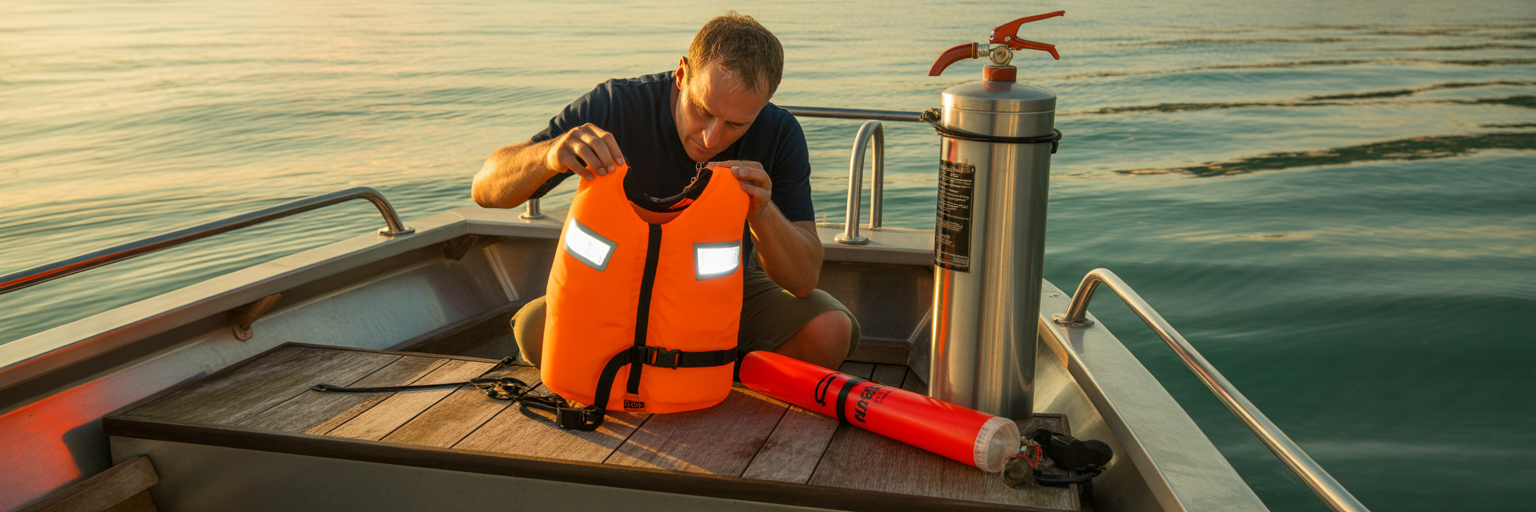
Before you even think about what lures to throw, you need to have your mandatory gear in order. This is the bare minimum foundation for any offshore trip. The USCG required safety equipment is not a suggestion; it is the law, and it is your first layer of protection when things go wrong. Do not leave the dock without verifying every single item.
Personal Flotation Devices (PFDs): More Than Just Vests
Every person on your boat needs a properly fitting, serviceable PFD. For offshore work, a Type I PFD is the standard. Unlike the common orange “horseshoe” Type II vests, a Type I is designed with more buoyancy to turn most unconscious wearers face-up in the water. In rough, remote seas where rescue may be slow, this is a critical feature. Before each trip, put your hands on every PFD. Pull the straps, check for rips or sun rot, and ensure the buckles are not cracked. You must also have at least one Type IV throwable device, like a ring buoy or seat cushion, immediately accessible to toss to someone in a man-overboard situation.
Visual Distress Signals (VDS): Your Call for Help
When your radio fails, flares and other signals are your only voice. For offshore trips, you need a combination of pyrotechnic (flares) and non-pyrotechnic (orange distress flag, electric S-O-S light) signals. Know the difference: handheld flares are for getting the attention of a nearby boat or aircraft, while aerial flares are for when you are alone on the horizon. The most important check is the expiration date printed on every flare. Expired flares are illegal for meeting the requirement and may not work. Keep them as a backup, but you must have a current set on board.
Fire Extinguishers: The First Line of Defense
A fire on a boat is one of the most terrifying emergencies. Most recreational vessels are required to carry at least one B-1 type fire extinguisher. For a proper offshore setup, you should have several. Place them strategically: one at the helm, one in the cabin or galley, and one near the engine compartment. Actionable tip: once a month, check that the gauge is in the green and give the extinguisher a good shake. This prevents the dry chemical agent inside from compacting at the bottom and becoming useless.
Sound-Producing Devices: Making Yourself Heard
In thick fog or a crowded channel, your ability to make noise is a vital collision-avoidance tool. Your boat must have a horn, whistle, or other device capable of producing an efficient sound signal. Test it at the dock. A weak horn is no better than shouting. This simple piece of gear is not just for getting another boat’s attention; it is a required tool for signaling your position and intentions in low visibility.
| PFD Type | Buoyancy (lbs) | Turning Ability | Best Use Case for Florida Offshore |
|---|---|---|---|
| Type I | 22 lbs | Turns most unconscious wearers face-up | Offshore / Rough, remote water where rescue may be slow |
| Type II | 15.5 lbs | May turn some unconscious wearers face-up | Near-shore / Calm, inland water with quick rescue potential |
| Type III | 15.5 lbs | Not designed to turn unconscious wearers face-up | Inshore / Watersports where freedom of movement is key |
| Type V (Hybrid) | Varies (15.5-22 lbs) | Varies by design | Specialized activities; must be worn to be legal |
Beyond the Basics: Your Offshore Lifeline Gear
Meeting USCG requirements is just the starting point. Seasoned captains know that true safety comes from redundancy and self-sufficiency. The gear in this section is not just nice to have; it is what experienced anglers rely on when a trip takes an unexpected turn. These are the tools that bridge the gap between a minor problem and a life-threatening emergency.
The VHF Marine Radio: Your Primary Line of Communication
Your VHF radio is the most critical piece of communication equipment you own. A handheld unit is a good backup, but for offshore use, a fixed-mount, 25-watt radio connected to a tall, high-quality antenna is non-negotiable. It has the power and range to reach other boats and the Coast Guard when you are well over the horizon. It is not just for emergencies. Use it to get real-time weather updates from NOAA channels and to communicate with other boats about where the bite is. A working VHF is your connection to the outside world.
The EPIRB: Your Ultimate Lifeline
An Emergency Position Indicating Radio Beacon (EPIRB) is your last resort, your “call for help” button that talks directly to satellites. When your engine is dead, your batteries are fried, and you are drifting in the Gulf Stream, activating your EPIRB sends a distress signal with your exact GPS location to a global network of rescuers. An unregistered EPIRB is just an expensive piece of plastic. Make sure rescuers know who you are and where to find you by registering it with NOAA. It is free, required by law, and you can do it right here: https://beaconregistration.noaa.gov/. Check your battery expiration date and test the unit according to the manufacturer’s instructions before every season.
Personal Locator Beacons (PLBs): Safety in Your Pocket
It is crucial to understand the difference between an EPIRB and a PLB. The EPIRB is registered to the vessel and stays with it. A PLB is registered to a person and stays with them. If you must abandon ship or if someone falls overboard, the PLB is their individual lifeline. In a worst-case scenario, this device ensures that rescuers are looking for a person, not just a boat. For serious offshore anglers, having crew members carry PLBs attached to their PFDs is a smart layer of personal protection.
The Offshore First-Aid Kit: Preparing for Real-World Injuries
A basic kit with bandages and antiseptic wipes is not enough for offshore fishing. Your kit must be equipped for the specific injuries that happen on a boat. This includes trauma shears to cut through heavy clothing or braided line, blood-clotting gauze for deep cuts from a gaff or fillet knife, and proper tools for hook removal. Also include supplies for treating dehydration, heat exhaustion, and severe seasickness. These practical offshore boat preparation tips can turn a potentially trip-ending injury into a manageable situation.
Vessel Readiness: The Pre-Departure Shakedown
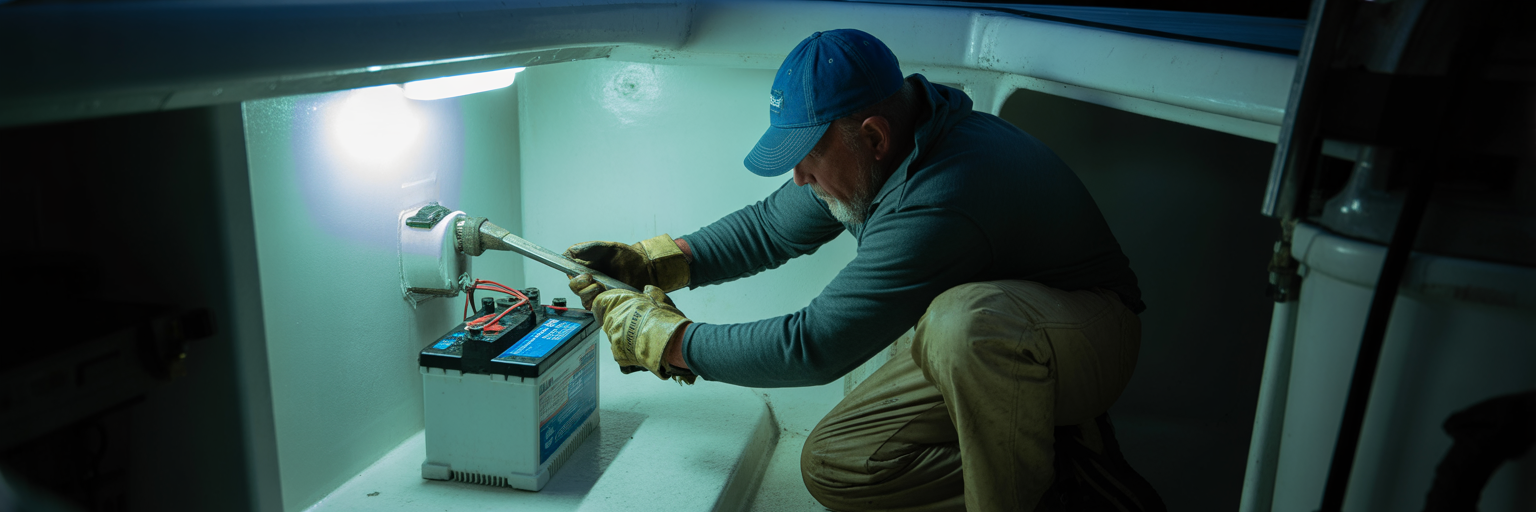
Trusting your vessel offshore is not a matter of faith; it is a matter of verification. A pre-departure shakedown, much like a pilot’s pre-flight check, ensures that your boat is as ready for the trip as you are. This meticulous process is about identifying small issues at the dock before they become big problems 40 miles out.
The first and most important rule is the unbreakable ‘Rule of Thirds’ for fuel management. One-third of your fuel is for the trip out, one-third is for the trip back, and one-third is held in reserve. That reserve is for emergencies: navigating around a storm, fighting a fish longer than expected, or having the ability to help another vessel in distress. This rule is not negotiable. Never leave the dock without enough fuel to follow it.
Next, conduct a thorough electrical system check. Your boat’s power is its lifeblood. Physically inspect your battery terminals and clean any corrosion. A layer of white or green powder can be enough to prevent an engine from starting. Ensure your batteries are fully charged and test your battery selector switch to confirm it is working properly. A dead battery means no engine, no bilge pumps, no GPS, and no radio. It is a cascading failure that begins with a simple lack of inspection.
Your bilge and pump systems are what keep the ocean on the outside of your boat. Before you untie the lines, manually test every single bilge pump. Flip the switch for the forward pump, the aft pump, and any high-water alarms. You should hear them kick on immediately. A small leak from a loose hose clamp is a minor annoyance if your bilge pump is working. It is a catastrophe if it is not.
Finally, do a last-minute check of your navigation and deck systems. Turn on your navigation lights, even for a day trip, because you never know if you will be returning after dark. Confirm your GPS has a solid satellite lock and that your waypoints are loaded. Walk the deck and make sure every piece of gear, from coolers and tackle bags to gaffs and bait buckets, is securely stowed. In rough seas, a loose cooler becomes a dangerous projectile. Having these Florida fishing boat essentials in order is the mark of a prepared captain.
The Float Plan and Weather Briefing
The final steps before you head out are two of the most critical: the float plan and the weather briefing. These on-shore planning actions are about discipline and responsibility. They are your first and last lines of defense, ensuring someone knows where you are and that you have a clear understanding of the conditions you are heading into.
A float plan is the single most important document for search and rescue crews if you become overdue. Let’s be clear about how to file a float plan: you do NOT file it with the Coast Guard. You leave it with a reliable person on shore who knows your plan and will actually notice if you are late. This person is your link to help. If they do not hear from you by a pre-determined time, they are the one who makes the call to the Coast Guard.
A comprehensive float plan must include:
- Vessel description: Make, model, color, and registration number.
- Persons on board: A complete list of every person’s name and a contact number for them.
- Safety equipment: Note key gear like an EPIRB, life raft, or satellite phone.
- Specific destination: Do not just write “fishing offshore.” Include GPS coordinates for the areas you plan to fish, like “The Hump” off Islamorada or specific wreck numbers.
- Departure and return times: Note your departure time and port, your expected return time, and a hard “call the Coast Guard if not back by” time.
The FWC provides a great template to ensure you do not miss any details. You can download it here: https://myfwc.com/media/3235/boating_float_plan.pdf.
Next, you must properly interpret the offshore marine forecast. Go beyond just looking at wind speed and wave height. Pay close attention to the swell period. A two-foot wave at a four-second period is a simple chop. A two-foot wave at a ten-second period is a powerful, long-period swell that carries much more energy and can make for a dangerously uncomfortable ride. Check multiple sources, like NOAA Marine Forecasts and trusted private weather services, to get a complete picture of the day.
This all leads to the final ‘Go/No-Go’ decision. This is the captain’s ultimate responsibility. If the weather looks marginal, if a key piece of equipment is not working perfectly, or if you just have a bad feeling in your gut, have the discipline to cancel the trip. The fish will be there tomorrow. The most important thing is to make sure you are too.
Crew Briefing and On-Water Preparedness
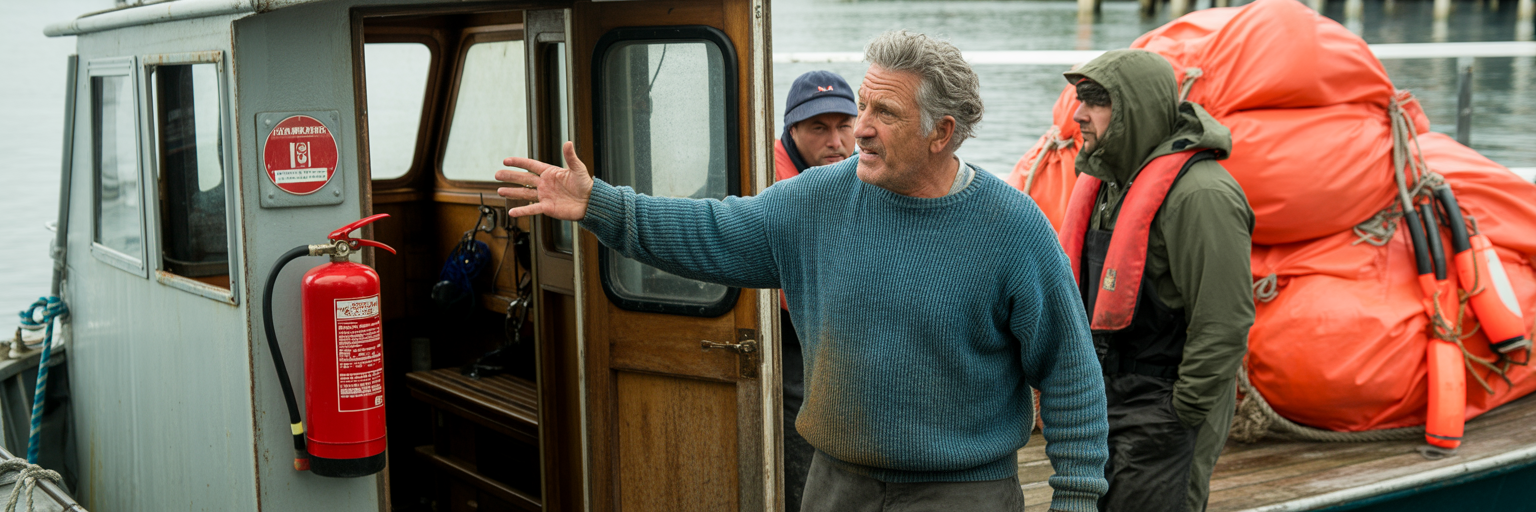
A safe boat is more than just reliable equipment; it is a prepared crew. As the captain, you are responsible for the human element. Your job is to turn every passenger on your boat into a capable team member who knows what to do in an emergency. This process starts at the dock with a clear and direct safety briefing.
Before you cast off the lines, gather everyone on board. This is a non-negotiable step. Physically show every person the exact location of all PFDs. Make them point to the throwable device, the fire extinguishers, the flare kit, and the first-aid kit. Do not just say, “The life jackets are in the front.” Open the compartment and show them. In the stress of an emergency, people will not remember vague instructions. They will remember what they saw with their own eyes.
It is also critical to delegate emergency tasks. What if you are the one who needs help? At least one other person on board must be shown how to use the VHF radio to make a Mayday call. Show them how to turn it on, switch to channel 16, and press the transmit button. Explain the simple “Mayday, Mayday, Mayday” call format. This simple act of cross-training provides critical redundancy if the captain is injured or incapacitated.
You should also conduct a verbal man-overboard (MOB) drill. You do not need to throw anyone in the water. Just walk through the procedure so it becomes instinctive. The response should be simple and memorable: 1. Shout “Man Overboard!” to alert everyone. 2. Throw the Type IV device toward the person in the water. 3. Point one person to be the designated “spotter” who never, ever takes their eyes off the person. 4. Hit the MOB button on the GPS to instantly mark the position. Practicing this verbally ensures a coordinated response instead of panic.
Finally, a complete offshore fishing safety checklist includes crew wellness. As captain, you are responsible for making sure everyone stays hydrated and uses sun protection. You must also be able to recognize the signs of heat exhaustion or severe seasickness. A sick, dehydrated, or fatigued crew member is a liability. They are more prone to accidents and less able to help in an emergency. Keeping your crew safe and healthy is just as important as keeping the boat running.
Adapting Your Safety Plan for the Trip
A truly effective safety plan is not a rigid, one-size-fits-all document. It is a dynamic framework that you must adapt based on the specific trip you are taking. The hallmark of an experienced captain is the ability to scale preparations based on distance, weather, and crew. This situational awareness is the final layer of Florida offshore boat safety.
Your preparations must scale with distance. A 20-mile run off Jacksonville to troll for kingfish is fundamentally different from a 70-mile bluewater trip to the canyons off Palm Beach to chase swordfish. The farther you go, the more self-sufficient you must be. This means more fuel, more water, and more food. It also means considering advanced safety gear. For true bluewater voyages, a life raft and a satellite phone move from the “nice to have” category to essential equipment.
You must also be prepared to adjust your plan for changing weather. The forecast you read at 5 AM is a prediction, not a guarantee. If the conditions deteriorate while you are out, your plan must change. This is not a sign of failure; it is a sign of smart seamanship. It might mean fishing a wreck that is 10 miles closer to shore, trolling with the seas instead of against them, or simply making the call to head in early. Trying to “beat the storm” home is a high-stakes gamble you cannot afford to lose. Have your crew put on their foul-weather gear before the squall hits, not after they are already soaked and cold.
The size and experience level of your crew also dictates your plan. A boat full of seasoned offshore anglers who have fished together for years requires a different level of oversight than a trip with your family and their friends who have never been on the ocean. With a novice crew, your plan should be simpler. Choose a closer destination, conduct a more detailed safety briefing, and check in with them more frequently. Your responsibility as captain increases with the inexperience of your crew.
Ultimately, the trip is not over until the boat is tied securely to the dock, the engines are flushed, and everyone is safely on their way home. Constant vigilance, a commitment to your plan, and the discipline to adapt when necessary are the traits that define a great offshore captain. It is about respecting the power of the ocean and doing everything possible to ensure you can come back and enjoy it again tomorrow.