

The same flats that were alive with tailing reds all summer can feel like a desert in January. That silence on the water isn’t a sign the fish are gone. It’s a signal that the game has changed. Success now depends on understanding their cold-weather behavior, and the key to finding winter redfish in Florida is knowing exactly where they go when the temperature drops. They aren’t feeding aggressively anymore. They are surviving, and that makes them predictable.
The Hunt for Finding Winter Redfish in Florida
When water temperatures fall, a redfish’s metabolism slows to a crawl. They stop wasting energy chasing bait across open flats and start conserving every bit of it. This is the winter shift. Instead of scattered fish competing for food, you find concentrated groups holding in specific areas for one reason: survival. Your job is to find those areas.
Cold fronts are the engine driving this entire process. A sharp angler learns to read the cycle. You have the pre-frontal bite, where fish sense the coming pressure change and feed heavily for a short period. Then comes the post-frontal shutdown. The north wind howls, the temperature plummets, and the fish get stunned, often becoming inactive for a day or two. This is the moment that matters. It forces them to abandon the exposed flats and move into predictable, warmer, and safer zones. Understanding how to catch redfish in cold weather is less about finding hungry fish and more about finding comfortable fish.
This triggers a migration from roaming the vast grass flats to holding in confined spaces. Their world shrinks to deep holes, protected creek bends, and sun-baked shorelines. Hunger takes a backseat to security and warmth. This is when redfish begin to school up, sometimes in massive numbers. They group together for safety from dolphins and to share what little warmth they can find. This behavior is a direct response to the cold.
Herein lies the opportunity. While these winter schools are notoriously spooky, finding one fish often means you have found hundreds. It presents some of the most rewarding sight-fishing of the year, with huge schools of bronze backs packed into gin-clear water. It’s a visual game that requires stealth and precision. While these winter patterns are specific, they are built on the core behaviors covered in our comprehensive guide to redfish fishing tips. Master the fundamentals of their behavior, and you can pinpoint their winter locations.
Reading Winter Water Conditions
Once you understand why redfish move, you need to identify the specific water features that attract them. This is not about guessing. It is about using your eyes and electronics to hunt for subtle environmental advantages that concentrate fish.
The single most critical factor is water temperature. Get your sounder’s temperature gauge working or carry a simple thermometer. A difference of one or two degrees is everything in winter. Redfish will actively seek out the warmest water they can find, which is often in the 60 to 70 degree Fahrenheit range. When the water dips below 50 degrees, they become extremely lethargic, often moving into the deepest holes available and refusing to eat. Your search is a hunt for warmer water, plain and simple.
This is why dark bottoms are magnets for winter reds. Think of a mud, oyster, or dark sand bottom as a solar panel. It absorbs sunlight all day and radiates that heat back into the water column. A shallow flat with a dark bottom can be several degrees warmer than an adjacent flat with light sand. Focus your efforts on these areas, especially in the afternoon after they have had hours to bake in the sun.
The cold also brings gin-clear water, a classic double-edged sword. The good news is you can spot schools from a long way off. The bad news is they can see and hear you just as easily. Stealth becomes non-negotiable. This clarity is a direct result of cold temperatures killing off the algae blooms common in warmer months. It is a signature of the winter season, and it demands long casts, quiet movements, and a low profile.
A more advanced factor to consider is salinity and spring-fed refuges. After a harsh cold front, freshwater inflows from natural springs, rivers, or even drainage canals can create pockets of warmer, more thermally stable water. Redfish are highly tolerant of varying salinity levels. In winter, temperature is a much stronger driver of their location than salt content. Finding these freshwater seeps can mean finding a sanctuary packed with fish trying to escape the cold.
Using Tides and Wind to Your Advantage
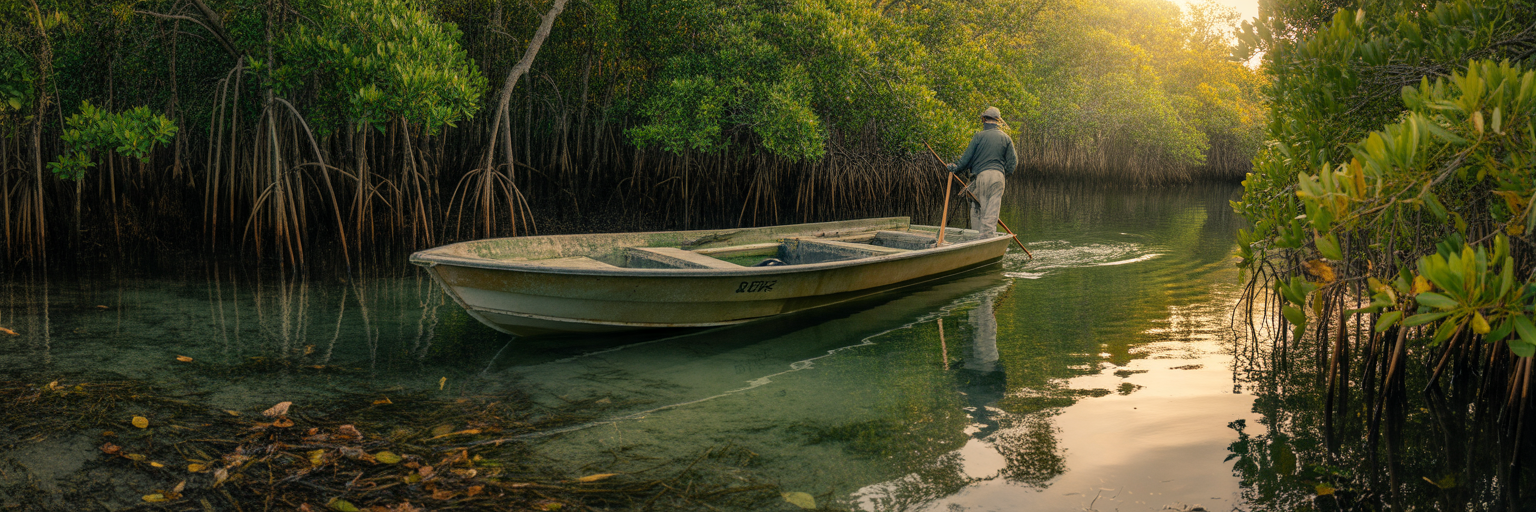
Winter fishing is a chess match, and the tide and wind are powerful pieces on the board. Instead of fighting these forces, a smart angler learns to use them to corner fish and create opportunities. This is where you apply some advanced Florida backcountry fishing tips to turn conditions in your favor.
First, learn to harness negative low tides. After a strong cold front, a stiff north or northeast wind can literally push water out of the backcountry, creating tides that are a foot or more lower than predicted. Do not see this as a day-ruiner. See it as an incredible opportunity. These “blowout” tides drain the flats, forcing every redfish into the nearest deep channel, basin, or hole. The fish have nowhere else to go. It concentrates them in predictable locations, making them much easier to find. Understanding these extreme tidal swings is crucial. For a deeper dive, check out our guide on mastering tide chart reading for kayakers, as the principles are identical.
Next, always be finding the lee shore. The lee is the shoreline that is protected from the wind. Before you even leave the dock, check the forecast. If you have a 15-knot north wind, the south-facing shorelines will be your target. The benefits are huge. The water will be calmer and clearer, making it easier to spot fish. It also makes for a much more comfortable and controllable day of fishing, allowing for precise boat positioning and casting.
Pay close attention to tidal flow in creeks and canals. Redfish use the current to feed efficiently. On an outgoing tide, they will position themselves at the mouths of creeks and drains, waiting for the current to wash baitfish and shrimp out to them. As the tide turns and starts coming in, they will follow that clean, warmer water up onto the adjacent sun-warmed mudflats to look for a meal. The game plan is clear: fish the creek mouths on the outgoing tide and push up onto the flats during the incoming.
Finally, use the wind as your ally for stealth. A dead-calm, glassy day is a sight-fisherman’s nightmare. Your boat, your shadow, and your casting motion are all broadcast for hundreds of feet. A slight 5 to 10-knot ripple on the water, often called a “cat’s paw,” is a gift. It breaks up your boat’s silhouette, camouflages the shadow of your fly line, and masks the small noises that spook fish. You want just enough wind to provide cover, but not so much that it hinders your ability to see fish or make an accurate cast.
High-Percentage Winter Redfish Zones
You know why redfish move and how to read the conditions. Now, it is time to pinpoint exactly where to look. These high-percentage zones are the winter homes for redfish, and knowing their characteristics is key to consistent success, whether you are exploring Mosquito Lagoon redfish spots or planning a day of Tampa Bay winter fishing.
Deeper basins and holes are the primary survival shelters. These are the bunkers where redfish schools ride out the coldest temperatures. Use your nautical charts and depth finder to locate depressions of 4 to 8 feet or more that are situated right next to large, shallow flats. The fish will stack up in these holes, often appearing as a massive blob on your electronics. They will be lethargic, waiting for the sun to warm the adjacent shallows enough for them to move up and feed.
Protected backcountry creeks offer a perfect mix of safety and feeding opportunities. The ideal winter creek is winding, which blocks the wind from multiple directions. It will have a deep-cut outer bend for security and will be lined with shallow mudflats for sunning. The daily pattern is predictable: fish hold in the deeper channel overnight and through the cold morning, then slide up to the shallow, dark-bottomed edges as the afternoon sun warms them.
Do not overlook residential canals and docks. These man-made structures are redfish goldmines in the winter. The canals are dredged deep, providing stable water temperatures insulated from sharp drops. More importantly, the concrete seawalls and dark, creosote-soaked dock pilings absorb immense amounts of solar heat and radiate it into the water. Focus on the sunniest banks in the afternoon and practice skip-casting lures far under the docks where the fish feel safe.
The main event is often on the sun-warmed afternoon flats. This is where you get the classic winter sight-fishing experience. As the day progresses, redfish will move out of their deep holding areas and onto these shallow, dark-bottomed flats to warm up and actively feed. The best flats are always located right next to a deep-water escape route like a channel or hole. This is where you will find fish tailing, pushing wakes, and cruising, offering prime targets for a well-placed cast.
| Zone Type | Primary Function for Fish | Best Time to Fish | Key Angler Tactic |
|---|---|---|---|
| Deeper Basins/Holes | Thermal refuge during coldest periods | Early morning or during a cold snap | Use electronics to find schools; slow, bottom-oriented presentations |
| Protected Creeks | Travel corridors and mixed-use habitat | All day; fish deep in AM, shallow edges in PM | Follow the tide; fish creek mouths on outgoing, flats on incoming |
| Residential Canals | Heated, deep-water sanctuary | Mid-day to afternoon on sunny banks | Skip-cast under docks; focus on sun-exposed seawalls |
| Sun-Warmed Flats | Afternoon feeding grounds | Midday to late afternoon | Sight-fishing; long casts to cruising or tailing fish |
The Art of the Stealthy Approach
You have found the right zone and the water looks perfect. The final piece of the puzzle is execution. Getting within casting range of a school of a hundred spooky redfish without alerting them is an art form. These steps are not suggestions, they are requirements for winter success.
The number one rule is to shut down the outboard. Do it hundreds of feet, if not yards, away from where you expect fish to be. The low-frequency vibration of a combustion engine travels incredible distances through shallow water and will put every fish on high alert. Your final approach must be done in complete silence.
This is where you master the push pole and trolling motor. The push pole is the gold standard for stealth. It is absolutely silent and allows for minute adjustments in boat position. The trolling motor is a faster option but is fraught with peril. The constant start-and-stop whine of a trolling motor is a notorious fish-spooker. If you must use one, keep it on a very low, constant speed. Do not pulse it. This level of stealth is the cornerstone of all successful shallow-water angling. You can refine these techniques further with our complete breakdown of Florida sight fishing redfish tactics.
Next, focus on positioning the boat for success. Use the elements to your advantage. Whenever possible, approach a flat with the sun at your back. This illuminates the water in front of you, making fish easier to see, while simultaneously putting your boat in the fish’s glare. Use the wind to set up a long, silent drift that will carry you into casting range. Proper boat handling is just as important as a good cast.
Finally, you must have a smart casting strategy for schools. The biggest mistake an angler can make is to fire a cast directly into the middle of a school. This creates immediate panic and will blow the entire school off the flat. The correct method is to always cast to the edges of the school. Pick off the fish on the perimeter one by one. This allows you to catch multiple fish from a single school without spooking the main group. Equally important is a soft lure landing. Your lure should land with the quietest entry possible, like a feather, not a rock.
Downsized Tackle for Winter Success
Your presentation must match the mood of the fish. Winter redfish are cold, their metabolism is slow, and they are not willing to waste energy chasing a large, fast-moving meal. They want a small, easy snack that requires minimal effort. This means downsizing your tackle and slowing everything down.
The core principle is that smaller is better. This is the time to put away the big topwater plugs and heavy spoons. Downsize your lures into the 2 to 3 inch range. Pair them with the lightest jig head you can get away with, typically 1/16 to 1/8 ounce. A lighter head creates a slower, more natural sink rate, which keeps the lure in the strike zone longer and gives a lethargic redfish more time to commit.
Some of the best lures for winter redfish are simple and subtle:
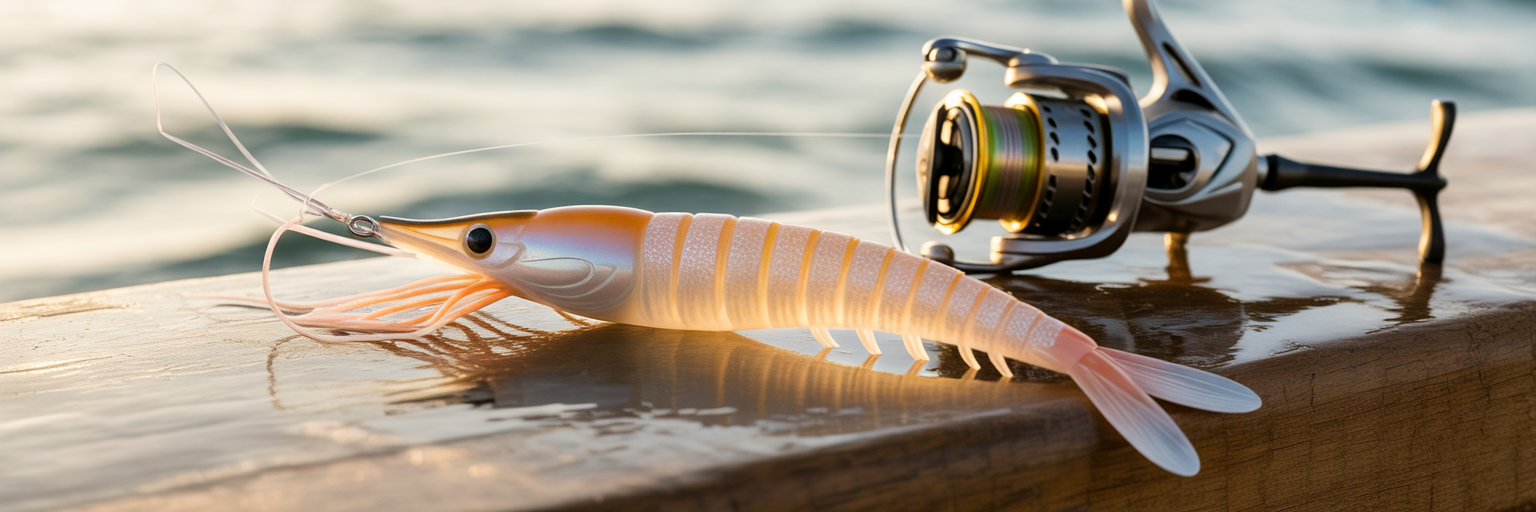
- Small soft-plastic shrimp: This is the universal language of inshore fish. A small shrimp imitation rigged on a light jig head and hopped slowly along the bottom is deadly.
- Small paddle tails: Lures in the 2.5 to 3 inch range in natural colors like new penny, root beer, or motor oil are perfect. The subtle kick of the tail is just enough to get noticed without being intimidating.
- Suspending twitchbaits: Baits like the MirrOlure MirrOdine Mini are exceptional. Their ability to be twitched and then paused, suspending right in the fish’s face, often triggers a strike from a fish that would ignore a moving lure.
Just as important as lure choice is the slow and low retrieve. Forget aggressive pops and fast reeling. Slow everything down. A simple, slow drag across the bottom, a gentle double-twitch followed by a long pause, or a series of small hops are the way to go. The pause is critical. Often, a redfish will follow the lure and pick it up only when it is sitting perfectly still on the bottom.
Do not be afraid to use live and dead bait tactics. When fish are particularly stubborn after a brutal cold front, scent can be the deciding factor. A single live shrimp hooked on a light jig head and left to twitch on the bottom in a deep hole can be irresistible. Alternatively, a small piece of cut ladyfish or mullet soaked on the bottom can draw in fish that are too cold to chase anything. Rigging this bait correctly is crucial to avoid snags, a principle we cover in detail in our guide to live bait rigs that clear Florida turtle grass. Getting your winter setup dialed in is part of a broader strategy, and for a complete look at what you need on the flats, consult our Florida inshore fishing gear guide.
A Game Plan for a Cold-Weather Trip
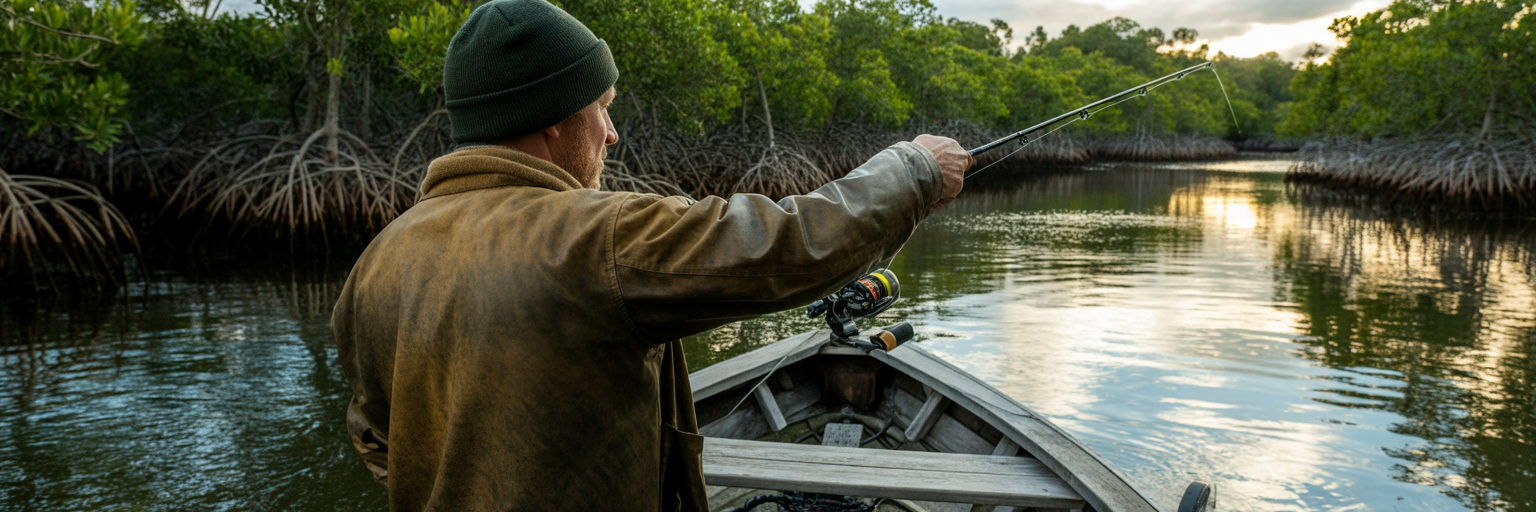
Success in the winter comes from putting all these pieces together into a coherent plan. A great trip is not about luck, it is about executing a strategy from start to finish. Here is a step-by-step game plan for your next cold-weather outing.
- Morning Prep and E-Scouting: Your trip begins the night before. Check the weather forecast, paying close attention to wind speed and direction. Study the tide charts, looking for the timing of the low and high. Use this information to form a plan. With a map or satellite imagery, identify potential lee shorelines, nearby deep holes, and promising sun-warmed flats. Have a primary plan and a backup.
- The Mid-Morning Search: The first few hours after sunrise are often the coldest, and the bite can be slow. This is not the time to pound shallow flats hoping for a bite. Use this period for reconnaissance. Idle into your targeted deep basins and creek channels. Use your electronics to slowly and quietly search for the large, tightly packed schools. The goal is not necessarily to catch them right then, but to locate their holding areas for later in the day.
- The Afternoon Bite Window: This is the main event. As the sun gets higher, it begins to warm the shallow flats you identified in your prep. This is the trigger. Make your move from the deep holding areas to these adjacent sun-baked flats. This is your prime time for sight-fishing. The redfish will become more active, spreading out and beginning to cruise or feed. This is the payoff for your patient morning search.
- Adapting and Overcoming: Remember that no plan is perfect. The fish might not be exactly where you predicted. The wind might be stronger than forecasted. A successful winter angler is adaptable. If the flats are empty, check the adjacent creek mouths. If the wind picks up, tuck into a more protected canal system. Success is about applying these principles to what the day gives you. Trust your knowledge, adapt to the conditions, and you will find your fish.