
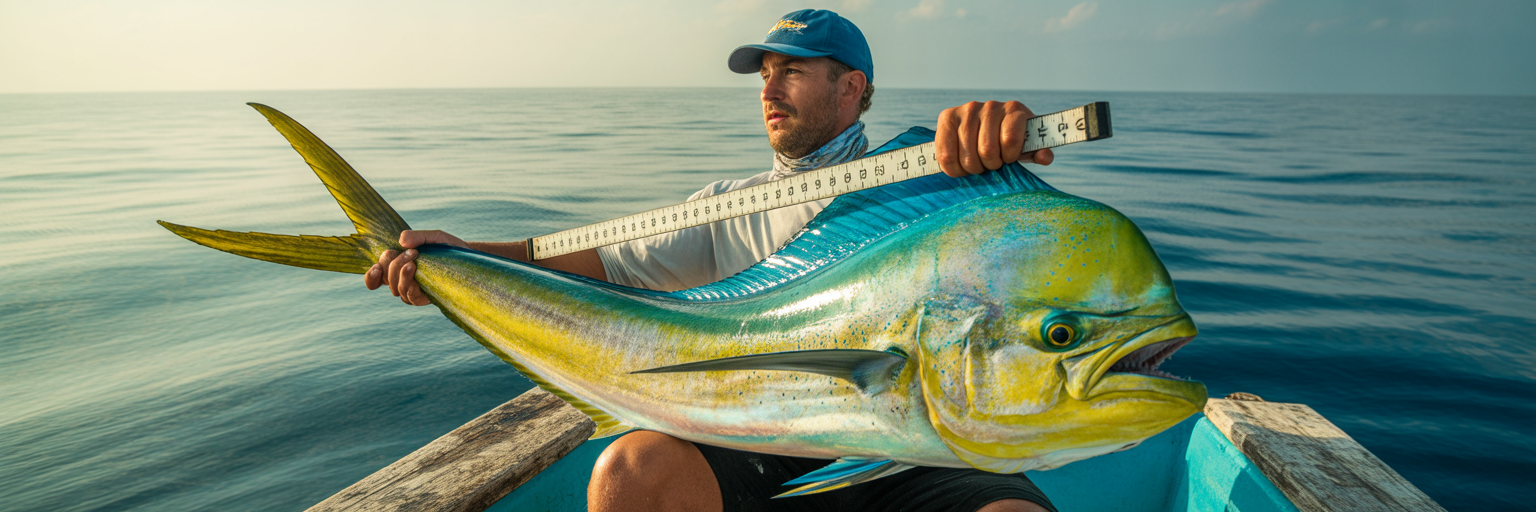
Why Florida Mahi Size Limits Matter
There are few things in saltwater fishing that match the chaos of a hot mahi bite. One minute you are trolling a quiet blue ocean, the next, a lit-up bull explodes on a ballyhoo. The drag screams, the deck erupts, and everyone scrambles for a rod. Getting that first fish to the boat often reveals a whole school of its followers, flashing electric blue and green just under the surface. It is pure adrenaline. But in that excitement, one simple mistake can turn the best day on the water into a very expensive one. Understanding the Florida Mahi Size Limits is not just about following rules, it is about protecting your passion.
The Thrill of the Mahi Run
Every offshore angler lives for these moments. The visual strike, the acrobatic jumps, and the frantic action of bailing fish after fish into the boat is what makes mahi fishing so addictive. They are aggressive, beautiful, and one of the fastest growing fish in the ocean. This rapid growth is what makes their fishery so prolific, but it is also what makes smart management so critical. That thrill we all chase depends on a healthy, sustainable population of fish ready to crash our trolling spreads season after season.
The High Cost of a Simple Mistake
Let’s be direct. Getting caught with an undersized mahi or being over your bag limit is a serious problem. It is not a simple warning. FWC and federal officers can issue fines that run into the hundreds or even thousands of dollars. They have the authority to confiscate your catch, your rods and reels, and in serious cases, even your boat. A violation can also lead to a suspension of your fishing license. Think about the investment you have in your boat, your tackle, and your time. A single mismeasured fish puts all of that at risk. Knowing the regulations is the cheapest insurance you can have.
Regulations as a Tool for Future Fishing
Size and bag limits are not there to punish anglers. They are a science-based tool we all use to ensure there are fish to catch next year and for the next generation. A minimum size limit, like the 20-inch fork length on the Atlantic side, is specifically designed to give most mahi a chance to spawn at least once before they are harvested. By releasing the smaller fish, you are directly contributing to the future of the fishery. It is a shared responsibility that pays off in the form of more and bigger fish down the road.
The Complexity of Florida’s Waters
Here is where it gets tricky for Florida anglers. The rules are not the same everywhere. The regulations for mahi, also known as dolphinfish, change depending on whether you are fishing in the Atlantic or the Gulf of Mexico. They also change based on how far you are from shore. This split between state and federal waters creates an invisible line on the water that every angler must be aware of. This guide will break down exactly what you need to know to stay legal and keep the fun in fishing.
State vs Federal Waters: The Invisible Line
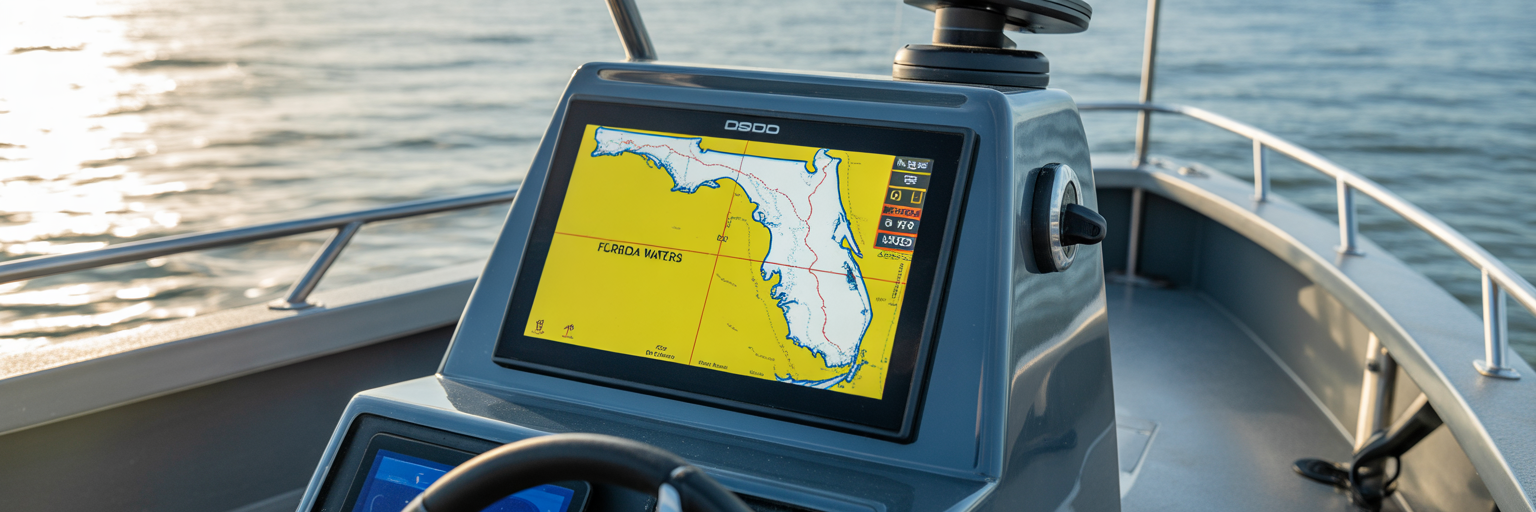
One of the biggest points of confusion for anglers is the difference between state and federal waters. Think of it like driving through a city and crossing into a different county. The speed limit might change, and you are expected to know it. On the water, these jurisdictional lines are invisible, but your GPS knows exactly where they are, and so do law enforcement officers.
Defining the Jurisdictional Boundaries
The dividing line is simple and absolute. In the Atlantic Ocean, Florida state waters extend from the shoreline out to 3 nautical miles. Beyond that 3-mile line, you are in federal waters. In the Gulf of Mexico, the boundary is different. Florida’s state waters in the Gulf extend from the shore out to 9 nautical miles. Anything beyond that is federal territory. These are not suggestions, they are legally defined boundaries with different sets of rules.
Why Two Sets of Rules Exist
The dual system exists because of how fish are managed. The Florida Fish and Wildlife Conservation Commission (FWC) is responsible for managing fisheries within state waters, focusing on populations that are more localized. Federal bodies, primarily NOAA Fisheries, manage highly migratory species like mahi mahi across their entire range. Since mahi travel hundreds of miles across state and even international borders, their management requires a broader, federal approach once they move offshore into federal jurisdiction.
How to Know Where You Are on the Water
There is no excuse for not knowing your location. Every modern boat GPS or chartplotter clearly displays these jurisdictional lines. Before you leave the dock, make it a habit to find the demarcation line on your screen. It is usually a distinct, marked line labeled on your chart. When you are running offshore, pay attention to when you cross it. It is a critical piece of situational awareness, just as important as watching your depth finder or radar.
The Practical Impact on Your Fishing Day
Let’s paint a picture. You leave Palm Beach Inlet and start trolling east. Two miles out, you hook a double header of mahi. You are in state waters, so Atlantic state rules apply. After landing those fish, you continue pushing offshore looking for a weed line. Once you cross that 3-mile mark on your GPS, the rules change instantly. Your bag limit per person is now different. This is where knowing the Atlantic vs Gulf fishing rules is not just theoretical, it is practical. Successful mahi mahi fishing requires you to be aware of your location at all times, as the regulations you must follow can change in the middle of a hot bite.
Atlantic Coast Mahi Regulations: Deep Dive
If you are fishing for mahi anywhere on Florida’s Atlantic coast, from the Keys to Jacksonville, you need to know two distinct sets of rules. The regulations are consistent on one key point, the minimum size, but diverge significantly on how many fish you can keep. Forgetting this difference is a common and costly mistake.
Current Atlantic State Water Rules (Out to 3 Nautical Miles)
When you are fishing inside the 3-nautical-mile line, you are under the jurisdiction of the FWC. The rules are straightforward and designed for the higher fishing pressure found closer to shore.
- Minimum Size: 20 inches to the fork
- Daily Bag Limit: 5 per person
- Daily Vessel Limit: 30 per vessel
Current Federal Waters (South Atlantic) Rules (Beyond 3 Nautical Miles)
Once you cross that 3-mile line, you enter federal waters managed by the South Atlantic Fishery Management Council. The size limit stays the same, but the bag limits increase.
- Minimum Size: 20 inches to the fork
- Daily Bag Limit: 10 per person
- Vessel Limit: Part of a 60-fish aggregate vessel limit for dolphin and wahoo combined.
These federal rules are managed by NOAA Fisheries, and as highlighted by them, anglers can verify the current limits directly on their Atlantic Mahi-Mahi species page.
The ‘Why’ Behind the 20-Inch Limit
That 20-inch minimum size is not an arbitrary number. Scientific studies on mahi mahi growth rates and reproductive maturity show that this size gives the average fish a chance to spawn at least once. By protecting fish until they reach this length, the regulation ensures they can contribute to the next generation of mahi, directly supporting the long-term health of the fishery we all depend on.
Common Scenarios for Atlantic Anglers
Think about a typical trip out of Miami or Stuart. A short run of just 15 to 20 minutes can easily put you into federal waters. If you find a weed line at 4 miles and load the boat, you are operating under the 10-fish-per-person federal limit. But if you find fish on the way back in at the 2-mile mark, you are suddenly back under the 5-fish state limit. This is why knowing both sets of mahi mahi regulations Florida before you ever leave the inlet is absolutely essential.
Gulf Coast Mahi Regulations: A Different Game
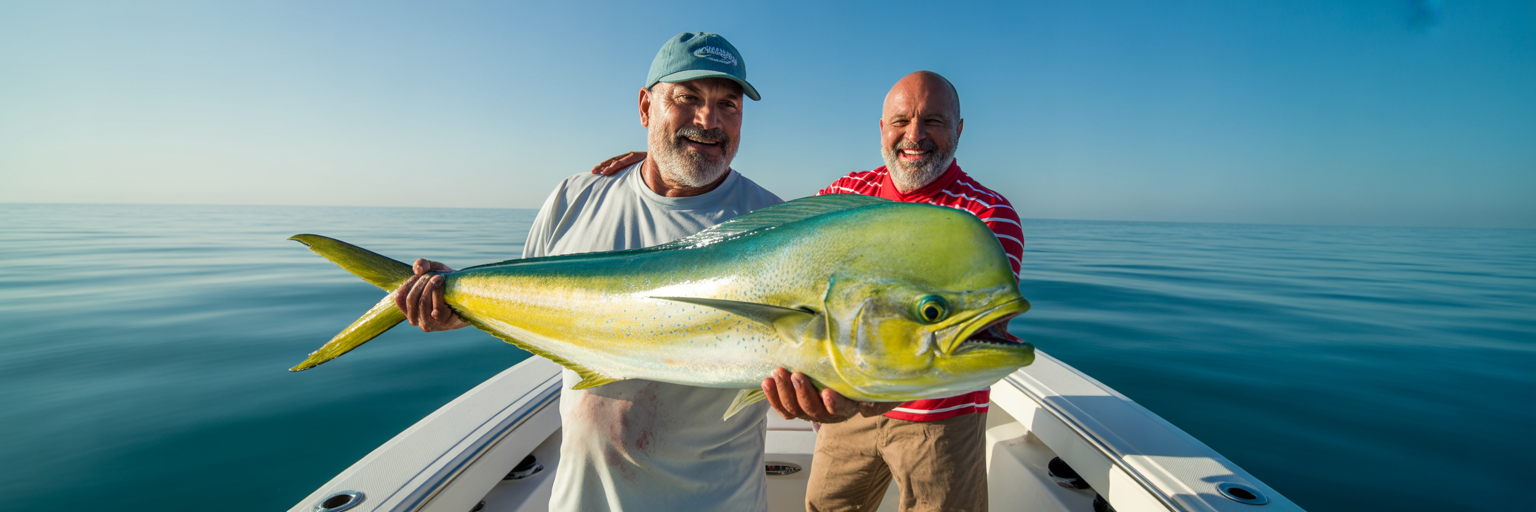
Fishing for mahi in the Gulf of Mexico presents a completely different regulatory landscape compared to the Atlantic. Anglers leaving from ports like Destin, Tampa Bay, or the Gulf side of the Keys need to operate under a different mindset, particularly when it comes to size. For the most current rules on size, bag, and vessel limits, the Florida Fish and Wildlife Conservation Commission (FWC) provides a dedicated page for dolphinfish.
Current Gulf State Water Rules (Out to 9 Nautical Miles)
Within the 9-nautical-mile state water boundary in the Gulf, the rules are simple and focus on bag limits rather than size.
- Minimum Size: None
- Daily Bag Limit: 10 per person
- Daily Vessel Limit: 60 per vessel
Current Federal Waters (Gulf of Mexico) Rules
Currently, the federal regulations for mahi in the Gulf of Mexico mirror the state rules. However, it is critical to remember that federal management can change independently of the FWC. Always verify before your trip, as these rules are not guaranteed to stay aligned forever.
- Minimum Size: None
- Daily Bag Limit: 10 per person
- Daily Vessel Limit: 60 per vessel
Why No Minimum Size in the Gulf?
The absence of a minimum size limit in the Gulf often surprises anglers. This is a management decision based on regional fishery data. It may reflect different population dynamics, lower recreational fishing pressure on mahi compared to the Atlantic, or a different age and growth structure for the fish in this region. It highlights how fishery science is applied differently to manage distinct bodies of water.
The Angler’s Ethical Choice: Releasing ‘Peanuts’
Just because it is legal to keep a 12-inch “peanut” or “shingle” mahi in the Gulf does not mean you should. This is where conservation ethics come into play. A fish that small yields very little meat and offers a minimal fight. Releasing these small, young fish is a smart investment. It allows them to grow into the 20, 30, or even 40-pound bulls and cows that make for a much better fight and provide significantly more fillets for the table. It is a choice that good anglers make for the future of the sport.
| Jurisdiction | Minimum Size Limit | Daily Bag Limit (per person) | Daily Vessel Limit |
|---|---|---|---|
| Atlantic State Waters (Shore to 3 NM) | 20 inches to fork length | 5 | 30 |
| Atlantic Federal Waters (Beyond 3 NM) | 20 inches to fork length | 10 | 60 (aggregate with wahoo) |
| Gulf State Waters (Shore to 9 NM) | None | 10 | 60 |
| Gulf Federal Waters (Beyond 9 NM) | None | 10 | 60 |
Note: This table reflects regulations at the time of writing. Federal regulations can change. Always verify current rules using the FWC Fish Rules app before your trip.
The Only Way to Measure a Mahi: Fork Length
On the Atlantic coast, where a 20-inch minimum size is law, measuring a mahi correctly is not optional. An FWC or Coast Guard officer will not accept “it looked close enough.” They use a specific method, and you should too. Using the wrong technique can lead to an illegal fish in your cooler, even if you thought you were compliant.
Defining Fork Length with No Ambiguity
Florida regulations require measuring mahi to the fork length. This is the single most important detail. Fork length is the distance from the tip of the fish’s closed mouth to the center “V” of the tail fin. It is not the measurement to the longest tip of the tail. Understanding how to measure mahi fork length properly removes all guesswork and ensures you are on the right side of the law.
Step-by-Step Measurement Technique
Follow this exact procedure for every fish that is close to the legal limit. There is no room for error.
- Lay the fish on a flat, rigid surface. The deck or a cooler lid works well.
- Close the fish’s mouth completely and butt its snout up against the zero mark of your measuring device.
- Make sure the fish is lying straight. Do not measure over the curve of its body.
- Pinch the two lobes of the tail fin together. This makes the fork in the center clearly visible.
- Read the measurement at the deepest center point of the fork. If it is 20 inches or more, it is a legal fish in the Atlantic.
Essential Tools for Accurate Measurement
A flexible sewing tape measure has no place on a boat. It can sag or stretch, leading to an inaccurate reading. The best tool is a rigid measuring device. A gunwale-mounted fish ruler sticker is perfect because it provides a flat, stable surface. A dedicated, rigid fish ruler is another excellent option. These tools ensure consistency and accuracy every single time.
Common Measurement Mistakes to Avoid
Anglers get into trouble by making these simple errors. Avoid them at all costs.
- Measuring to the tail tip: This is the most common mistake. Always measure to the fork.
- Measuring over the body: Laying a tape over the fish’s curved side will give you a longer, incorrect measurement.
- An open mouth: The measurement must start from the tip of the snout with the mouth closed.
- Guessing: Never “eyeball” a fish. If it is close, it gets measured. No exceptions.
Your Go-To Tools for Real-Time Regulations
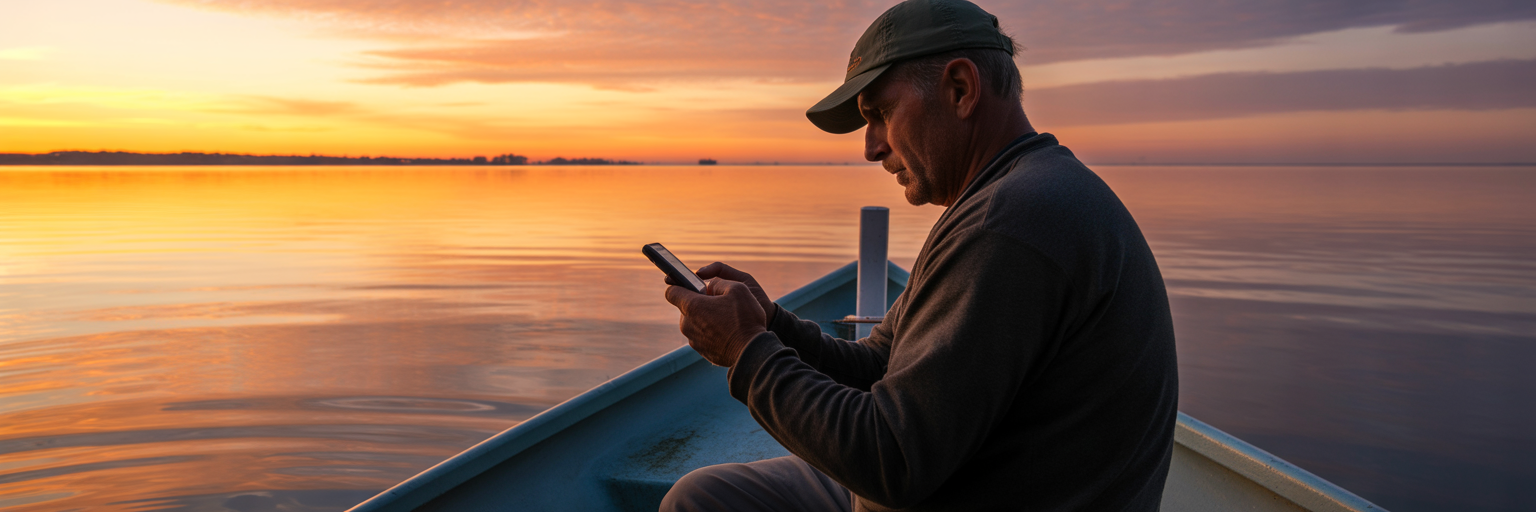
Regulations can and do change. What was legal last season might not be legal today. Relying on memory or “dock talk” is a recipe for a bad day. Fortunately, technology has made it incredibly simple to have the most current rules right at your fingertips. Building a habit of checking the rules is as fundamental as checking your fuel and safety gear.
The FWC Fish Rules App: Your Best Friend Offshore
If you own a smartphone, you should have the official FWC fish rules app. This is the single most valuable tool for staying compliant. It uses your phone’s GPS to show you exactly what regulations apply to your current location, whether you are in state or federal waters. Best of all, it works even when you are offshore and out of cell range. It removes all doubt and is updated directly by the FWC, so you always have the correct information.
The Danger of ‘Dock Talk’ and Old Information
Your buddy at the ramp might be a great fisherman, but he is not an official source for regulations. The same goes for a forum post from two years ago or a screenshot you saved last season. Regulations are amended based on stock assessments and management goals. Telling a game warden that you “heard” the limit was different will not get you out of a ticket. Ignorance is not an excuse.
Official Websites as a Pre-Trip Backup
When you are at home planning your trip and have an internet connection, the official websites are your best source of truth. Bookmark the FWC’s saltwater regulations page and the NOAA Fisheries page for federal rules. A quick five-minute check the night before your trip confirms you have the latest information on bag limits, size limits, and seasons for all your target species.
Building a Pre-Trip Habit
Make checking the regulations a non-negotiable part of your pre-launch checklist. Just like you check the oil, test your bilge pumps, and load ice, you should open the Fish Rules app or check the FWC website. This simple habit ensures you are a responsible, informed angler. It protects the fishery for the future and protects you from costly fines. Properly managing your Florida fishing bag limits starts before you ever cast a line.