
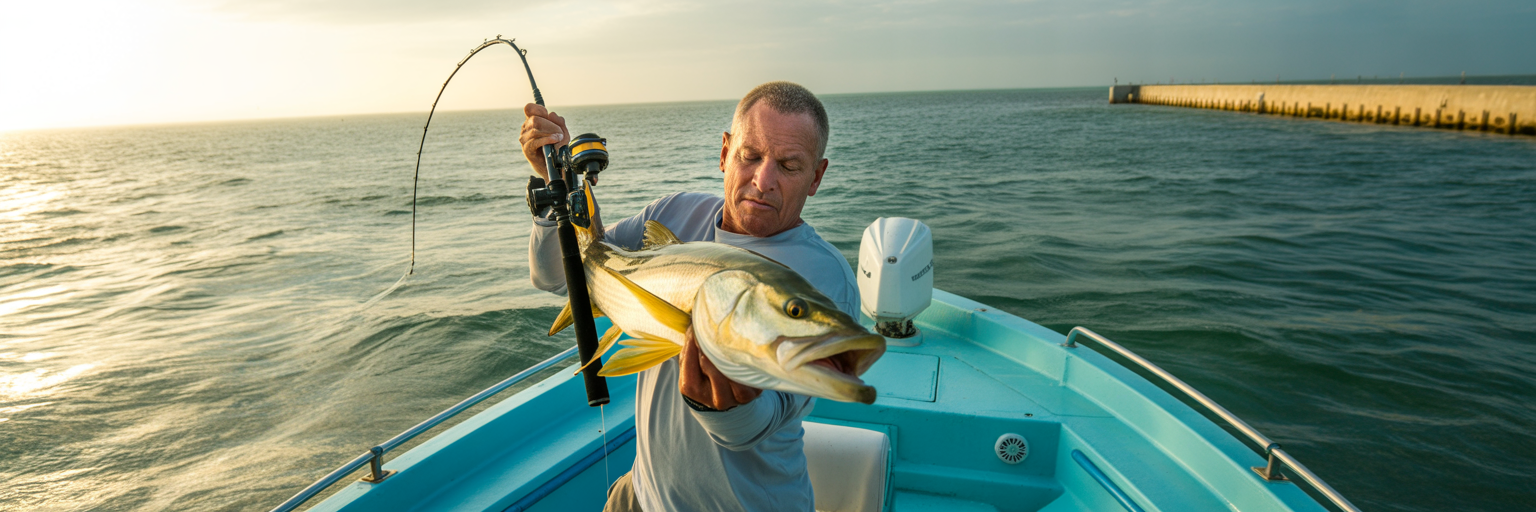
A tide chart tells you when the water will rise and fall. But the fish? They follow the current. For anyone serious about fishing live bait in Florida, understanding this difference is everything. The horizontal movement of water, not just its vertical height, dictates where predators set up and when they feed. This moving water is the engine of our coastal ecosystem, a conveyor belt delivering food to hungry gamefish. Mastering how to present a bait in this flow is the single most important skill for successful saltwater fishing Florida, turning frustrating days into unforgettable catches.
Why Current Is King for Fishing Live Bait in Florida
Let’s get one thing straight: tide and current are not the same. Tide is the vertical rise and fall of the water level. Current is the horizontal flow of water created by that change. Fish care far more about the current. Think of it as a food delivery service. Gamefish like snook, tarpon, and redfish are intelligent predators, not marathon swimmers. They won’t waste energy chasing bait all over the flats or through a pass. Instead, they use structure—bridge pilings, channel ledges, oyster bars, and jetty rocks—as ambush points. They hold in the slack water just off the main flow and wait for the current to bring a meal right to them.
Your job is to think like a predator. Stop staring at the tide app on your phone and start reading the water in front of you. Look for the telltale signs of moving water. You can see the direction and speed of the current in the ripples on the surface, the way water pushes against a channel marker, or the formation of a distinct line where fast and slow water meet. Pay attention to how the wind affects the surface. A strong wind pushing against an outgoing tide can create confused, choppy water that holds bait and attracts fish, even if the current itself seems weak.
The most common mistake anglers make is presenting an unnatural drift. A bait that is dragged against the current, or held static in a moving column of water, looks wrong. It spins, fights the flow, and screams “danger” to any predator watching from below. Your bait must look like it is being helplessly swept along with the flow, just like every other shrimp, crab, or baitfish caught in the current. Your success hinges on making your offering look like an easy meal, and that begins and ends with respecting the power of the current.
Boat Positioning for the Perfect Natural Drift
Once you understand that current is the key, the next question is where to put the boat. The golden rule is simple: always position your boat to allow your bait to drift naturally into the strike zone. This almost always means setting up down-current or to the side of the structure you intend to fish. As noted in a guide on the topic, successful inlet fishing hinges on letting the current do the work for you, which starts with proper boat placement. You can find more on this in these inlet fishing tips.
Setting up a successful drift is a repeatable process:
- Identify your target structure, like a channel drop-off or a bridge piling.
- Motor well past the structure, moving up-current.
- Turn the boat to face into the current and use your motor or trolling motor to hold your position.
- Cast your bait up-current, well ahead of the structure.
- Let the bait drift back naturally, right into the ambush zone where you expect fish to be holding.
Holding your position is critical. A modern trolling motor with a GPS anchor feature like Spot-Lock is the ultimate tool for this job. It allows you to hold your position precisely without noise or hassle. If you’re anchoring, you need to do it correctly. Approach your spot from down-current, motor past it, and drop anchor so the boat settles exactly where you want it. You’ll need enough anchor rope, or scope, to hold firm. A 5:1 or 7:1 ratio of rope to depth is a good starting point. This prevents the boat from swinging and pulling your baits out of the zone.
Remember to fish the edges. The fastest part of the current is not always the most productive. The real action happens on the seams, where fast water meets slower water. These current seams are visible as foam lines or changes in water texture. Position your boat to drift your baits directly along these edges, as this is where predators wait to ambush prey. Learning how to fish strong currents is less about fighting them and more about using their edges to your advantage.
Avoid these common positioning mistakes:
- Anchoring on top of the fish: The noise and shadow will spook every fish on the spot.
- Setting up too close: This leaves no room for the bait to drift naturally and looks forced.
- Using the main engine to hold: The constant starting, stopping, and shifting creates too much noise and disturbance.
- Casting against the current: This is the cardinal sin. Your bait will spin unnaturally and will not get bit.
Dialing In Your Rig for Ripping Currents
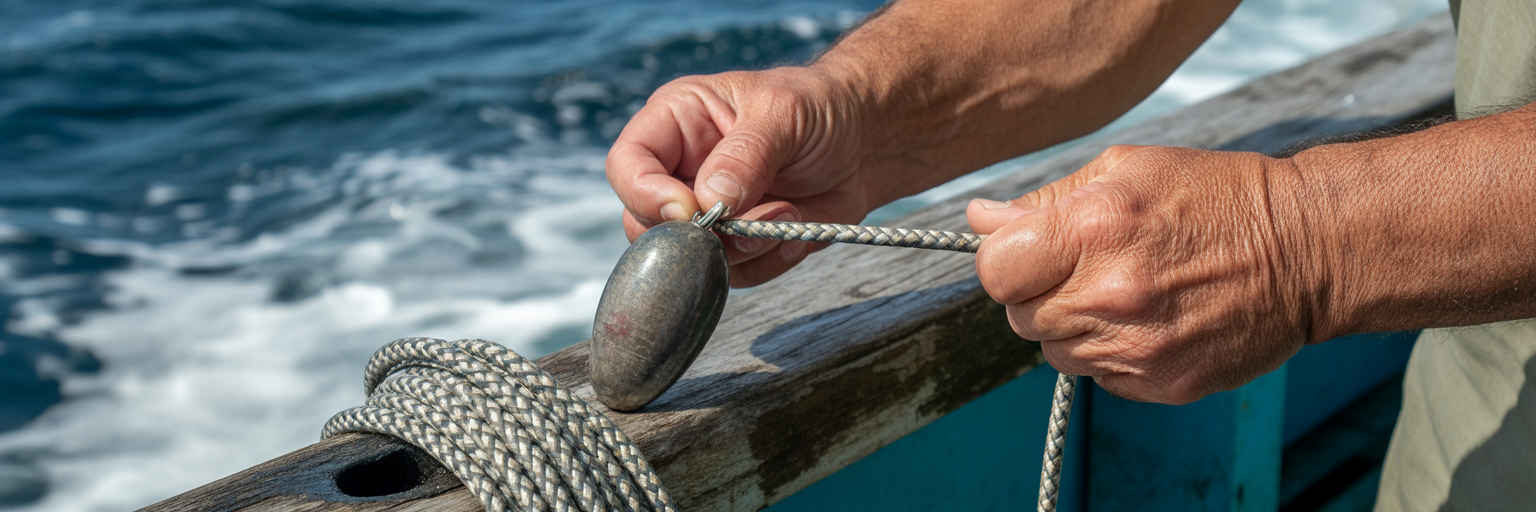
Rigging for current is more art than science, requiring constant adjustment to what the water is telling you. The perfect presentation starts with your terminal tackle. Your goal is to get the bait into the strike zone near the bottom without anchoring it there. You want to feel a light “tick, tick, tick” as your sinker drifts along the bottom, not a heavy, constant drag.
Sinker weight is your primary adjustment. In a mild channel current, a one or two ounce egg sinker might be perfect. But in a deep, fast pass like Boca Grande during a full moon tide, you might need six, eight, or even more ounces just to touch bottom. The key is to use just enough weight to feel the bottom periodically. Too little, and your bait flies by in the mid-water column. Too much, and it plows a trench in the sand. This is one of the most important Florida tide fishing tips you can learn.
Leader length and material are just as critical. A longer fluorocarbon leader of four to six feet gives a lively bait more freedom to swim and look natural in moderate current. In a ripping current, however, a long leader can act like a kite, causing your bait to plane up toward the surface. In these situations, shortening your leader to three or four feet can help keep it down. These fine-tuned adjustments are a core component of successful live bait fishing.
Your main line choice also plays a huge role. Thin-diameter braided line is essential. Its slick, narrow profile cuts through the water with far less resistance than thick monofilament. This means you can use less weight, feel the bottom more effectively, and detect the subtlest bites. For most inshore work, 20 to 30 pound braid is ideal. For heavy-duty inlet and offshore fishing, step up to 50 or even 80 pound braid.
Finally, consider your hook. A slightly heavier gauge hook can add just enough weight to help a frisky bait get down. Circle hooks are fantastic for solid, corner-of-the-mouth hooksets when fish are running with the bait. J-hooks can sometimes give you an edge when the bite is soft and you need to set the hook quickly. The right combination of these elements is what separates a lucky catch from consistent success.
| Current Speed | Typical Sinker Weight | Recommended Leader Length | Main Line Focus |
|---|---|---|---|
| Slow / Weak | 1/2 – 1 oz | 5-6 ft | Stealth and natural action |
| Moderate | 2 – 4 oz | 4-5 ft | Balance between bottom contact and bait freedom |
| Fast / Ripping | 4 – 8+ oz | 3-4 ft | Cutting through water and holding bottom |
| Slack Water | Minimal to no weight | As needed for presentation | Precision drops into structure |
Note: These are starting points. Always adjust your weight based on depth and the specific conditions you observe. The goal is to feel the bottom periodically, not anchor your bait to it.
Choosing the Right Live Bait for the Job
Not all live baits are created equal, especially when you’re dealing with a hard-running tide. The bait you choose must match the conditions and the appetite of your target species. Putting the wrong bait on the hook is like trying to paddle a canoe in a hurricane; it just will not work. When it comes to fishing live bait in Florida‘s currents, your choice matters immensely.
Think of your baits in two main categories:
- Hardy Baits for Strong Currents: When the water is moving fast, you need a bait that can handle it. Pinfish, croakers, large threadfin herring, and blue runners are excellent choices. Their durability and strong swimming ability allow them to present a substantial meal that a big fish will expend energy to eat. They do not wash out easily and send out strong vibrations that predators can home in on.
- Lighter Baits for Slower Tides: In slower currents or during the tide shoulders, more delicate baits can be deadly. Whitebait (pilchards) and live shrimp have a subtle, natural action that can be irresistible. In a ripping tide, however, they would be quickly exhausted, spin unnaturally, or be difficult for fish to catch. Save these prime baits for when the conditions allow them to shine.
Beyond bait type, you must “match the hatch.” This means using a bait that mimics what the fish are actively feeding on. Pay attention to the baitfish you see in the water. If you’re targeting big tarpon in a pass, a frisky, hand-sized mullet or ladyfish is a perfect offering. If you’re drifting a channel edge for mangrove snapper, a small, lively shrimp or pilchard is a much better choice. The size of the meal should match the size of the predator’s mouth and its current feeding preference.
How you hook the bait is the final piece of the puzzle. This small detail is what separates beginners from experts. To get a natural drift, hook a pilchard or threadfin through the clear cartilage in its nose. This encourages it to swim head-first into the current. When using a shrimp, hook it through the horn on its head, being careful to avoid the dark spot which is the brain. This allows it to kick and drift tail-first, just as it would naturally. For bottom-oriented baits like pinfish or croakers, hooking them just behind the dorsal fin encourages them to swim down toward the bottom. These details trigger strikes.
Timing the Tide Shoulders for Peak Action
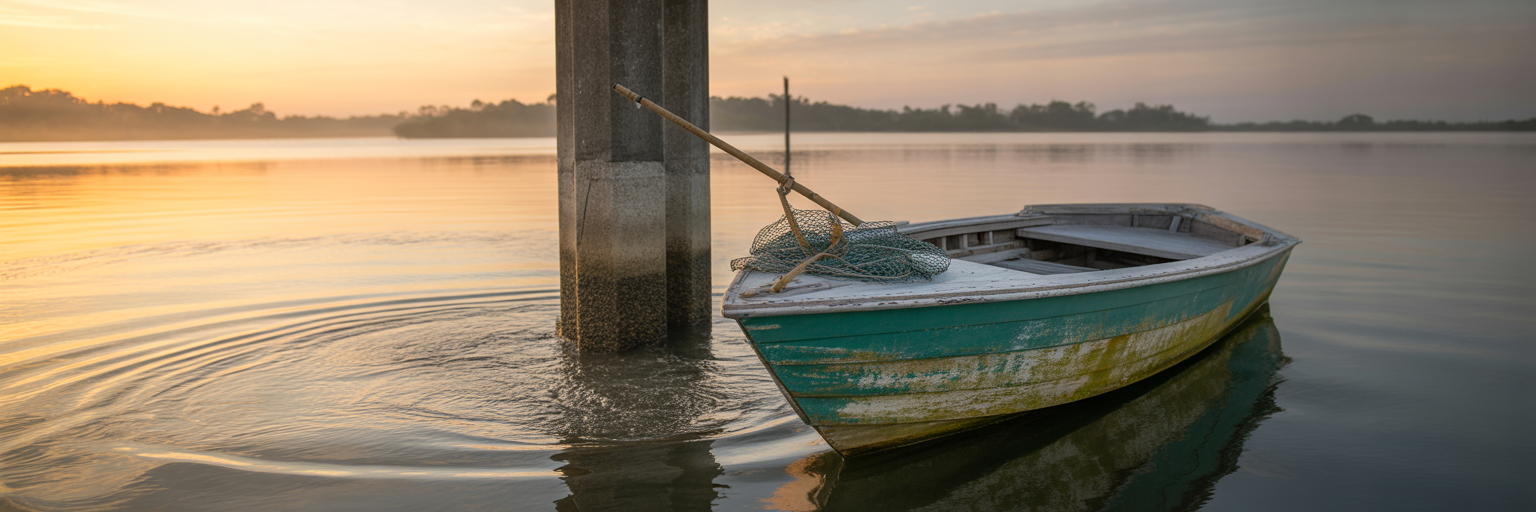
You can have the perfect boat position, rig, and bait, but if your timing is off, you will be fishing empty water. The best action rarely happens at the peak of high or low tide. Instead, the magic happens on the “tide shoulders.” This is the sweet spot when the current is moving with enough velocity to trigger a strong feeding response but is not so fast that it becomes impossible to present a bait effectively.
In a typical six-hour tide cycle, the prime shoulders occur during the second and third hours of the incoming or outgoing tide, and again during the fifth and sixth hours as the tide begins to slow before going slack. This is when the current is established and predators are actively positioned to feed. The first hour of a new tide is often slow as the water is just beginning to gain momentum. The bite will build as the flow increases.
Let’s make this practical. Imagine you check your chart and see that high tide is at 1:00 PM and the previous low tide was at 7:00 AM. This is a six-hour incoming tide. The current will be weak around 7:00 AM. The prime incoming tide shoulder to target would be from roughly 9:00 AM to 11:00 AM. Likewise, the outgoing tide will start moving after 1:00 PM. The prime outgoing shoulder would be from about 2:00 PM to 4:00 PM. Planning your trip to be on the water and fishing during these windows dramatically increases your odds of success.
As an advanced tactic, try to align these tide shoulders with solunar feeding periods. Solunar charts predict peak wildlife activity based on the moon’s position. When a major or minor feeding period overlaps with a strong, fishable tide shoulder, the results can be spectacular. This is when you experience those epic, concentrated bites where it feels like every fish in the area is feeding at once. Stacking these odds in your favor is the hallmark of a well-planned trip.
The Underestimated Power of Slack Tide
Most anglers pack it in when the current dies. They believe the myth: “no current, no fish.” While the bite certainly slows for current-dependent species, slack tide is the absolute prime time for targeting some of Florida’s largest and most challenging bottom fish. This brief window of calm is an opportunity, not a dead zone.
The reason is simple physics. A big gag grouper, cubera snapper, or goliath grouper cannot easily leave its home in a wreck or deep ledge to chase a bait in a four-knot current. They would burn far too much energy. The short period of slack water, lasting from 30 to 60 minutes, is their chance to move out from their lairs and actively hunt without fighting the intense flow. This is often the only time these trophy-class fish are accessible and willing to feed.
The tactic for fishing slack tide is completely different from drift fishing. This is a game of precision. You can now position your boat directly over a wreck, piling, or ledge that was unfishable just minutes before. The technique is to drop a large, appealing bait—like a whole blue runner or a big live crab—vertically into a specific zone. You need heavy tackle for this. The strike is often immediate, violent, and right next to sharp, line-shredding structure. There is no time to play the fish; you have to turn its head and pull.
This same principle applies to the “turn of the tide” bite. This is the 15 to 30 minute window just before slack and just as the new current begins to move. This change often triggers a concentrated feeding frenzy. Predators take advantage of baitfish that are disoriented by the shifting flow. This is a key time for tarpon fishing in inlets, as they often feed aggressively right as the tide turns. As experts from Salt Strong note, catching giant redfish in inlets often involves focusing on these tide turns when fish reposition themselves to feed. You can learn more from these expert tips on catching giant redfish. Do not make the mistake of leaving early; this short period can be the most intense of the entire day.
Reading the Water for Hidden Strike Zones
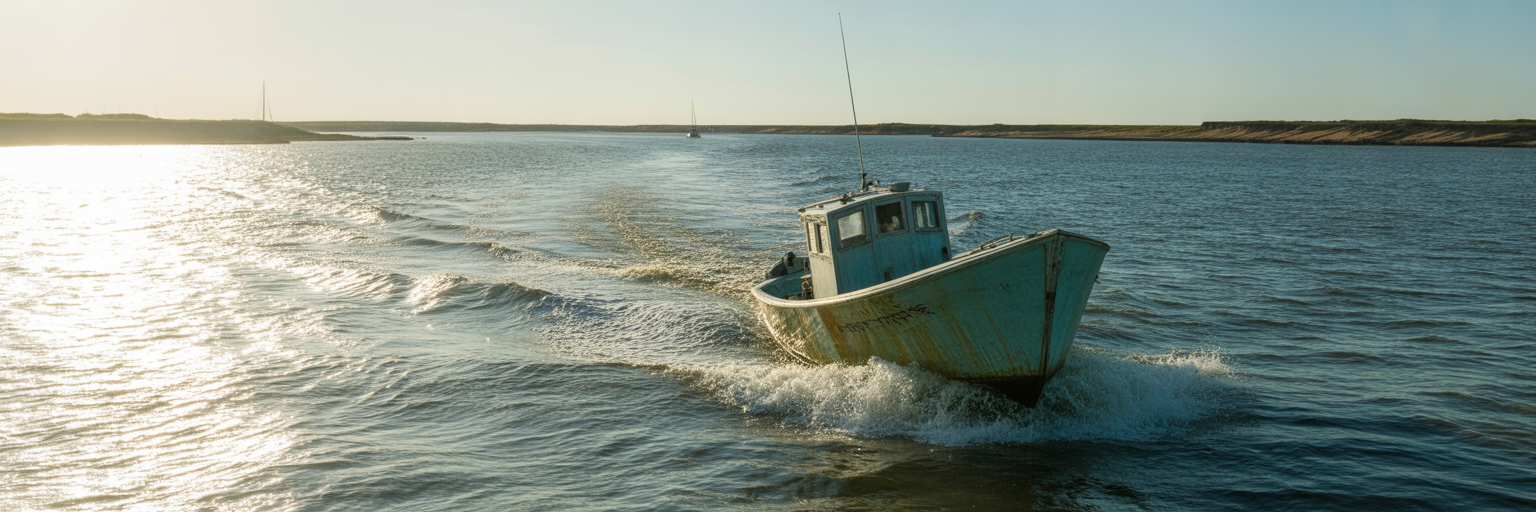
The best anglers can read the surface of the water like a map. They see subtle clues that reveal the underwater topography and pinpoint exactly where fish will be holding. This is a skill developed over thousands of hours on the water, but you can accelerate your learning by knowing what to look for. This is not just about seeing the current; it is about understanding what it is doing and why.
Focus on these key visual cues:
Fishing Current Seams: A current seam is the visible line that forms between fast-moving and slow-moving water. It often collects foam, grass, or debris, making it easy to spot. This is a natural buffet line. Predators hold in the slower water, conserving energy while watching the faster “conveyor belt” for an easy meal to drift by. Position your boat so your bait drifts perfectly along this edge. It is one of the highest-percentage strike zones you can find.
Finding Fish in Eddies: An eddy is a pocket of calm or swirling water that forms behind an obstruction, such as a jetty point, a wide bridge piling, or a point of land. The main current flows around the obstruction, creating a calm zone where baitfish get trapped. This is a natural feeding station. The correct way to fish an eddy is to cast your bait *past* it, into the faster current, and let the flow sweep your offering naturally into the calm pocket. A predator waiting there will see it as a disoriented baitfish being served up on a platter.
Decoding ‘Boils’ and ‘Rips’: These are more subtle but equally important signs. A “boil” is an upwelling of water that looks like the surface is bubbling. This indicates an underwater obstruction like a rock pile, a wreck, or a sharp ledge that is forcing water upward. A “rip” is a line of turbulent, choppy water where two currents collide or where current flows over a shallow bar. Both of these signs scream “structure” and “ambush point.”
The final step is to combine these old-school water-reading skills with modern technology. Use your sonar to confirm what your eyes are telling you. You see that boil on the surface 50 yards ahead? Motor over it slowly and look at your fishfinder. You will likely see the rock pile or ledge 20 feet down that is causing it, and you might just mark the fish holding on it. This combination of visual observation and electronic confirmation is what turns a good angler into a great one.
Applying These Tactics in Florida’s Top Inlets
Theory is great, but results happen on the water. Let’s apply these principles to some of Florida’s most famous and productive tidal fisheries. Each location has its own personality, but the core tactics of current, position, and presentation remain the same.
Tampa Bay Passes (Pass-a-Grille, Egmont Channel)
The big passes connecting Tampa Bay to the Gulf are legendary tarpon and snook highways. The classic strategy here is to fish the strong outgoing tides, especially during the spring and summer tarpon migration. Set up your boat down-current of the main shipping channel drop-offs and drift live crabs, pinfish, or threadfins along the ledge. You will need to adjust your sinker weight constantly as the current speed changes, but a natural drift is everything. The fish are holding on that ledge, waiting for the tide to bring them a meal.
East Coast Inlets (Jupiter, Sebastian)
The inlets on Florida’s Atlantic coast, like Jupiter and Sebastian, are known for their notoriously fast currents. This is big-tackle territory. You will need heavier weights, often four to six ounces or more, and stout gear to handle the powerful snook, jacks, and tarpon that call these places home. The key here is timing the tide shoulders. Fishing the peak flow is nearly impossible. Instead, focus on the second and third hours of the tide, presenting large live baits like mullet or pinfish close to the jetty rocks. This is the classic scenario for live bait fishing for snook, as they use the rocks as perfect ambush points.
The Florida Keys Bridges (Bahia Honda, Seven Mile)
The bridges of the Florida Keys are unique structures that create incredible fishing opportunities. The famous nighttime outgoing tide for tarpon at Bahia Honda and the Seven Mile Bridge is a perfect example of using structure. Anglers use the bridge shadow lines as ambush points, drifting live mullet or crabs through the darkness. During the day, the strategy shifts. Anchor up-current of a bridge piling, drop back a chum bag, and drift live shrimp or pinfish back to the mangrove snapper, yellowtail, and grouper holding tight to the structure.
Panhandle Passes (Destin, Pensacola)
The deep, sandy passes of the Florida Panhandle offer a different kind of challenge. The primary targets here are often bull redfish and flounder. This fishery often requires a lighter approach. Drifting live shrimp, bull minnows, or menhaden through the sandy troughs and holes carved by the current is a deadly technique. Use your depth finder to locate these depressions where fish congregate to escape the main flow. A light weight that allows the bait to tumble naturally along the bottom is often the ticket to getting bit.