
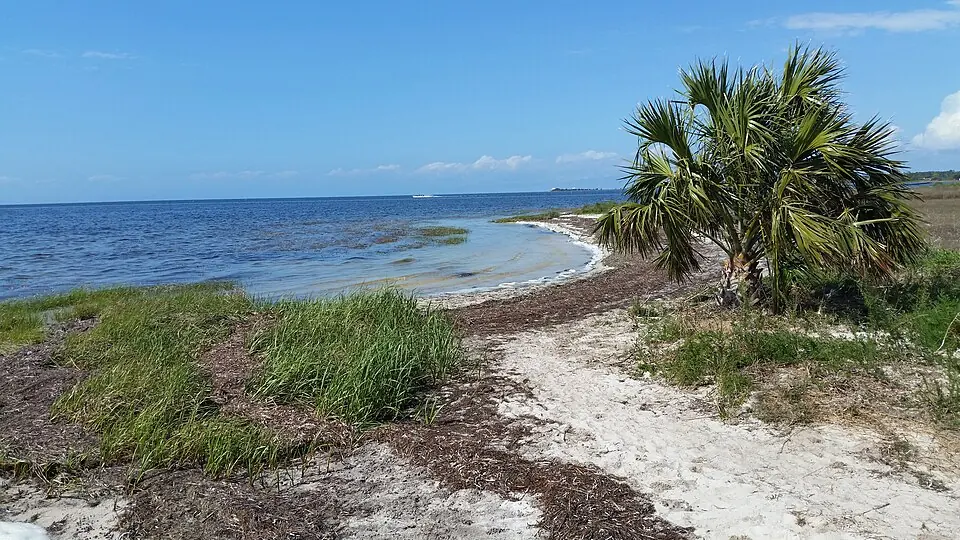
Keaton Beach is a small coastal community with a big expanse of shallow water beyond it. Shore fishing here is not the same as booking a boat to the offshore grounds. Plan around the water you can reach from an open public area, and pack for redfish and trout habitat rather than grouper.
Featured image: Keaton Beach coast on Florida's Big Bend. Photograph dated 2017. Current access may differ. Credit: DiscoverTaylor. CC BY-SA 4.0. Image source. Resized and converted to WebP.
Separate Hodges Park from the boat-launch area
The beach at Hodges Park and the Coastal Park launch area serve different purposes. Check Taylor County's current park information before relying on a pier, restroom or particular access. Storm recovery and improvement work can change what is usable. An older photo is useful for context, not a facility guarantee.
Keep hooks out of swimming space and boat lanes. A launch ramp is not an extra fishing platform when the beach is busy. If shore access leaves no safe casting room, use another open location or plan a properly equipped boat trip.
Find enough water over useful habitat
Redfish and spotted seatrout are natural targets on the surrounding shallow coast. From shore, your opportunities depend on whether grass edges, sand openings or a drain are within range. Do not confuse a dark grass patch with a deep hole.
Try a small paddletail above the bottom. Reduce jig weight when it digs into grass. A shrimp under a float can be easier to manage over uneven depth. Let the float drift through a clear lane, then retrieve before it enters boat traffic or another angler's line.
Keep the outfit portable
A 7-foot medium spinning rod, 3000 reel, 15 lb braid and 20-25 lb leader cover modest inshore work. Bring light jig heads, weedless hooks and a few spare soft plastics. Leave heavy surf lead behind unless you have a specific, suitable place to use it.
If keeping fish, have ice ready before the first cast and confirm the current FWC rules for the species and region. Do not turn an uncertain identification into a guess in the cooler. A quick photograph and release are better when you cannot identify a catch confidently.
Do not follow retreating water across the flat
Low tide may leave poor shore options. Wind can make that worse. Return with more water rather than walking into unfamiliar mud. Hagen's Cove offers another shallow-coast setting nearby, but it requires the same care with water level, footing and weather.
A compact packing list
| Pack | Starting choice |
|---|---|
| Rod and reel | 7-foot medium spinning rod; 2500-3000 reel |
| Main line / leader | 10-15 lb braid; 20-25 lb leader |
| First presentation | Shrimp under a float or small paddletail |
| Bottom contact | Keep bait and lures above grass and shell |
Fish to recognize
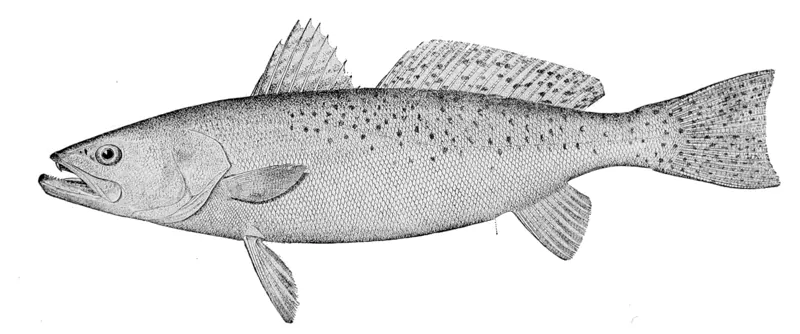
These references help identify possible targets in the habitats discussed above. They do not document catches at this beach or guarantee that a fish is present on your visit.

Plan another nearby fishing stop
- Hagen's Cove Fishing: Shallow Flats Near Steinhatchee
- Atsena Otie Key Fishing: A Cedar Key Island Trip
- Cedar Key Beach Fishing: City Park and Pier Options
Access research checked September 24, 2026, using Visit Natural North Florida. Recheck closures and posted rules before traveling. Confirm your fishing license and current species-specific harvest rules with FWC before keeping fish.