
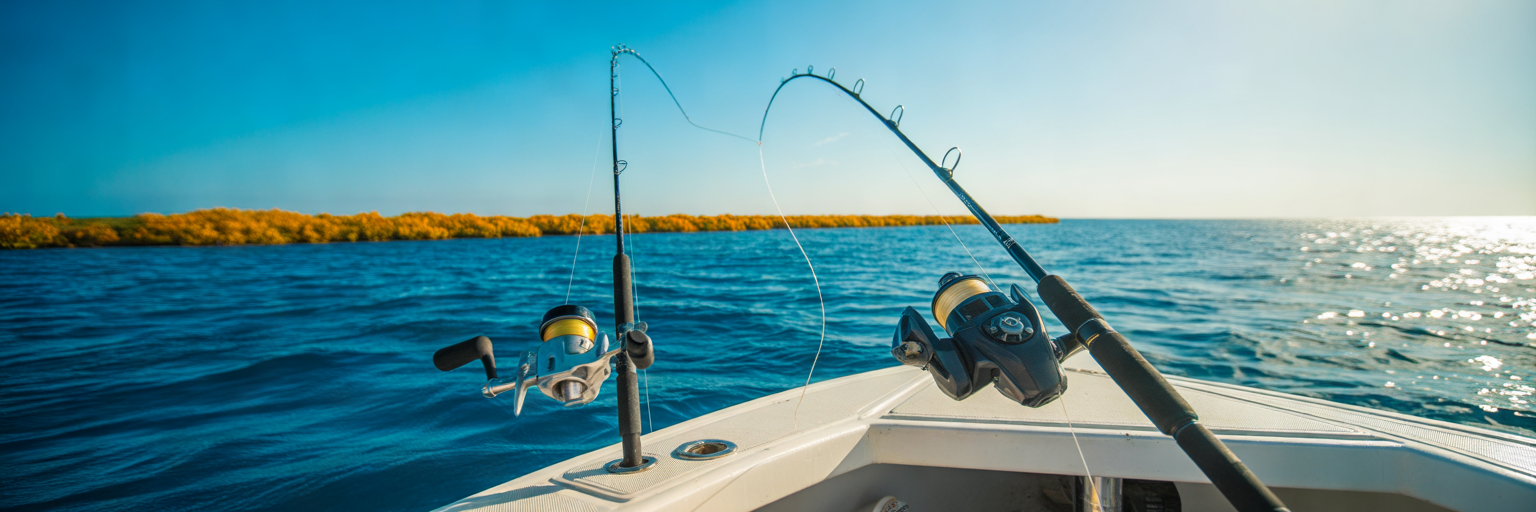
Mahi mahi can reach burst speeds exceeding 50 knots during an offshore blitz, turning any minor flaw in your terminal tackle into an instant break off. Dialing in your braided line setup for mahi ensures compact center console reels hold the yardage and shock resistance needed to put those fish on the deck.
Why Your Braided Line Setup for Mahi Matters on a Small Boat
Running a 20 to 26 foot center console out of Palm Beach, Islamorada, or Destin means managing every square inch of deck space. Gunwale rod holders and T top rocket launchers fill up fast when you bring ice, pitch baits, and safety gear on board. You simply do not have the storage capacity to carry separate single purpose outfits for every possible offshore scenario.
Deck Realities of Running a Compact Center Console
Because rod storage is tight, every combo on a small boat must pull double duty. A crew might spend two hours pulling ballyhoo along a current edge, then immediately drop back to pitch live pilchards or cut squid when a pack of fish lights up behind the transom. As detailed in our tactical overview of mahi mahi fishing, transitioning smoothly between trolling weed lines and sight casting to schooling fish separates a full fishbox from a frustrating boat ride.
Checking local offshore condition reports on HookCurrent before leaving the dock helps you read weed density, current edges, and wind speeds so you know exactly which rods to rack in the T top. When you build an adaptable offshore fishing line setup Florida small boat crews can trust, your tackle handles fast transitions without cluttering the cockpit.
Line Capacity vs. Zero-Stretch Physics in a Gulf Stream Chop
Traditional monofilament eats up spool volume quickly. To get enough mono yardage to stop a heavy fish on a long run, you have to step up to bulky, heavy conventional reels that wear out your crew during a walk around fight. Modern polyethylene line solves that capacity problem immediately.
As we break down in our complete angler’s guide to Florida saltwater braided fishing line, the ultra thin diameter of woven fibers lets you pack 300 to 400 yards onto mid sized spinning and compact conventional frames. That reserve yardage gives you the stopping power to turn a solitary bull mahi without lugging oversized 50 wide reels around a cramped bow.
However, packing zero stretch line onto compact reels introduces mechanical challenges when your hull is pitching in a three foot Gulf Stream chop. Near zero elongation gives you instant hooksets when pitching baits at long range because energy transfers straight from your rod tip to the hook point. Yet that same lack of stretch punishes heavy handed drag settings or weak terminal connections when a green fish surges sideways right at the boat.
When the bow rises on a swell and a twenty pound gaffer kicks toward the engines, something in the system has to absorb that sudden spike in load. Your braided line setup for mahi must balance thin diameter capacity with smart shock absorption so hooks stay pinned all the way to the gaff.
Selecting Braid Strength for Schoolies, Gaffers, and Bulls
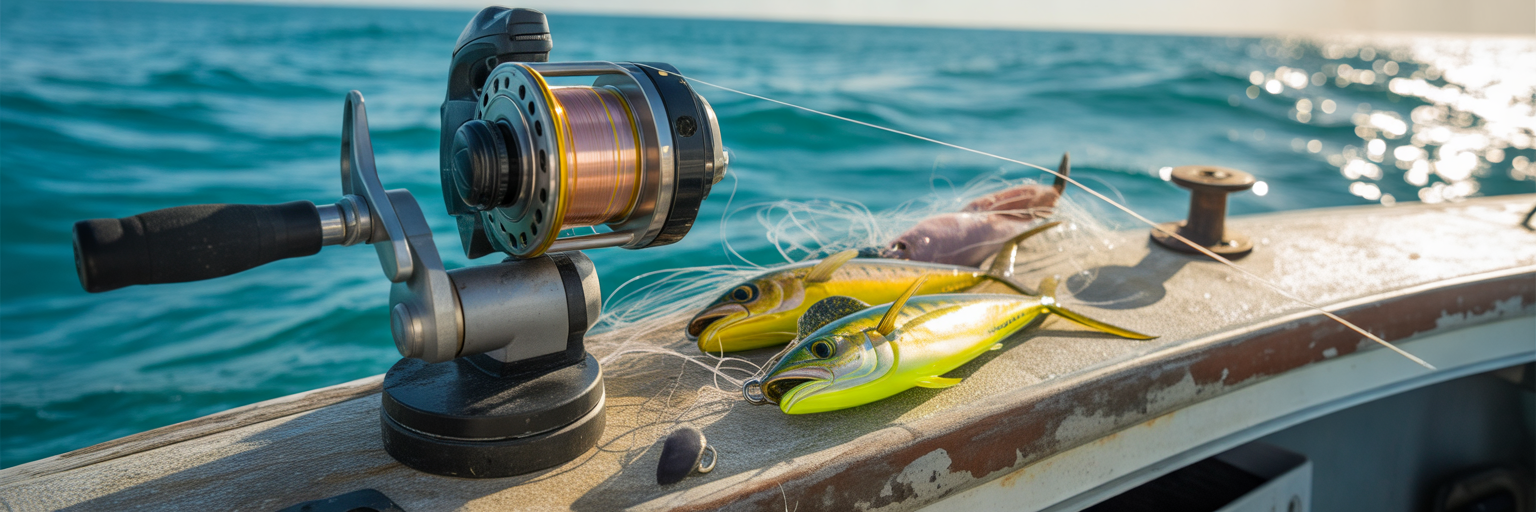
Choosing the right breaking strength comes down to matching line diameter to water resistance, wind velocity, and the physical limits of your rods and reels. Overloading a light outfit with heavy rope ruins bait presentation, while under gunning a trolling reel invites failure under sustained boat speed.
The 20 to 30-Pound Sweet Spot for Pitch and Spinning Rods
For 4000 to 6000 size spinning reels racked as pitch rods, 20 to 30 pound braided line is the proven sweet spot. When you pull up to a scattered patch of sargassum in a 15 knot east wind, a weightless live pilchard or a half ounce bucktail will not cast far if it is dragging thick line behind it. Thin 20 pound line slices through crosswinds, letting you drop a bait right on the nose of a cruising gaffer fifty yards upwind of the hull.
That slim profile also cuts down on water drag once the bait hits the surface. When you are drifting squid chunks back into the slick, heavy currents grab thick line and create an unnatural belly that pulls the bait away from the natural drift. Running 20 or 30 pound braid lets the bait sink naturally while retaining the crisp sensitivity needed to feel a hesitant fish pick up a chunk before you engage the bail.
Stepping Up to 50 to 80-Pound Braid on Trolling Outfits
Conventional trolling outfits face a completely different set of physical forces. Pulling chuggers, slant face resin heads, planers, and small dredges at seven to nine knots generates constant hydrodynamic load. Stepping up to 50 to 80 pound braid on your trolling spread gives you the structural margin to absorb brutal high speed strikes while dragging heavy lures through floating grass. You can pair these line ratings directly with the lure profiles covered in our guide to mastering trolling lures for mahi to keep your spread tracking true in rough water.
Never mismatch these heavy trolling poundages onto light pitch rods or under built reel frames. Loading 65 pound braid onto a light tip spinning rod shifts the entire mechanical load onto the equipment. If a big fish surges while the drag is locked down on heavy line, you will blow out anti reverse bearings, snap high modulus graphite blanks, or rip hooks right out of a mahi’s mouth during violent boatside jumps.
4-Carrier vs. 8-Carrier Weaves Around Heavy Sargassum
Finding the best braid for mahi fishing also requires choosing between 4 carrier and 8 carrier weave constructions. An 8 carrier line weaves eight individual fibers into a tight, round, and smooth profile. It flies through spinning rod guides quietly and maximizes casting distance on precision reels like a Shimano Stella SW 6000XG, making it the top choice for open water pitch rods.
Conversely, 4 carrier braid uses four thicker strands that create a slightly coarser, textured surface. When your line wraps around thick golden sargassum stalks or rubs against floating bamboo, 4 carrier braid acts like a micro saw, slicing right through the vegetation while resisting fiber fraying. For a deeper comparison of how carrier counts hold up in local currents, review our breakdown on dialing in braid for Florida mahi fishing before filling your spools.
Use the specification matrix below to standardize your pitch rods and trolling spread before clearing the inlet.
| Target Class & Tactic | Braid Rating | Weave Type | Reel Size Class | Target Drag Setting |
|---|---|---|---|---|
| Schoolie Pitching (Live Bait & Jigs) | 20 lb | 8-Carrier Smooth | 4000 to 5000 Spinning | 5 to 7 lbs |
| Gaffer Casting & Heavy Chunking | 30 lb | 8-Carrier or 4-Carrier | 6000 to 8000 Spinning | 8 to 10 lbs |
| Standard Weedline Trolling | 50 to 65 lb | 4-Carrier Abrasion Resistant | 20 to 30 Conventional | 12 to 16 lbs |
| High-Speed & Planer Trolling for Bulls | 80 lb | 4-Carrier or Hollow Core | 30 Wide to 50 Compact | 18 to 24 lbs |
Spooling Mechanics and Backing Strategies That Prevent Slippage
Even the highest grade offshore line fails if the foundation on the reel arbor is loose. Slick polyethylene fibers have zero natural elasticity, meaning they cannot stretch and grip a bare anodized aluminum spool on their own.
Monofilament Base Layers vs. Waterproof Spool Tape
When a reel sits in a sunny T top rocket launcher from chilly dawn until midday, the aluminum spool expands and contracts slightly. If you tie braid directly to bare metal, heavy offshore drag pressure will cause the entire cylinder of line to spin freely around the arbor. A slipped spool feels identical to a blown drag washer, leaving you unable to gain an inch of line while a fish swims away.
You can lock the line pack down using one of two proven methods. On conventional trolling reels and larger 8000 class spinners, wind on a 20 to 30 yard base layer of monofilament backing first. Nylon mono stretches as you wind it under tension, clamping down tightly on the aluminum arbor and giving the subsequent braid layers a soft bed to bite into.
On smaller 4000 to 6000 spinning reels where preserving every yard of line capacity is critical, skip the mono base and apply a single wrap of waterproof adhesive spool tape or heavy electrical tape directly to the arbor. Tie your arbor knot over the tape so the first coils crush into the adhesive backing and lock the pack in place.
Tension Packing and Optimal Spool Fill Levels
Once anchored, the braid must go onto the reel under heavy, uniform resistance. Winding line onto a spool with loose finger tension leaves microscopic air gaps between the inner coils. When a big bull mahi sounds vertically under the boat and pulls fifteen pounds of drag, the top layers of braid will slice straight down into that spongy lower pack, wedging the line tight and snapping it off instantly.
Always pack your spools under 8 to 12 pounds of steady winding resistance until the line bed feels as hard as cured oak when you press it with your thumb. On spinning reels, stop filling at roughly one eighth of an inch below the beveled spool lip. Filling past that bevel causes multiple coils to spill over the edge at once during a crosswind cast, while underfilling creates excessive friction against the spool lip that chokes off casting distance when pitching to spooky gaffers.
Follow this five step dockside spooling checklist to guarantee rock solid line packs every time you respool:
- Mount the bulk line spool on a dedicated tensioning spindle or run a wooden dowel through the center with spring clamps pressing against the side flanges to generate steady mechanical drag.
- Secure the tag end to the arbor over waterproof tape or tie in a twenty yard monofilament base using a low profile connection knot tucked cleanly against the lower spool flange.
- Wet the bulk spool lightly with fresh water using a spray bottle before winding; damp fibers pack tighter and dissipate the friction heat generated by heavy tension.
- Keep your rod tip elevated at a forty five degree angle while cranking steadily, checking the spool every hundred yards with your thumb to verify the pack remains rock hard with zero soft spots.
- Halt winding precisely one eighth of an inch shy of the upper spool bevel on spinning gear, then secure the tag end to the line clip and let the spool rest overnight so the fibers settle under tension.
Leader Lengths and Topshots for Casting Versus Trolling
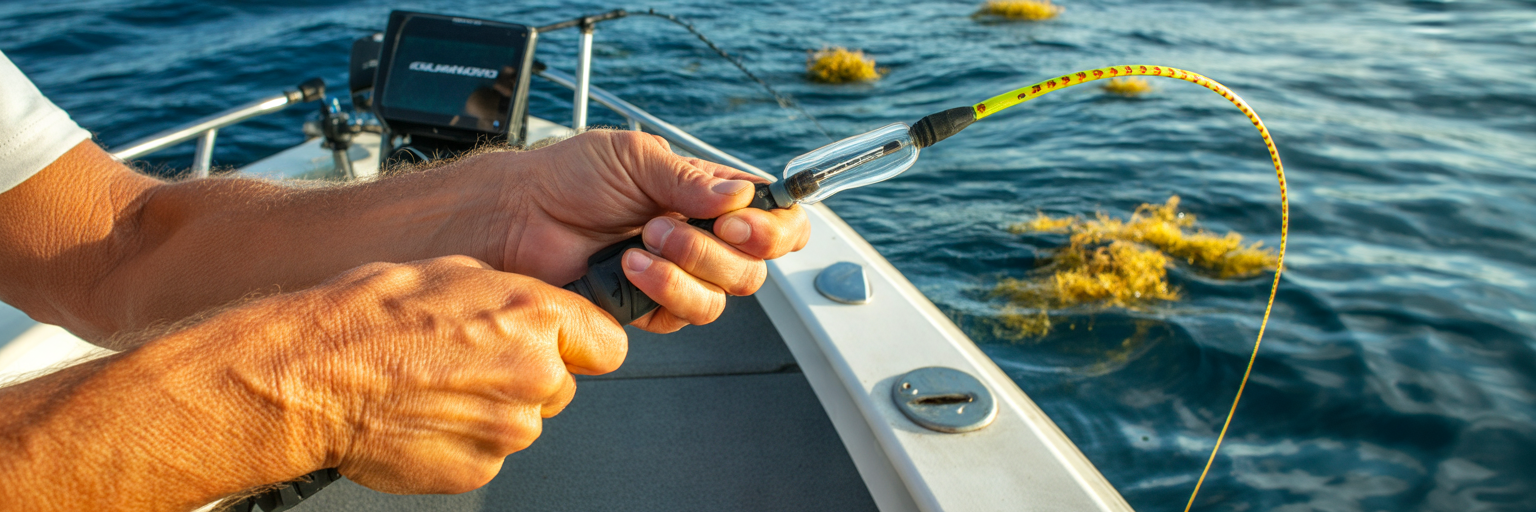
Because braided line lacks stretch and turns highly visible in bright sunlight, your terminal leader system does the heavy lifting during the bite and the endgame. Casting setups and trolling outfits require distinct leader geometries to handle visibility, strike shock, and boatside control.
The 6 to 10-Foot Fluorocarbon Formula for Pitch Rods
For spinning and pitch rods, run a 6 to 10 foot leader of 30 to 50 pound fluorocarbon. In the gin clear waters of the Atlantic Gulf Stream or the Florida Keys, educated gaffer mahi will frequently inspect a drifting chunk of ballyhoo and turn away if they spot opaque braid tied close to the hook. Fluorocarbon shares a refractive index nearly identical to saltwater, keeping the last several feet of your presentation practically invisible.
Beyond stealth, a six to ten foot fluorocarbon section protects your setup against a mahi’s sandpaper bill and rough gill plates while providing just enough controlled stretch to cushion sudden headshakes next to the hull. That length is deliberately chosen so the connection knot stays just outside the reel bail on a cast, yet allows the angler to wind the knot through the top few guides when leading a fish to the gaff without the fish wrapping around the lower unit.
Running 30 to 150-Foot Monofilament Topshots on the Troll
When pulling baits at seven to nine knots, a short fluorocarbon leader is not enough to handle the physics of the strike. A proper mahi trolling leader setup uses a 30 to 150 foot monofilament topshot of 50 to 80 pound test connected ahead of the main braid. When a thirty pound bull slams a chugger going the opposite direction of the boat, the strike impact hits before the heavy reel spool can even overcome its own rotational inertia.
That long nylon monofilament topshot acts like a giant bungee cord, stretching up to twenty five percent under load to absorb the initial violence of the strike and keep hooks from pulling. On a 20 to 26 foot center console, adjust your topshot length so that when a fish is twenty feet behind the outboard cowlings and trim tabs, the connection knot is already safely wound onto the reel spool. Having several wraps of mono on the drum during the final circle gives the wireman something safe to grab if needed and prevents a sudden boatside surge from snapping tight braid.
Why Bare Barrel Swivels Between Braid and Topshots Fail
One of the worst rigging mistakes on a small offshore boat is tying a standard metal barrel swivel directly between the main braid and a long trolling topshot. When a crew member gets excited during a fight and reels that metal barrel swivel straight into the rod tip, it cracks silicon carbide or ceramic guide inserts instantly. A cracked guide insert becomes a razor blade that slices through tight braid on the very next fish.
Furthermore, metal swivels create a rigid hinge point that concentrates shock loads and catches stray strings of sargassum. Join your main braid directly to your monofilament topshot with a seamless line to line knot, and reserve tiny wind on swivels or standard snap swivels solely for the short terminal trace right ahead of your lure or ballyhoo rig to stop bait spin.
Scale your leader diameters up or down based on local water clarity and average fish size. As noted in our Destin seasonal fishing guide, northern Gulf current rips often carry slightly greener water than the southern Keys, letting you get away with 50 pound fluorocarbon on pitch rods when bigger fish are mixed in. If the water is cobalt blue and calm with picky fish circling the boat, drop down to 30 pound fluorocarbon immediately to trigger bites.
Low-Profile Connection Knots That Survive the Guides
Every offshore angler knows the sickening sound of a bulky connection knot clattering loudly through the rod guides on a hard cast, followed a split second later by the crack of the bait flying off into the horizon. When your leader knot passes through the guides on every cast and retrieve, knot geometry determines whether you land the fish or re-rig empty handed.
Tying and Seating the FG Knot for Spinning Gear
For connecting thin polyethylene main line to heavier fluorocarbon on spinning gear, the FG knot is the undisputed standard for a braid to fluorocarbon knot offshore. Unlike older knots that force the thick, stiff fluorocarbon leader to fold back over itself in a bulky bend, the FG knot keeps the fluorocarbon completely straight while weaving the soft braid around it in an alternating cross pattern.
When you pull the connection tight, that weave bites down into the slick fluorocarbon surface just like a Chinese finger trap. Because the leader never doubles over, the finished knot profile is barely thicker than the fluorocarbon itself. It glides effortlessly through micro guides and standard spinning guides without catching on the rod tip or slowing down your cast into the wind.
The Bimini Twist to Bristol Combo for Heavy Trolling Spreads
On heavy conventional trolling rods where you are joining 65 or 80 pound braid to an 80 pound monofilament topshot, you need a connection engineered for sustained vibration and heavy planer drag. Start by tying a 20 turn Bimini Twist or a well seated Spider Hitch in the end of your main braid to form a double line loop that retains nearly one hundred percent of the line’s breaking strength.
Once you have that double line loop, join your heavy monofilament topshot to it using a five turn Bristol knot (also known as the No Name knot) or a Yucatan knot. Doubling the thin braid first prevents it from acting like a cheese wire and slicing straight through the softer nylon monofilament when a big fish pulls twenty pounds of drag for thirty minutes.
Fast Deckside Backup Knots When the School Is Lit Up
While the FG knot dominates when rigging rods at the dock, trying to weave twenty alternating wraps while your 23 foot hull is rolling in a beam sea and forty glowing schoolies are swimming around the trim tabs is a recipe for missed fish. When a line parts mid blitz, your crew needs a backup knot they can tie cleanly in under sixty seconds.
The Alberto knot (a modified Albright) is the most reliable fast deck knot for offshore pitch rods. You form a single loop in the fluorocarbon leader, wrap the braid seven times down the loop and seven times directly back up over the first wraps, and exit through the loop the exact way you entered. For light 20 pound setups, a six turn to four turn Double Uni also gets you back in the water fast, though its opposing coils create a slightly wider shoulder going through the guides.
Regardless of which knot you choose, lubricating with saliva and seating under heavy tension is mandatory. Dry friction burns microscopic grooves into fluorocarbon during tightening, cutting breaking strength in half. Pull the main line and leader with gloved hands or wrap the braid around a wooden gaff handle until the coils turn slightly darker and translucent as they bite into the leader, then lock the tag end with alternating half hitches so it never unravels after fifty casts. Practical knot testing analysis from Outdoor Life shows just how dramatically proper tension seating separates top tier connections like the FG and Alberto from poorly cinched alternatives.
| Knot Name | Approximate Strength Retention | Guide Clearance Profile | Average Tying Time | Best Offshore Application |
|---|---|---|---|---|
| FG Knot | 90% to 95% | Ultra-Thin (No Leader Fold) | 3 to 4 Minutes | Dockside rigging for spinning and pitch rods |
| Bimini Twist to Bristol | 95% to 100% | Moderate (Double Line Loop) | 4 to 5 Minutes | Heavy trolling topshots and planer rods |
| Alberto Knot | 80% to 85% | Compact (Single Leader Fold) | 45 to 60 Seconds | Fast re-tying on a pitching deck during a bite |
| Double Uni Knot | 70% to 80% | Bulky (Opposing Coils) | 45 Seconds | Light 20 lb braid to 30 lb leader emergency connections |
Preventing Wind Knots and Line Twist During Chaotic Schoolie Bites
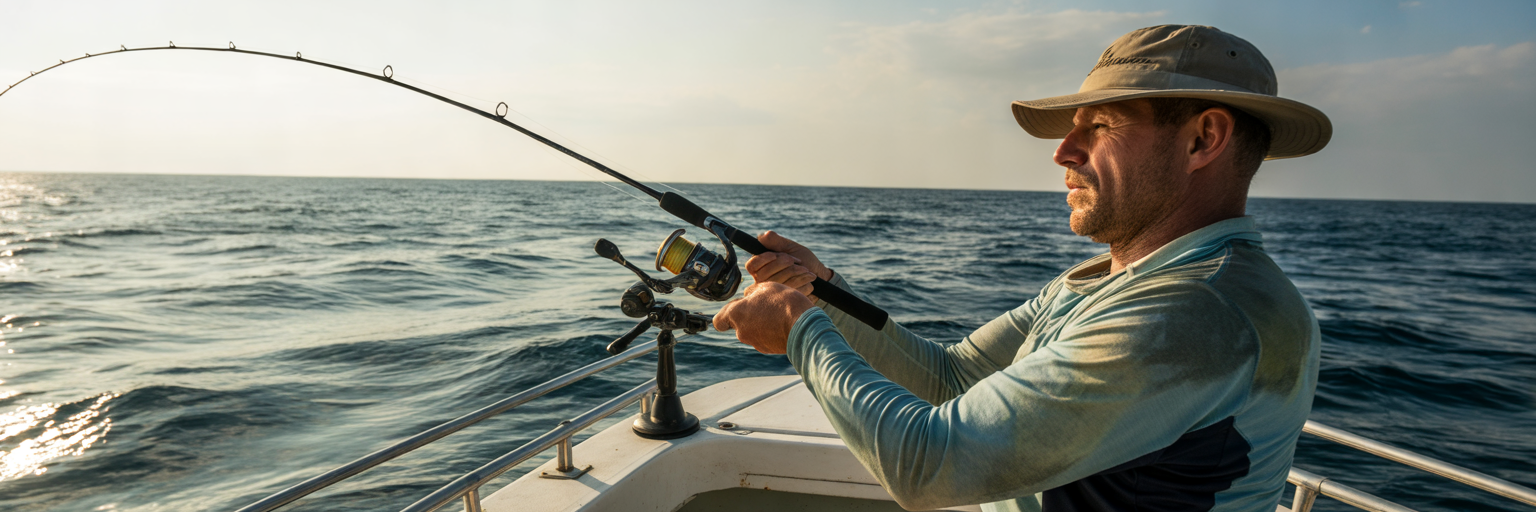
Nothing kills momentum during a wide open schoolie bite faster than two anglers blowing up their spinning reels with giant bird’s nests on the second cast. Most crews blame the reel or the line brand, but wind knots almost always trace back to active line management mistakes during unweighted bait presentations.
Diagnosing Slack-Line Loops on Spinning Reels
When you pitch an unweighted live pilchard, a light squid chunk, or a tiny jig into a stiff crosswind or fast current rip, the wind grabs the airborne braid and blows a huge slack bow into the line. If the angler immediately starts cranking the reel handle while that slack belly is floating on the surface with zero water resistance, the bail roller lays soft, loose coils crossways over the top of the tightly packed lower spool.
You might not even notice that loose loop sitting near the spool lip while working that bait back to the boat. However, on the very next hard cast, the fast moving top layer catches that buried slack loop and rips five yards of tangled braid off the spool at once, locking up in the stripping guide as a hopeless wind knot.
Manual Bail Control and Stopping Reel-Induced Line Twist
To prevent wind knots spinning reel crews battle offshore, every angler on deck must build a strict three part muscle memory sequence on every single cast:
First, feather the edge of the spool lip with your index finger just before the bait hits the water to straighten out the airborne bow of line. Second, reach up and close the bail manually by hand rather than cranking the handle to snap it shut, which instantly twists a loose loop onto the roller. Third, pull the line tight with your rod tip or strip the first foot of line through your fingers to confirm tension before making the very first turn of the reel handle.
You also have to guard against mechanical line twist. Cranking the handle of a spinning reel while a hooked mahi is actively pulling drag does not gain an inch of line; it simply puts one full rotation of twist into your braid for every turn of the rotor. Similarly, trolling a poorly rigged ballyhoo or a fouled chunk that spins like a propeller in the wake twists braided fibers tight until they spring around your rod tip and snap the blank when you give the line slack.
If a spinning outfit gets twisted up after a frantic schoolie session, strip off the terminal tackle and let 300 feet of bare braid trail out behind the boat while idling toward the next weed line. Two minutes of clean water friction pulling against the bare tag end will spin the twist right out of the line so it lays flat on the spool when you wind it back in under finger tension.
Captain’s Briefing Checklist for Crew and Guests
Professional captains who run trips every day know that five minutes of instruction before reaching the fishing grounds saves hours of re-rigging on the water. As we point out in our guide on when to book a mahi charter in Florida, experienced guides drill these exact deck habits into their guests before the first weed mat appears on the horizon. Run your own crew through this quick briefing before handing out the pitch rods:
- Flip the Bail by Hand Every Cast: Never turn the reel handle to trip the bail closed; snap it shut manually and pull the slack tight before cranking so loose loops never reach the spool.
- Stop Cranking When Drag Is Screaming: If a fish is taking line and the spool is spinning, freeze your reel hand and let the drag washers work to prevent severe rotor twist.
- Keep One Hooked Fish in the Water: Leave the first hooked schoolie swimming safely in the water alongside the hull to hold the rest of the pack behind the boat while the crew pitches to the larger gaffers deeper down.
- Call Your Casts on a Tight Deck: Look behind your shoulder before loading the rod on a 23 foot hull, and communicate with the angler next to you so two lines never cross upwind in a cross breeze.
- Watch Your Knot at the Rod Tip: Never reel the terminal swivel or hook eye slammed tight into the tip top guide when racking a rod or swinging a small fish over the gunwale.
Beating Abrasion Around Floating Sargassum and Flotsam
Big mahi love structure that destroys fishing line. Whether you are working golden sargassum mats off Palm Beach, barnacle encrusted driftwood in the Keys, or floating poly rope and bamboo stalks in the Gulf, your braid is constantly exposed to sharp, abrasive edges.
The Ten-Foot Thumb Inspection Habit and Rigging Tweaks
Because polyethylene fibers are under high tension and have very fine individual filaments, they are highly vulnerable to shearing when dragged across hard or fibrous objects. If a hooked gaffer dives straight back under a floating wooden pallet or wraps your line around a thick sargassum stalk, the outer strands of the braid can fray in seconds.
Make the ten foot thumb inspection habit non negotiable on your boat. After every single fish landed, or anytime you rip a fouled bait free from heavy grass, physically slide your bare thumb and forefinger down the connection knot and the first ten feet of main braid and fluorocarbon leader. If you feel the slightest fuzzy spot in the braid or a rough nick in the fluorocarbon, cut it back and re-tie immediately rather than gambling on the next cast with a thirty pound bull.
On days when scattered pin grass and thick sargassum clog the surface, stray weeds will slide down your main line and pack tightly against the tiny shoulder of your leader knot, acting like a saw against the fibers. Thread a tiny plastic nose cone or a quarter ounce sliding egg sinker onto your main line ahead of a small bead and swivel, or slide it right down to your hook eye on pitch baits, so it catches stray grass before it fouls your connection or ruins your bait action.
Managing Boatside Chaos Around Engines and Trim Tabs
The last thirty seconds of a fight on a small center console are where most big mahi win their freedom. When three or four fish are hooked simultaneously around a 24 foot hull, green fish will dart wildly under the stern toward the lower units. Tight braided line touching a spinning or stationary stainless steel propeller blade, a sharp trim tab edge, or a transom mounted transducer bracket parts instantly as if touched with a hot knife.
Train your crew to stay mobile along the gunwale rather than planting their feet in one spot. When a fish surges toward the stern corners, step back to the transom, extend your arms past the outboard cowlings, and plunge your rod tip two feet underwater if necessary to bow the line safely beneath the lower units and trim tabs while the captain bumps the boat forward in gear to clear the stern.
Post-Trip Braid Maintenance to Double Spool Lifespan
Saltwater left to dry inside a tight spool of braid forms microscopic, jagged salt crystals deep within the weave. Left untreated, those crystals grind against the polyethylene fibers on your next trip out, weakening the line from the inside out and cutting spool life in half. Protect your investment with this post trip washdown routine:
- Rinse with Low Pressure Mist Only: Tighten your drag down first so water cannot enter the washers, then rinse the spool with a gentle, low pressure fresh water mist to dissolve surface salt without driving crystals deeper into the lower line pack.
- Back Off Drag Stars and Levers Completely: Once the reels air dry in the rack, back all spinning drag knobs and conventional levers off to free spool so internal carbon fiber washers do not compress and stick over time.
- Wipe Down Guides with a Microfiber Cloth: Run a damp cloth or cotton swab around the inside of every guide insert after washing; if cotton fibers snag on a hairline ceramic crack, replace that guide before your next offshore run.
- End-for-End Your Braid Mid Season: Because only the top 75 to 100 yards of braid see sun exposure, casting friction, and weed abrasion, wind your line off onto a spare reel halfway through the summer so the pristine bottom half moves to the working end.
Once your spools are rinsed, inspected, and rigged with fresh leaders, your tackle is ready for the next weather window. Before planning your next run out of the inlet, pair your dialed in gear with our Florida fishing tide charts and live offshore reports so you hit the weed lines right when the current pushes the bait together.