
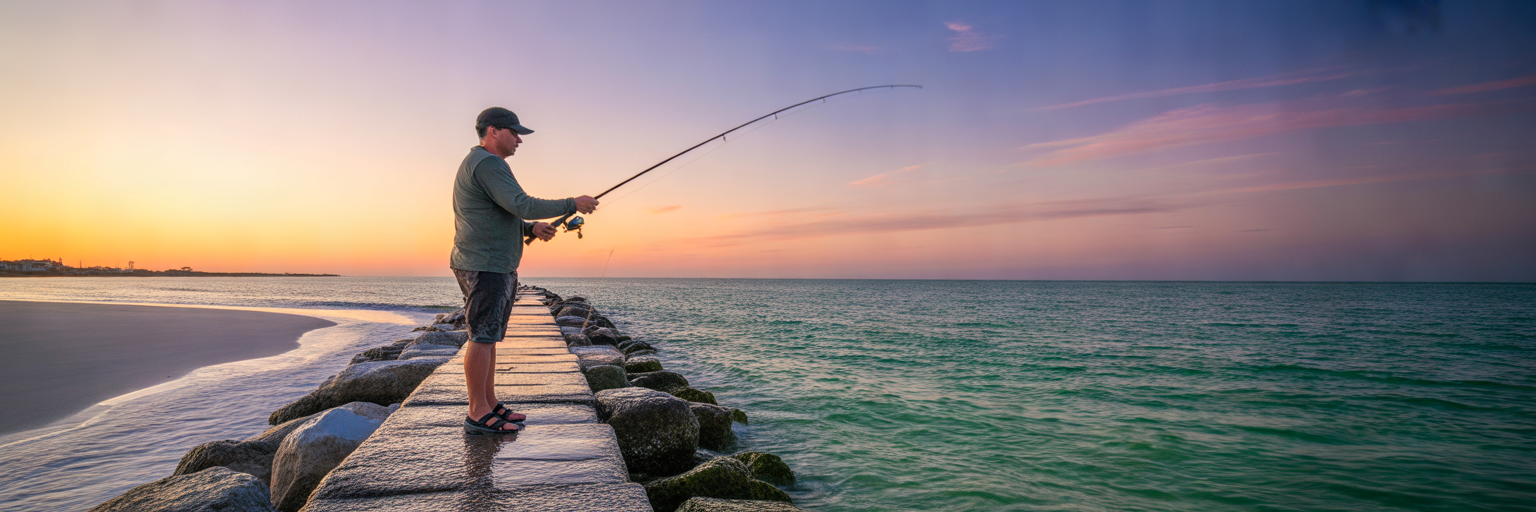
Commercial fishermen founded Destin in the 1830s specifically because the 100-fathom curve of the DeSoto Canyon sits closer to this stretch of Panhandle sand than anywhere else on the Gulf Coast. Today, that same dramatic underwater drop-off pushes clean water and pelagic bait schools straight into casting range for anglers working the shoreline on foot.
Reading the Water for Destin Shore Fishing Access
The Three-Zone Geography Advantage
Understanding Destin shore fishing access starts with a quick look at the map before you even load the truck. Destin sits on a narrow sandy peninsula bordered by three distinct bodies of water. You have the deep open Gulf of Mexico to the south, the high-velocity bottleneck of the East Pass to the west, and the expansive grass flats and bridge pilings of Choctawhatchee Bay to the north.
This compact layout gives bank anglers a massive tactical advantage. When a stiff south wind blows out the Gulf surf and stacks heavy waves on the sandbars, you are never more than a ten-minute drive from sheltered bay shorelines. Conversely, if heavy summer rains stain the backwaters or a cold north wind muddies the bay, that exact same north wind flattens the open beach into a glassy, gin-clear sight-casting arena. Reviewing our broader regional overview of destin fishing helps you connect these bank options to the seasonal movements of pelagic and inshore fish across the entire Panhandle.
Evaluating Daily Wind, Swell, and Barometric Triggers
Winning from the sand requires a disciplined pre-trip routine while the coffee is still brewing at your condo or rental house. Never drive blindly to the nearest boardwalk hoping for the best. Start by checking wind direction and speed. North and northeast winds knock down the Gulf swell and push floating algae offshore, creating prime conditions for long surf casts. South and southwest winds over 12 knots build a washing-machine shore break and push thick mats of June grass onto the beach, fouling your lines within seconds of hitting the water.
Next, look closely at swell height and swell period. A two-foot swell on a nine-second period packs plenty of surge energy, making wading onto the first sandbar dangerous and rolling standard two-ounce leads down the beach. Anything over a seven-second period paired with a three-foot wave height calls for heavy Sputnik sinkers or a pivot to the pass and bay. Also watch the barometer. A dropping barometric pressure trend just ahead of an approaching cold front triggers aggressive feeding windows for trophy redfish and speckled trout.
Smart visiting anglers check our real-time water condition feeds, tide charts, and active bite reports on HookCurrent before loading their rods. Spending five minutes verifying salinity, water clarity, and wind shifts saves hours of guessing on unproductive sand.
- North or East Wind (Under 15 Knots): Head straight to the open Gulf beaches for calm, clear troughs and long-distance pompano soaking.
- South or Southwest Wind (Over 15 Knots): Skip the blown-out surf and work the protected leeward seawalls, docks, and grass flats inside Choctawhatchee Bay.
- Strong Outgoing Tide with Moderate Swell: Post up on the East Pass granite boulders or Norriego Point T-groins to intercept bait flushing out of the bay.
- Post-Front High Pressure or Heavy June Grass in the Surf: Pay the daily fee at the Okaloosa Island Pier to get your baits elevated above the shore break and past the dirty water line.
Surf Fishing Access Along Destin and Miramar Public Beaches
Spotting Sandbars, Troughs, and Runouts from the Sand
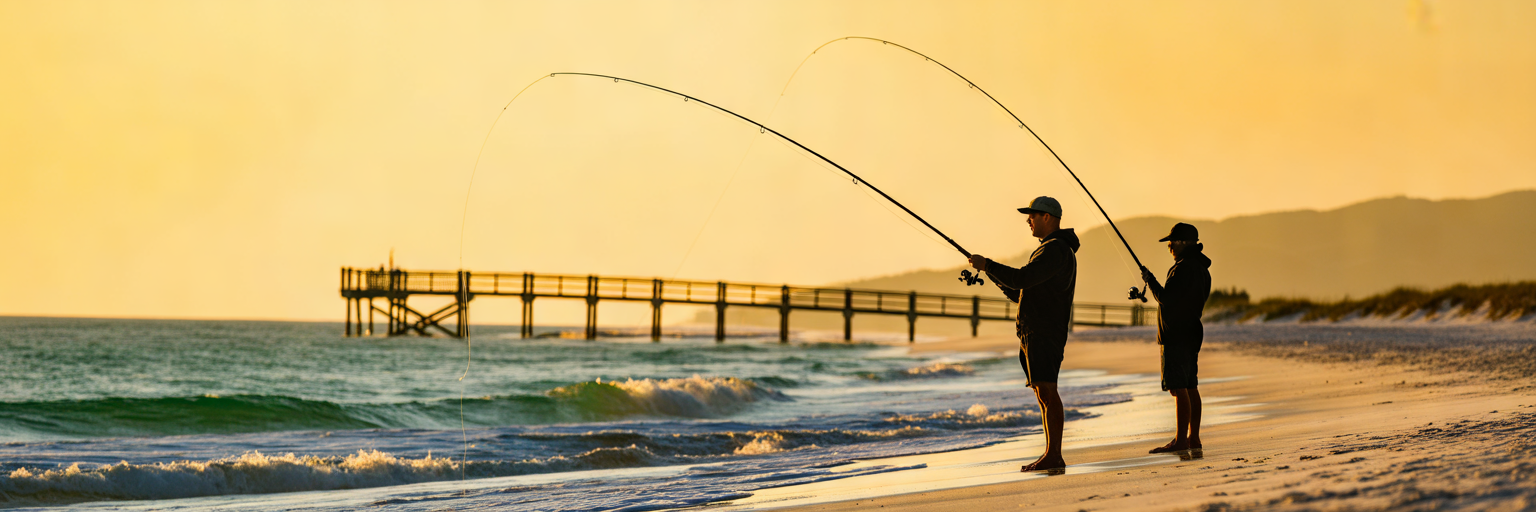
Successful surf fishing Destin Florida relies on reading bottom contours before making your first cast. Stand high on the dry sand or the walkover steps during midday sunlight and scan the water color. The pale, sandy-green bands indicate shallow sandbars where waves crest and break. Tucked directly between the beach lip and that first shallow bar sits a darker emerald ribbon of deeper water known as the inside trough.
Cruising pompano, whiting, and slot redfish use this inside highway to hunt sand fleas tumbled loose by the shore break. Beyond the first bar lies a deeper trough and a second outer sandbar where heavier predators patrol. Keep walking until you spot a break in the first sandbar where waves stop white-capping and foam funnels seaward in a subtle V-shape. These rip currents or runouts act as conveyor belts flushing crushed shells, crabs, and baitfish into deeper water. Upgrading your eyewear using the advice in our guide on choosing polarized lenses for spotting redfish makes identifying these subtle bottom edges and cruising fish dramatically easier against the bright quartz sand.
Reliable Public Beach Access Corridors and Parking Realities
Finding reliable Destin public beach fishing spots requires knowing which corridors offer realistic parking for anglers hauling sand spikes and coolers. Moving from west to east, these four access points provide consistent entry to the surf:
- Henderson Beach State Park: Located right in the heart of Destin, this state park charges a small per-vehicle entry fee and provides over 6,000 feet of undeveloped shoreline without high-rise condos crowding your backcast. Paved parking lots, rinse showers, and restrooms sit a short boardwalk hike from deep, productive troughs.
- Crystal Beach Street-End Walkovers: Neighborhood corridors along Scenic Highway 98, such as Shirah Street and Hutchinson Street, drop you onto classic pompano sandbars. Parking consists of tight parallel street spots that fill up completely by 6:30 AM during spring and summer.
- James Lee Park: Situated on the eastern edge of Destin at the county line, this park features three large paved parking lots, dune walkovers, and deep runouts right out front.
- Miramar Regional Public Beach Access: Just east in Walton County, this facility offers large parking lots and easy sand access, though heavy midday tourist traffic makes it strictly a dawn or dusk fishery.
Understanding Customary Use and Managing Beach Crowds
Visiting anglers need a clear grasp of property rules along the Emerald Coast. Ongoing legal disputes over customary beach use in Walton County and parts of Okaloosa County mean many beachfront resorts and private homeowners rope off the dry white sand behind their properties. Never set up your chairs or sand spikes behind private boundary signs.
However, under the Florida Constitution, the public retains the sovereign right to walk and fish the wet sand zone seaward of the mean high-water line. Once you step onto the beach via a public access walkover, you can legally walk miles down the wet shoreline chasing bird activity or casting into troughs. Respect swimmers by fishing the first two hours of daylight from 5:30 AM to 8:00 AM or the final hour before dark. Always set your spikes well outside commercial beach umbrella lines and keep your long rods vertical so passing joggers never catch a taut braided main line across the chest.
Fishing the East Pass Jetties and Norriego Point
Why the East Pass Bottleneck Holds Heavy Fish
When you want to step up from surf panfish to bruising tackle-testers, East Pass jetty fishing delivers the heaviest shore action on the Panhandle. Every single day, the entire volume of Choctawhatchee Bay exchanges water with the Gulf of Mexico through this one narrow tidal throat. On a hard falling tide, millions of gallons of brackish water flush blue crabs, brown shrimp, pinfish, and finger mullet straight along the granite boulders lining the channel.
Gamefish stack up behind the rocks to ambush disoriented baitfish tumbled by the current. Slot redfish and 30-pound bull reds patrol the bottom rocks alongside convict sheepshead, aggressive mangrove snapper, and doormat flounder staging on the sand-meets-rock transition. During spring and fall bait migrations, king mackerel, Spanish mackerel, jack crevalle, and tarpon blast through the surface boils within easy reach of a long cast from the boulders.
Navigating East Jetty Access vs. the Restricted West Jetty
Getting to the rocks requires knowing which side of the pass is open to foot traffic. Looking at a satellite map, you will see two long rock jetties flanking the channel. The West Jetty on Santa Rosa Island is strictly off-limits to standard public shore entry because the surrounding barrier island land belongs to Eglin Air Force Base. Military police actively patrol that boundary, so do not attempt to hike in from the west.
All public foot access happens on the East Jetty located at the western tip of Holiday Isle. Drive down Gulfshore Drive and look for the marked public beach access trailhead near the end of the road, or park at the paved spaces near Norriego Point and hike south along the sand to the base of the rocks. Arrive well before sunrise during peak tourist months, as Gulfshore Drive has limited public spaces and tow trucks enforce no-parking zones relentlessly.
Rock Hopping Safety and Target Zones from Norriego Point to the Tip
Walking the East Jetty demands respect and proper gear. The massive granite blocks feature wide gaps, sharp barnacles, and a coating of slick green algae near the waterline. Leave the flip-flops and boat shoes in the truck. Seasoned jetty regulars wear felt-soled boots or strap-on metal cleats over neoprene wading booties to maintain traction when a rogue boat wake or south swell washes over the lower stones. Give fellow anglers plenty of elbow room on the rocks, and always look behind you before whipping a heavy lead weight.
You can break the pass into two distinct fishing zones. Around Norriego Point, rock T-groins create calm, turquoise swimming and wading pockets bordered by a concrete seawall and a deep, swift boat channel. This sandy transition is prime territory for bouncing soft plastics for flounder or drifting live shrimp for pompano and trout. Walking farther south onto the main East Jetty puts you over 20 to 40 feet of ripping water. To hold bottom along the channel edge without donating ten rigs an hour to the rocks, tie the sliding sinker and breakaway setups detailed in our Florida bottom fishing rigs guide, or free-line a live croaker or finger mullet on a bare circle hook into the current eddies.
Pier Strategies at the Okaloosa Island Fishing Pier
Logistical Perks of the 1,262-Foot Platform
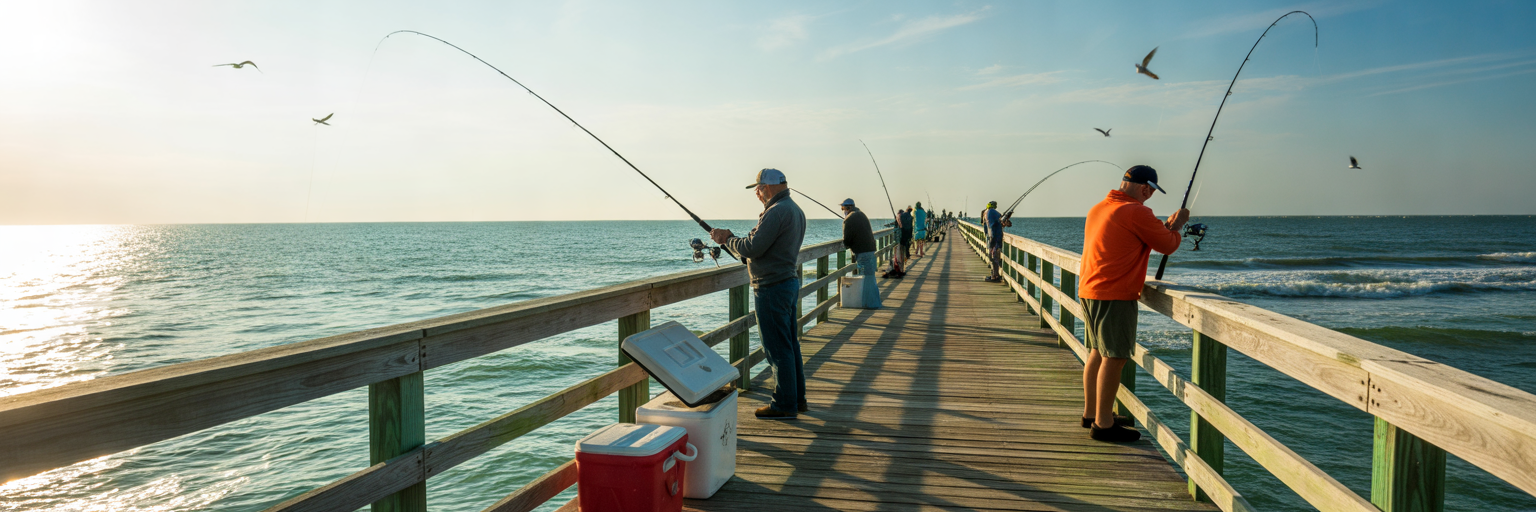
If you are traveling with family or want to get your baits into deep pelagic water without wading through surf, drive five minutes west across the East Pass bridge for Okaloosa Island pier fishing. Stretching 1,262 feet straight into the Gulf of Mexico, this wooden structure acts as a landlocked charter boat for visiting anglers.
The logistics could not be simpler. Paying the daily fishing admission at the pier house automatically covers you under the pier’s blanket Florida saltwater fishing license, meaning out-of-state visitors can test the waters for a day without buying an individual state permit. The pier house stocks frozen cigar minnows, fresh shrimp, terminal tackle, and heavy rental rods, while offering a massive paved parking lot steps from the gate.
Breaking the Pier into Three Tactical Zones
The biggest mistake visiting anglers make is marching straight to the far end of the pier while walking right over hundreds of feeding fish. Smart pier rats divide the deck into three tactical zones based on water depth and bottom structure:
- The Inside Surf Zone (First 300 Feet): Right where the waves break against the shallow pilings, sand fleas and crabs wash out of the sand. Drop double-drop pompano rigs baited with live fleas or shrimp into the white water for pompano, whiting, and redfish, or scrape the barnacle-encrusted pilings with fiddler crabs for sheepshead.
- The Mid-Pier Trough (300 to 900 Feet): Spanning the deep water between the first and second sandbars, this open stretch is high-speed ambush territory. Keep a medium spinning rod rigged with a 7/8-ounce Gotcha plug, silver spoon, or bubble rig ready to cast at surfacing schools of Spanish mackerel, bluefish, ladyfish, and bonito.
- The Deep Octagon End (Final 360 Feet): Sitting over deep green water past the outer bar, the wide octagon platform is reserved for heavy predators. Anglers soak live cigar minnows or blue runners on trolley rigs and heavy free-lines here to hook king mackerel, cobia, mahi, blackfin tuna, and massive tarpon.
Pier Etiquette, Underhand Casting, and Landing Big Pelagics
Fishing shoulder-to-shoulder on an elevated rail requires strict deck etiquette. The pier enforces a two-rod maximum per angler in the deep end so tangles stay manageable when a 30-pound kingfish screams down the rail. Most locals set one heavy live-bait rod in the rail holder and work a lighter plugging rod in hand.
Overhand casting is strictly prohibited on the pier. Always execute a controlled underhand pendulum pitch by letting your lure hang three feet below the rod tip, swinging it back beneath the rail, and sweeping forward so sharp treble hooks never come near the faces of spectators walking behind you. When you hook a big fish that runs down the deck, call out “Fish on, coming left!” or “Over!” and “Under!” loudly so neighbors can lift or duck their rods. Never attempt to hoist a heavy fish 25 feet straight up on monofilament leader; pair up with another angler using a weighted pier drop net or a treble-hook pier gaff to bring your catch over the rail cleanly.
Sheltered Bay Parks and Bridge Approaches in Choctawhatchee Bay
When to Ditch the Surf for Protected Inshore Flats
Even the best surf anglers get shut out when the Gulf turns angry. Two specific scenarios should immediately trigger a pivot to Choctawhatchee Bay bank fishing. The first is a sustained 15-to-25-knot south wind that triggers double-red-flag surf closures and turns the beach trough into unfishable brown chocolate milk. The second is a heavy summer bloom of June grass, a filamentous green algae that drifts down the beach and coats every knot, swivel, and hook in slimy green wool.
Stepping inside the bay completely eliminates both problems. The barrier peninsula blocks the south swell, leaving the southern shoreline of the bay calm and fishable, while the brackish bay water remains free of open-Gulf June grass blooms. Here, the game shifts from heaving heavy pyramid sinkers to working light artificials and live baits around bridge pilings, docks, and shallow turtle-grass flats.
Productive Public Bay Parks and Wading Approaches
Several well-maintained public parks around Destin and Fort Walton Beach offer direct bank and wading access to prime inshore holding structure:
- Marler Park (Okaloosa Island): Tucked right beneath the western approach of the Brooks Bridge on Santa Rosa Boulevard, this park offers plenty of parking and direct access to swift tidal currents sweeping past concrete bridge fenders and riprap rocks. Drop heavy Carolina-rigged live shrimp or cracked blue crabs tight to the pilings for slot redfish, black drum, mangrove snapper, and heavy sheepshead.
- Clement Taylor Park (Destin): Located on Calhoun Avenue overlooking Destin Harbor and Joe’s Bayou, this sheltered park provides a sandy beach drop-off and a public pier. It fishes well on chilly mornings or windy afternoons when speckled trout and redfish push into calmer bayou pockets.
- Liza Jackson Park (Fort Walton Beach): Just a short drive west on Highway 98, this expansive waterfront park offers over 1,000 feet of shoreline, multiple boat ramps, docks, and shallow grass flats. It is the premier wading spot in the area for targeting speckled trout, redfish, and flounder at dawn.
While you can catch plenty of fish dry-shod from the seawalls and public docks at these parks, slipping into thigh-deep water multiplies your coverage. Pull on a pair of hard-soled wading boots, shuffle your feet along the sandy patches to alert buried stingrays, and fan-cast topwater walking plugs or 1/4-ounce paddle-tail jigs along the dark edges where sandy potholes meet lush turtle grass. When soaking natural baits over thick vegetation, tie the specialized popping cork and float setups shown in our guide on live-bait rigs that clear Florida turtle grass to keep your shrimp suspended right in the strike zone above the blades.
Seasonal Target Calendar for Bank and Surf Anglers
Spring Migration: Cobia, Pompano, and Spanish Mackerel
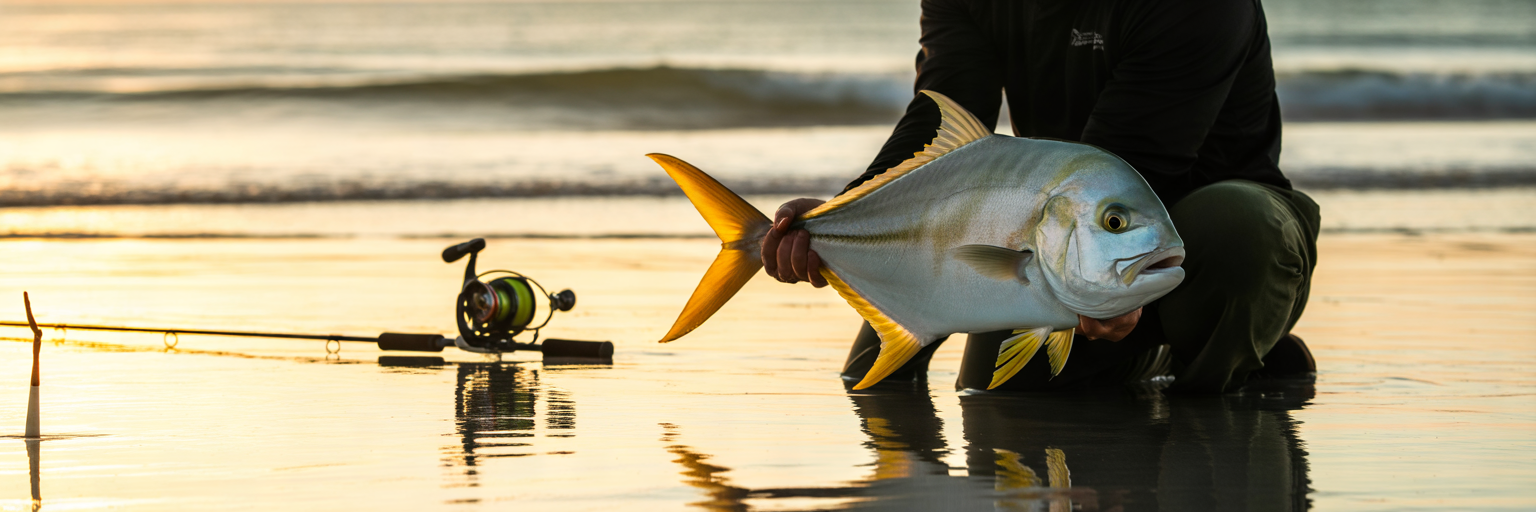
Spring wakes up the Panhandle shoreline with explosive action as water temperatures climb through the 65-to-70-degree mark between March and May. As emerald water pushes against the beach, schools of migrating cobia cruise east-to-west right along the outer sandbar, often swimming on the backs of large manta rays. Anglers on the Okaloosa Island Pier and tall dune walkovers sight-cast bright two-ounce bucktail jigs and live eels to intercept these brown bombers. Down in the surf trough, spring marks the peak run of big yellow-bellied pompano rooting for sand fleas, while huge schools of Spanish mackerel slash through glass minnows within easy range of a silver casting spoon.
Summer Dawn Patrol and Night Sessions
From June through August, water temperatures top 82 degrees and midday air temperatures push 90 degrees alongside heavy vacation crowds. Smart shore anglers shift their clock to the first two hours of dawn from 5:30 AM to 8:00 AM or fish after sunset. Early mornings bring silver-sided tarpon rolling past the Okaloosa Pier octagon and redfish smashing topwater plugs on the Liza Jackson bay flats. Around the East Pass rocks, summer is prime time for chumming up aggressive mangrove snapper using small live shrimp or cut cigar minnows tucked right against the boulders on 20-pound fluorocarbon leader.
Fall Mullet Run and Trophy Redfish
Ask any local veteran and they will tell you September through November is the undisputed crown jewel of the shore fishing calendar. Summer beach crowds vanish, crisp north winds flatten the Gulf surf into a mirror, and millions of finger mullet pour out of Choctawhatchee Bay through the East Pass. Trophy bull redfish exceeding 35 inches stack up along the pass channel edges and outer beach bars to gorge on the bait flush. Simultaneously, heavy doormat flounder stage along the sandy bottoms of Norriego Point and the Brooks Bridge before making their late-autumn move offshore to spawn.
Winter Structure Soaking for Sheepshead and Drum
When water temperatures dip into the 50s between December and February, metabolism slows down and pelagic speedsters head south. Winter rewards patient structure anglers who fish the warming trends between cold fronts. Downsize your terminal tackle to 15-pound fluorocarbon leaders and small #1 octopus hooks to soak fiddler crabs, barnacles, and peeled shrimp tight against the East Pass rocks and Brooks Bridge fenders. You will find thick concentrations of striped convict sheepshead, puppy drum, and whiting holding in deep surf holes, while our tactical breakdown on finding winter redfish in Florida shows how to locate schooled-up slot reds warming themselves on dark mud bottoms inside the bayous.
| Season | Primary Shore Targets | Best Access Zones | Go-To Baits and Lures |
|---|---|---|---|
| Spring (Mar to May) | Pompano, Cobia, Spanish Mackerel, Whiting | Public beach troughs, Okaloosa Pier octagon | Live sand fleas, bright cobia jigs, Gotcha plugs, fresh shrimp |
| Summer (Jun to Aug) | Mangrove Snapper, Tarpon, King Mackerel, Ladyfish | East Pass Jetty rocks, Okaloosa Pier rail, Bay flats at dawn | Live cigar minnows, pilchards, small live shrimp, topwater plugs |
| Fall (Sep to Nov) | Bull Redfish, Flounder, Pompano, Bluefish | East Pass channel edge, Norriego Point, Miramar surf runouts | Finger mullet, cut ladyfish, bucktail jigs, gold spoons |
| Winter (Dec to Feb) | Sheepshead, Black Drum, Whiting, Slot Redfish | Brooks Bridge fenders, East Pass inner rocks, deep surf holes | Fiddler crabs, mud minnows, peeled dead shrimp, sand fleas |
Tides, Parking Logistics, Legal Rules, and Safety Protocols
Timing Destin’s Diurnal Tide Cycle
If you normally fish the Atlantic Coast, you need to adjust your timing for the Northern Gulf. Destin experiences a diurnal tide cycle, meaning there is only one high tide and one low tide every 24-hour period. Because the water rises and falls so gradually over twelve hours, looking solely at the clock time of high or low water will leave you standing over slack water.
Instead, focus on the tidal coefficient, which measures the vertical difference in feet between the daily high and low marks. Days around the new and full moons produce a strong 1.5-to-2.2-foot exchange that gets current ripping through the East Pass and turns on the bite. Weak neap tides with a 0.3-foot range barely move the water inside the bay, making the open Gulf surf or deep pier octagon a smarter bet. Review our detailed walkthrough on fishing tide charts for better Florida trips so you can pinpoint the exact three-hour window of peak water velocity before leaving the house.
Parking Cutoffs and Mobile App Logistics
During spring break and peak summer months, parking logistics dictate where you can actually wet a line. Free street-end lots in Crystal Beach and along Gulfshore Drive near the East Jetty fill up by 6:00 AM sharp. Both the City of Destin and Okaloosa County enforce paid mobile-app parking zones at major beachfront lots and Norriego Point, so keep your smartphone charged and pay your session fee immediately upon parking to avoid hefty municipal tickets.
Vehicle size also plays a major role along these tight coastal corridors. Many street-end walkovers feature narrow parallel bays, low overhanging live oaks, and strict length limits that prohibit oversized rigs. Visiting anglers embracing the nomadic road-trip lifestyle quickly discover that navigating early-morning parking cutoffs and tight beach trailheads is just one part of the equation, as detailed in this honest look at working and traveling from a camper van. If you are driving a high-roof van or pulling a long cargo hitch rack, head straight for the wide open surface lots at James Lee Park, Marler Park, or the Okaloosa Island Pier rather than squeezing down narrow residential cul-de-sacs.
FWC Licensing, Shark Rules, and Beach Flag Safety
Keeping your trip legal requires following strict state wildlife rules. While Florida residents fishing exclusively from the bank, a beach, or a fixed pier qualify for the no-cost Resident Shoreline Fishing License, all non-resident anglers aged 16 and older must purchase a standard Florida non-resident saltwater fishing license even when casting strictly from the dry sand. Run through our Destin license checklist for visiting saltwater anglers before your trip, and verify current bag limits and seasonal closures directly on the official FWC saltwater fishing portal.
If you plan to soak heavy baits from the beach for sharks, you must complete the mandatory, free FWC Shark-Smart Fishing educational course and carry your permit. State law requires using non-offset, non-stainless-steel circle hooks whenever fishing with natural bait for sharks, keeping the gills of any prohibited shark species completely submerged in the wash during release, and keeping long-handled bolt cutters on the sand to clip the hook immediately.
Finally, never ignore the colored beach warning flags flying at public walkovers. In both Okaloosa and Walton Counties, entering the Gulf water when Double Red Flags are flying is a criminal misdemeanor punishable by arrest and a $500 fine. Even knee-deep wading to cast a pompano rig is strictly prohibited during double-red conditions due to life-threatening rip currents. Likewise, heed the severe currents sweeping around the tip of Norriego Point, and pull your graphite rods off the beach or pier at the very first rumble of summer lightning.
Practical Tackle, Rigging, and Bait Selection for Traveling Anglers
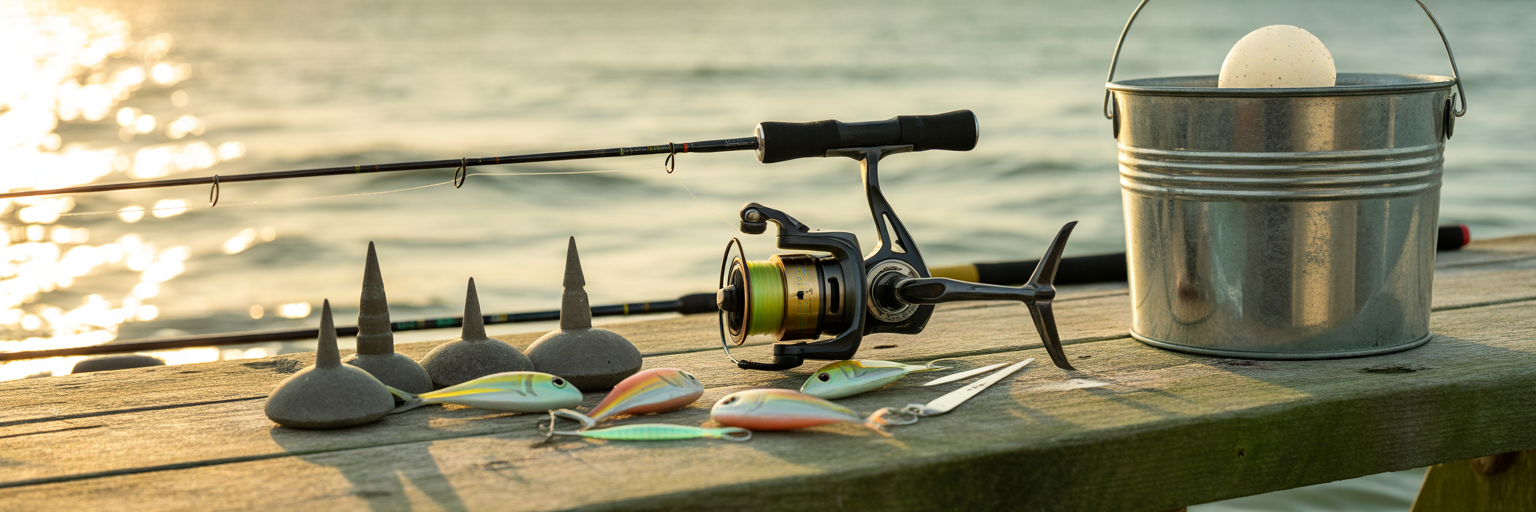
The Two-Rod Travel Arsenal
You do not need a rack of eight rods cluttering the roof of the family SUV to catch fish across Destin’s diverse shore zones. Packing two carefully matched spinning outfits covers 90 percent of every surf, jetty, pier, and bay scenario you will encounter on the Emerald Coast:
- The Long-Range Surf Combo: Pack a 9-to-11-foot, two-piece medium-heavy surf rod paired with a 4000-to-6000-size saltwater spinning reel. This length keeps your main line elevated above the shore break and gives you the leverage to launch three-ounce leads and double-drop rigs past the first sandbar into the outer pompano trough.
- The All-Purpose Inshore and Jetty Combo: Bring a 7-foot-6-inch medium or medium-heavy fast-action spinning rod matched with a 3000-to-4000-size reel. This nimble setup handles walking the East Pass boulders, pitching live shrimp around Brooks Bridge fenders, whipping Gotcha plugs off the Okaloosa Pier rail, and wading the Liza Jackson grass flats.
Spool both reels with high-visibility 15-to-30-pound 8-carrier braided line rather than monofilament. Thin braid cuts cleanly through stiff Gulf crosswinds and strong pass currents while doubling your casting distance from the beach. Check our complete breakdown on Florida saltwater braided fishing line to match the exact line diameter and leader knot to your reel spool.
| Setup Role | Rod Length & Action | Reel Size & Main Line | Leader & Terminal Rig | Best Destin Application |
|---|---|---|---|---|
| Long-Range Surf Soaker | 10 ft Medium-Heavy, Fast Action | 5000 Spinning, 20 lb Braid | 25 lb Fluorocarbon, Double-drop pompano rig with 3 oz pyramid sinker | Miramar Beach, Henderson State Park, and Crystal Beach outer sandbars |
| All-Purpose Jetty & Pier Plugger | 7 ft 6 in Medium, Extra-Fast Action | 3000 to 4000 Spinning, 15 lb Braid | 20 to 30 lb Fluorocarbon, Carolina rig, Gotcha plug, or 3/8 oz jighead | East Pass Jetty rocks, Okaloosa Pier rail, and Liza Jackson Bay flats |
Proven Local Rigs and High-Converting Natural Baits
Keep your tackle bag light by carrying a single waterproof utility tray stocked with these five high-converting terminal rigs:
- Double-Drop Pompano Rigs: Pre-tied on 20-to-30-pound fluorocarbon with size 1 or 2/0 circle hooks and small chartreuse or pink floats to lift baits off the sand away from scavenging crabs.
- Pass Carolina Rigs: Built with a 1-to-3-ounce sliding egg sinker above a heavy swivel, 24 inches of 30-pound fluorocarbon leader, and a stout 3/0 inline circle hook for soaking live baits along the East Pass bottom.
- Metal Pier Plugs and Spoons: Stock 7/8-ounce gold-and-white Gotcha plugs alongside 1/2-ounce silver and gold casting spoons for fast-moving Spanish mackerel, bluefish, and ladyfish.
- Inshore Jigheads and Paddle-Tails: Carry 1/4-ounce and 3/8-ounce lead jigheads paired with three-inch white or root-beer-gold soft plastic swimbaits for bouncing sandy bay potholes and Norriego Point drop-offs.
- Pyramid and Sputnik Sinkers: Bring 2-, 3-, and 4-ounce pyramid leads for calm surf days, plus two 3-ounce wire-legged Sputnik sinkers that dig into the sand when longshore currents try to roll your rig down the beach.
Even the best rig fails if you tip it with grey, mushy frozen shrimp from a gas station freezer. Pompano and mangrove snapper rely heavily on scent and firm texture. Rake live sand fleas right out of the receding beach wash, or buy fresh-dead table shrimp, live fiddler crabs, and fresh local finger mullet from a dedicated Destin bait shop. Store your shrimp and cut mullet inside a dry plastic container resting on a tray above your cooler ice; letting fresh meltwater soak your bait turns it pale, rubbery, and lifeless within an hour.
When to Step Off the Sand and Book a Local Captain
Shore fishing in Destin offers tremendous rewards, but every visiting angler eventually hits a day where 20-knot onshore winds lock down the beaches or the itch to pull on deep-water gag grouper, red snapper, amberjack, or offshore mahi takes over. When the surf refuses to cooperate or you want to experience the legendary nearshore reefs and bay flats from the bow of a well-equipped boat, browse HookCurrent’s vetted charter and guide directory. Connecting directly with a full-time Destin captain puts you on productive water immediately and turns a blown-out beach day into the highlight of your trip.