
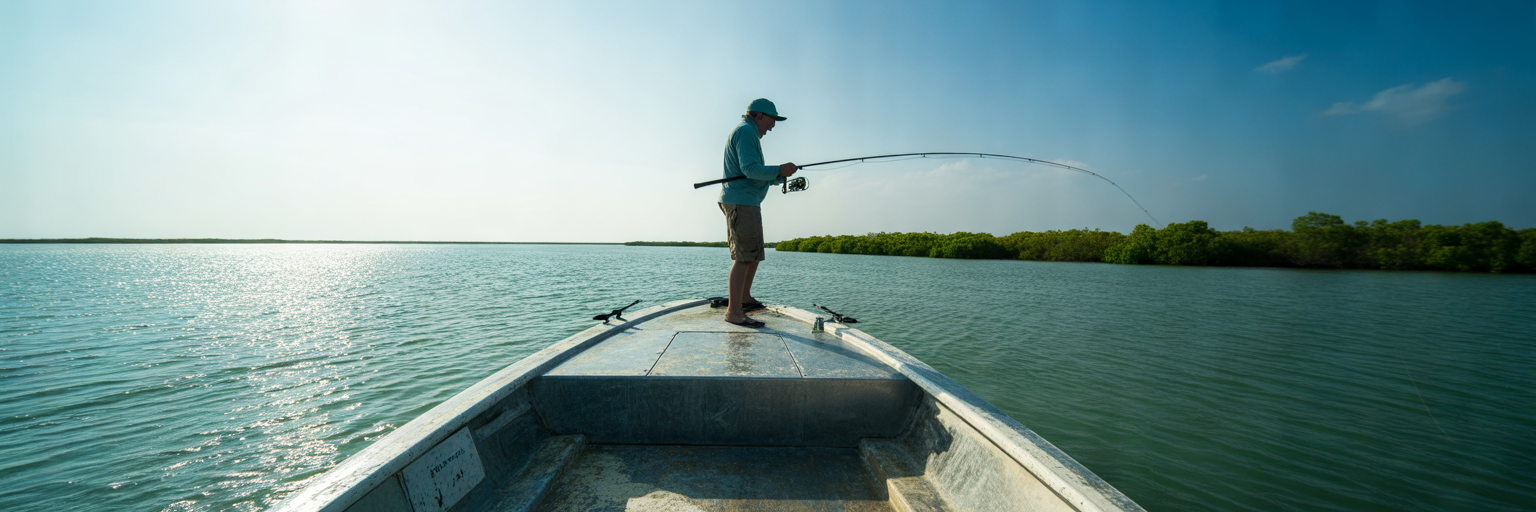
When Ultra High Molecular Weight Polyethylene fibers shifted from commercial marine cordage to recreational reels in the 1990s, line stretch dropped from nearly 25 percent to virtually zero. On a shallow Florida flat where a single foot of casting accuracy separates a tailing redfish eat from a blown school, this Florida flats braid guide breaks down how to rig your skiff rods for maximum range and stopping power.
Why a Florida Flats Braid Guide Matters on the Skiff
Stand on the bow of a technical poling skiff from Mosquito Lagoon down to the Florida Keys, and the margin for error disappears fast. In two feet of gin-clear water, pressured fish feel subtle hull slap through their lateral lines and spot overhead line shadow from sixty feet away. You get one shot to drop a bait on a cruising fish’s nose before it bolts off the flat. Every extra foot of casting distance and every ounce of direct line tension determines whether you bow up or watch wakes disappear into the basin.
The Physics of Zero Stretch in Shallow Water
Your main line serves as the primary mechanical link between your rod tip and the hook point. Pairing a high-density fluorocarbon leader with our recommended braided fishing line remains the undisputed standard when selecting the best braid for inshore fishing across Florida. Monofilament stretches like a rubber band under load, absorbing energy that should be driving steel into a bony jaw.
Polyethylene braid eliminates that delay completely. When a big speckled trout or redfish inhales a soft plastic at the very end of a 120-foot cast, near-zero stretch transfers rod sweep energy immediately to the hook point. At the same time, the ultra-thin physical diameter slices cleanly through a 15-knot coastal breeze. Instead of the wind catching a thick belly of line and dragging your lure off target, thin braid stays tight between the rod tip and the bait so you feel the lightest tick before the fish drops the presentation.
Why One General-Purpose Line Weight Fails Inshore
Many anglers fall into the trap of buying a single bulk spool of general-purpose braid and loading every spinning reel in the rod locker with the exact same line. That shortcut costs you fish the moment you transition from open water to heavy cover. A whisper-thin finesse line designed for open turtle grass flats gets shredded instantly when a hooked fish drags it across barnacle-encrusted dock pilings or sharp oyster clusters.
Conversely, spooling up with heavy structure cable across all your rods kills the darting action of small jigs and cuts your casting range by thirty feet in open water. Smart skiff crews match their line setups to specific habitats and pair that tackle prep with our real-time wind, water clarity, and fishing tide charts before leaving the boat ramp. Knowing how high the water will flood over the oysters or how hard the afternoon breeze will stack against the tide tells you exactly which rods need to be on the deck gunwales.
Matching your main line and leader system to specific Florida habitats, wind speeds, and target species is the fastest way to eliminate wind knots, prevent structure break-offs, and put more slot and trophy fish on the deck.
Matching Braid Diameter and Pound Test to Inshore Zones
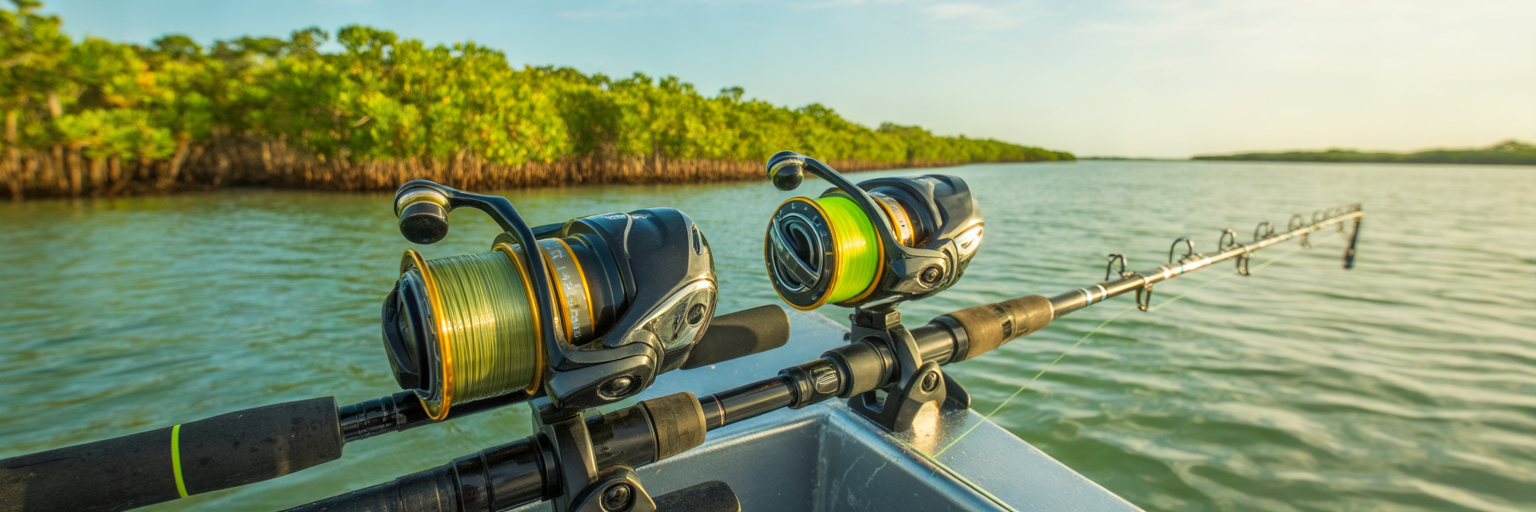
Once you abandon the one-size-fits-all approach, your next step is matching physical line diameter and breaking strength to your spinning reel spools and target zones. Every shoreline, pass, and grass flat along the Florida coast demands a specific balance between long-distance castability and brute abrasion resistance.
Open Grass and Sand Flats: 10 to 15-Pound Setups
When you are poling across shallow sand potholes in Tampa Bay or working expansive turtle grass flats in the Indian River Lagoon, thin diameter rules. Spooling 2500 to 3000 series spinning reels with 10 to 15-pound test braid gives you the decisive edge needed to reach spooky fish before they sense the boat. Firing a 1/8-ounce jighead or an unweighted soft plastic jerkbait into a stiff headwind requires minimal friction as coils leave the spool lip and shoot through the rod guides.
Heavier lines create air drag that stalls light lures mid-flight, dropping them twenty feet short of the target. With 10-pound braid, you can keep the skiff pushed back at a safe range and execute the long, quiet presentations detailed in our sight-fishing redfish tactics without spooking the school. Open flats rarely hold vertical structure that can cut your line, allowing your reel drag and rod parabolic bend to wear down oversized fish cleanly in open water.
Mangroves, Docks, and Passes: Pound Test Braid for Snook
The game changes completely when you trade open grass for shadowy shorelines and deep current edges. Choosing the right pound test braid for snook, overslot redfish, and juvenile tarpon means stepping up to 20 to 30-pound test braid on 3000 to 4000 series reels with heavy drag washers. When you pitch live pilchards, pinfish, or suspending twitchbaits under low mangrove overhangs, around concrete bridge fenders, or beside razor-sharp oyster bars, you have less than two seconds to turn the fish’s head after the strike.
Finesse line will pop under the violent initial surge of a forty-inch snook against a locked-down drag. Deep, fast-moving waters like Boca Grande Pass or Sebastian Inlet require a similar calculation. In ripping tide, you must balance a thin enough diameter to get heavy jigs or live baits down to the bottom without excessive line scope against the raw pulling power needed to lift big fish away from jagged bottom ledges and bridge rubble.
Actual Millimeter Diameter vs. Rated Box Strength
Walk down the line aisle at any tackle shop and you will notice a massive gray area between stated pound test on the box and actual physical thickness. Because manufacturers are not bound by strict tournament class ceilings on standard retail spools, most Polyethylene lines break well above their printed label rating. A spool labeled as 15-pound braid from an American brand often tests closer to 26 or 30 pounds on a calibrated scale, while carrying the thickness of another brand’s 20-pound line.
Instead of trusting the marketing number on the front of the package, veteran skiff anglers shop by physical millimeter diameter or monofilament equivalent rating. Checking for a true 0.15mm to 0.23mm diameter ensures your line fits the exact spool capacity of your reel and delivers the wind-cutting profile you expect on the water.
| Inshore Zone | Spinning Reel Size | Rated Braid Test | Typical Diameter (mm) | Primary Target Application |
|---|---|---|---|---|
| Open Grass Flats and Sand Potholes | 2500 to 3000 | 10 lb to 15 lb | 0.13 mm to 0.19 mm | Long casts with 1/8 oz jigs for redfish and seatrout |
| Mangrove Shorelines and Oyster Bars | 3000 to 4000 | 20 lb | 0.21 mm to 0.23 mm | Skipping soft plastics and pitching live bait under cover |
| Dock Pilings, Bridges, and Deep Passes | 4000 to 5000 | 30 lb | 0.25 mm to 0.28 mm | Stopping heavy snook, tarpon, and grouper near barnacles |
| Backcountry Creeks and Heavy Hydrilla | 3000 | 20 lb to 30 lb | 0.23 mm to 0.28 mm | Sawing through thick grass beds with weedless swimbaits |
This breakdown pairs standard saltwater spinning reel spools with verified millimeter diameters and breaking strengths to balance casting range against structure stopping power. Using these metrics takes the guesswork out of rod locker preparation so every setup on your skiff has a dedicated job.
Keep this simple mental rule on the boat: rig at least one light finesse rod with 10 to 15-pound braid for open-water distance, and keep a heavy rod rigged with 20 to 30-pound braid on deck for pounding shorelines and hard structure.
4-Carrier vs 8-Carrier Braid for Casting Light Lures in Wind
Beyond physical thickness and breaking strength, the internal weave construction of your braid dictates how it behaves in the air and around cover. Braided lines are built by weaving individual bundles of Polyethylene fibers, known as carriers, into a single strand. The structural difference between 4-carrier (4-strand) and 8-carrier (8-strand) construction determines weave tightness, surface texture, and cross-sectional roundness.
Why 8 Strand Braid for Flats Dominates in Coastal Wind
Run your fingers down a length of 8-carrier line and you immediately feel a slick, uniform cylinder with virtually no ridges. Choosing an 8 strand braid for flats fishing gives you an unmistakable advantage across open water and during windy coastal afternoons. Because eight smaller fiber bundles are braided tightly together, the resulting round profile glides silently through modern micro-guides without the loud sawing noise common to rougher lines.
That smooth outer surface sheds water droplets quickly and prevents adjacent coils from grabbing each other on the spool. When you are firing light artificials like 1/4-ounce shrimp imitations or topwater walk-the-dog plugs directly into a 15-knot east breeze, 8-carrier braid lays down evenly on the retrieve and drastically reduces dreaded wind knots. You get quieter presentations, cleaner guide clearance, and maximum yardage on every cast.
When Rough 4-Carrier Braid Earns a Spot on the Deck
With 8-carrier line casting so smoothly, you might wonder why anyone still spools up with 4-strand braid. The answer lies in the raw, abrasive grit of heavy vegetative cover and sharp shell. Because 4-carrier braid uses four thicker fiber bundles, it forms a slightly squarer, coarser texture that acts like a miniature chainsaw under tension.
When a big redfish or snook buries itself deep inside heavy backcountry hydrilla, floating mats, or woody mangrove stems, that rough four-plait weave slices straight through tangled grass stems instead of hanging up. It is the ideal main line to pair with our live bait rigs for Florida turtle grass when fishing windblown summer flats loaded with floating blades. Additionally, the thicker individual carriers in a 4-strand weave often resist fraying slightly longer than fine 8-strand fibers when dragged across rough oyster bars.
Coated Lines and Color Selection: High-Vis vs. Low-Vis
Manufacturers also offer factory-coated braids treated with wax or polymer resins alongside softer uncoated weaves. Stiff coated lines add slight body to thin braid, helping prevent loose wind loops from spilling off spinning reel spools during the initial break-in period before the coating wears down into a supple texture.
Alongside coatings, line color sparks endless dockside debate. High-visibility yellow, chartreuse, and electric aqua lines allow you to track subtle surface twitches and line jumps the instant a fish inhales your bait on the drop, long before you feel the tick in the rod handle. Low-visibility moss green or slate gray blends neatly into stained mangrove water or dark grass bottoms. Make no mistake about the reality on the flats: because you are tying a clear fluorocarbon leader at the business end, main line color matters far more for angler strike detection and tracking bait swing in current than it ever does to the fish.
Make smooth 8-strand braid your primary choice for wind management and casting accuracy with light tackle, reserving coarse 4-strand braid strictly for heavy-cover pitching where grass-cutting power and raw grit outweigh silent casting.
Building a Bulletproof Fluorocarbon Leader System
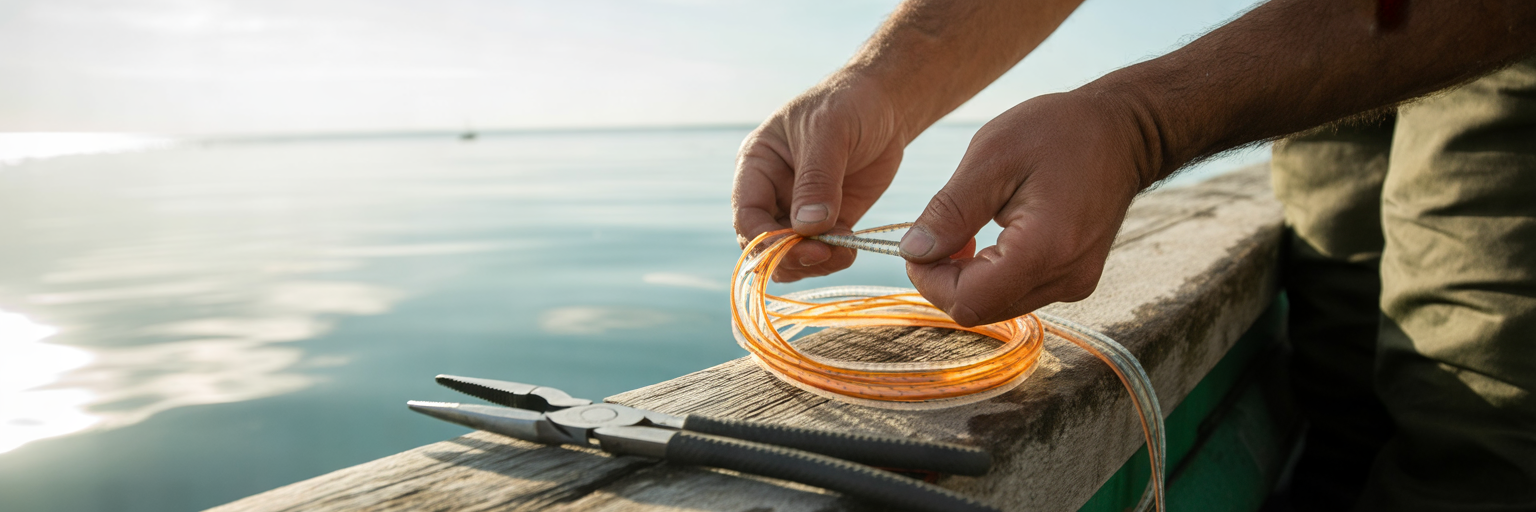
Even the toughest braided main line has two fatal flaws in shallow saltwater: it floats like a solid cord in front of your lure, and it parts instantly when scraped against sharp edge under load. Building a proper braid to fluorocarbon leader setup solves both problems at the terminal end of your rig. Pure 100 percent fluorocarbon carries a light refractive index nearly identical to coastal saltwater, rendering it virtually invisible under high overhead sun. At the same time, its dense, hard molecular structure acts as armor against coarse sandbars, razor-sharp snook gill plates, and crustacean-covered pilings.
Open Flat Leader Pairings for Pressured Redfish and Trout
Out on open sand and grass flats, your leader must balance stealth against modest bottom abrasion. Matching 10 to 15-pound main line braid with 15 to 20-pound fluorocarbon leader covers ninety percent of open-water scenarios for slot redfish and giant gator trout. Twenty-pound fluorocarbon gives you plenty of stiffness to turn over topwater plugs while resisting the raspy crushers of a redfish mouth.
When the wind dies completely and high noon sun turns the flat into a slick mirror, pressured fish inspect every detail of your offering before committing. Stepping down to 15-pound fluorocarbon in these ultra-clear conditions produces a measurable jump in strikes, especially when you combine stealthy rigging with the visual advantage of choosing polarized lenses for spotting redfish early enough to lead them properly.
Heavy Structure Armor for Snook and Juvenile Tarpon
Pitching baits into shadowy mangrove tunnels, under low dock planks, or alongside concrete bridge fenders requires serious terminal armor. Here, pairing your 20 to 30-pound braid with 30 to 40-pound fluorocarbon is the baseline minimum. A thirty-inch snook has sharp gill plates that slice through light leaders on the first headshake, and its immediate instinct upon feeling the hook is to bolt straight back into barnacle-covered prop roots.
When targeting trophy bridge snook or rolling tarpon around deep passes and sharp bottom structure, bumping up to a 50 or 60-pound fluorocarbon bite tippet is mandatory to survive brutal friction. As highlighted in a technical breakdown by Florida Sportsman, matching heavy fluorocarbon thickness and extended leader length to coastal structure prevents heart-breaking cutoffs when big fish rub against coral rock and pilings.
Dialing In Leader Length for Accurate Skiff Casting
Leader length directly impacts your casting accuracy from the bow of a skiff. For standard sight fishing and shoreline casting, a 24 to 36-inch (2 to 3-foot) leader hits the mechanical sweet spot. This specific length keeps your braid-to-leader connection knot completely outside the rod tip-top guide when you load the rod on the backcast.
Winding a bulky connection knot inside the guides creates a violent clicking hesitation as the knot slams through the narrow frames on the forward cast, throwing your lure five feet left or right of a spooky fish. The only time to stretch your leader out to 4 or 5 feet is when lobbing live baits around deep bridge pilings or working over jagged coral heads in the Florida Keys, where keeping raw braid elevated completely off the bottom outweighs pinpoint casting mechanics.
| Target Species and Scenario | Main Line Braid | Fluorocarbon Leader | Optimal Leader Length | Primary Abrasion Hazard |
|---|---|---|---|---|
| Pressured Seatrout and Redfish in Slick Calm | 10 lb (8-Carrier) | 15 lb | 30 to 36 inches | Sandbars and gill plates |
| Standard Flats Redfish and Snook in Grass | 15 lb (8-Carrier) | 20 lb to 25 lb | 24 to 36 inches | Turtle grass stems and sparse shell |
| Mangrove Shoreline Snook and Overslot Reds | 20 lb (4 or 8-Carrier) | 30 lb to 40 lb | 24 to 30 inches | Mangrove prop roots and oyster clusters |
| Bridge Piling Snook and Juvenile Tarpon | 30 lb (8-Carrier) | 40 lb to 60 lb | 36 to 60 inches | Barnacles, concrete pilings, and coral rock |
These pairings reflect field-tested ratios used by Florida inshore captains to ensure the connection knot clears spinning rod guides while providing sufficient abrasion resistance against coastal structure.
Treat your fluorocarbon leader as both shock absorber and armor: match its pound test to the sharpest object in your fishing zone, and keep it between 24 and 36 inches whenever pinpoint casting accuracy is required.
Braid-toLeader Knots That Fly Through Rod Guides
A dialed-in line and leader pairing is only as strong as the splice connecting them. Because slick Polyethylene braid has a much smaller diameter than stiff fluorocarbon, standard monofilament knots slip right apart under heavy drag pressure. Skiff anglers need knots that bite securely into hard fluorocarbon while maintaining a slim profile on a pitching deck.
The FG Knot: The Pre-Trip Standard for Micro-Guides
When you are rigging rods in the garage the night before a trip or tying up at the dock before launch, the FG knot is the undisputed gold standard. Its brilliance lies in simple Chinese-finger-trap physics. Instead of folding the thick fluorocarbon leader back over itself into a bulky loop, the fluorocarbon remains completely straight while tensioned braided wraps criss-cross and bite directly into the plastic surface.
The result is the thinnest, strongest connection in saltwater fishing. If you run longer four-foot leaders that must get reeled inside the rod blank, the FG knot is the only splice slim enough to fly cleanly through modern micro-guides during power casts without hanging up or cracking delicate ceramic inserts.
Double Uni and Alberto Knots: Fast Re-Tying in a 20-Knot Breeze
As tough as the FG knot is, let’s be honest about real-world conditions on the bow. When you break off on an oyster bar in a 20-knot wind while a school of fifty redfish is actively pushing down the bank, nobody wants to spend four minutes weaving a 22-wrap FG knot under tension while the skiff is pitching in chop. You need a bait back in the water immediately.
That urgent window is where the Alberto knot (modified Albright) and the Double Uni knot earn their keep. To tie an Alberto, form a simple bend in the fluorocarbon leader and wrap your braid seven turns up the loop and seven turns directly back down before exiting through the eye the exact same way it entered. For a Double Uni on 10 to 20-pound setups, make eight wraps on the braid side and four to five wraps on the fluorocarbon side. While slightly bulkier than an FG, both knots can be tied in under sixty seconds with wet hands and hold rock-solid when your leader is kept short enough to stay outside the rod tip.
Why a Terminal Loop Knot Is Mandatory on Heavy Fluoro
Once your leader is spliced to the main line, pay close attention to the terminal knot connecting your fluorocarbon to the lure eye or hook. Cinching a tight knot like an Improved Clinch or Palomar with stiff 30 to 40-pound fluorocarbon clamps down rigidly on the metal hook eye. That vice-like grip chokes the natural swimming action of bucktail jigs, weedless gold spoons, and topwater plugs.
Tying a Non-Slip Loop Knot (such as the Kreh Loop or Canoe Man Loop) forms a small, rigid ring of fluorocarbon around the lure eye. This open loop acts as a free hinge, allowing artificial baits to dart, roll, and swing violently from side to side on every subtle rod twitch, which is one of the most reliable triggers covered in our proven redfish fishing tips for shallow flats.
- Lubricate heavily with saliva: Always wet both the braid and fluorocarbon thoroughly before pulling wraps tight so friction heat does not weaken the outer fluorocarbon skin.
- Watch for the color shift: On FG and Alberto knots, apply steady tension until the tightly stacked braided wraps visibly darken and turn translucent as they bite into the leader.
- Lock with alternating half-hitches: Finish FG and Alberto knots with three to four alternating half-hitches over the main braid to prevent the top wraps from unraveling after repeated casts.
- Clip the fluoro tag at a 45-degree angle: Trim the rigid fluorocarbon tag end completely flush or at a slight bevel so a sharp square stub does not catch outgoing coils of braid on the cast.
- Glove-pull to seat the coils: Wrap the main line around a gloved hand or pliers handle and pull hard before making your first cast; if a knot is going to slip, make it fail on the deck rather than on a forty-inch fish.
Tie the ultra-slim FG knot at home before your trip, switch to a fast Alberto or Double Uni with a 24-inch leader when re-tying in the wind on the water, and always finish artificial lure rigs with a Non-Slip Loop Knot.
Spooling Right and Managing On-the-Water Line Maintenance
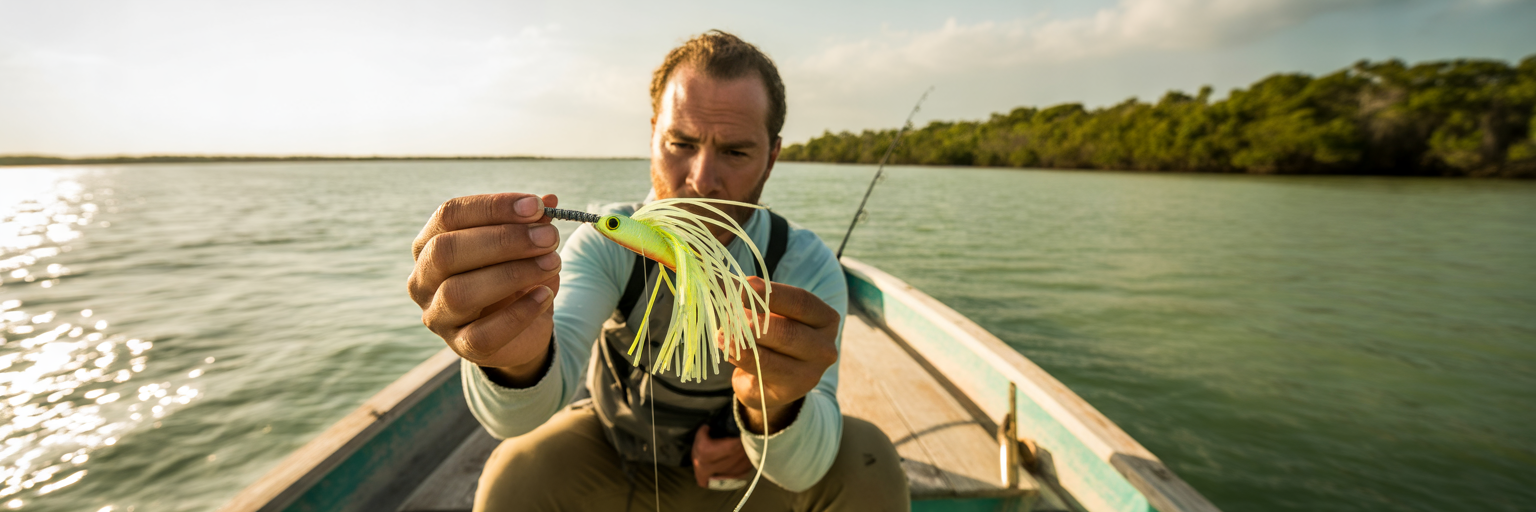
Buying premium braid and tying clean knots will not save your day if the line is loaded poorly onto your spinning reel. Proper spooling mechanics and a disciplined on-the-water maintenance routine eliminate mid-cast bird nests and double the working lifespan of every spool you buy.
Backing the Arbor and Hitting the 1/8-Inch Spool Lip Margin
Never tie raw Polyethylene braid directly onto a smooth anodized aluminum reel arbor unless the spool features a dedicated rubber friction band. Because braid has zero stretch to grip the metal core, the entire mass of line will eventually spin uselessly around the arbor under heavy drag pressure, making it feel like your drag washers have failed completely. Always start by winding 15 to 20 yards of cheap 12-pound monofilament backing (or laying down a single wrap of waterproof electrical tape) to give the braid a tacky base to bite into.
As you wind the braid onto the reel, run the line through a damp rag held firmly in your hand to apply heavy tension. Packing the coils rock-hard prevents top wraps from digging down into spongy bottom layers when a big snook or tarpon surges. Stop filling the spool when you have an exact 1/8-inch margin of bare metal spool lip visible. Overfilling past that lip allows multiple loose coils to jump off the spool simultaneously and form massive wind knots on your first hard cast into the breeze, while underfilling creates heavy lip friction that robs fifteen to twenty feet of casting range.
The 20-Cast Finger Check and Clearing Wind Knots on the Bow
Once you are fishing, build the habit of running your bare thumb and index finger up the last three to five feet of braid and fluorocarbon leader every twenty casts. Perform that exact same tactile check immediately after pulling a fish out of mangrove roots, bouncing a jig across an oyster bar, or unhooking a spinning, slime-coated ladyfish. If you feel the slightest rough spot, nick, or fuzzy fray in the braid, cut it back and re-tie immediately before making another cast.
- Pull wind knots from the loop trap: When a wind knot forms mid-cast, never pull both ends of the main line tight. Grab the single protruding loop that trapped the outgoing coils and pull it gently outward; nine times out of ten, the entire tangle slides right out without kinking the braid.
- Keep serrated micro-scissors on a lanyard: Standard worn-out pliers mash Polyethylene fibers into a frayed broomstick that refuses to thread through small hook eyes. Keep dedicated serrated braid scissors or tungsten cutters clipped to your shirt to slice tag ends razor-clean.
- Mist salt crystals off spools gently: After every trip, rinse your spinning spools with a low-pressure freshwater mist rather than a high-pressure nozzle that drives salt into the drag stack. Dissolving salt prevents sharp microscopic crystals from abrading internal braid fibers on your next trip.
- Flip your braid mid-season: After four months of hard fishing, only the top 75 yards of your braid have seen sun fade, guide friction, and dock rash. Strip the line onto an empty reel so the fresh, factory-smooth bottom half moves to the top while the worn end becomes buried backing.
- Swab rod guides with a cotton ball: Once a month, run a dry cotton swab around the inside of your ceramic rod guides, especially the tip-top. A microscopic hairline crack in the ceramic ring invisible to the naked eye will snag cotton fibers immediately, revealing why your braid has been mysteriously fraying on the retrieve.
Premium braid easily lasts a full season of hard shallow-water fishing when backed properly, packed tight to the 1/8-inch spool margin, and inspected regularly around cover. Dial in your line system alongside the rods, reels, and tackle breakdowns in our complete Florida inshore fishing gear guide, check current local water reports before you launch, and every cast off the bow of your skiff will count.