
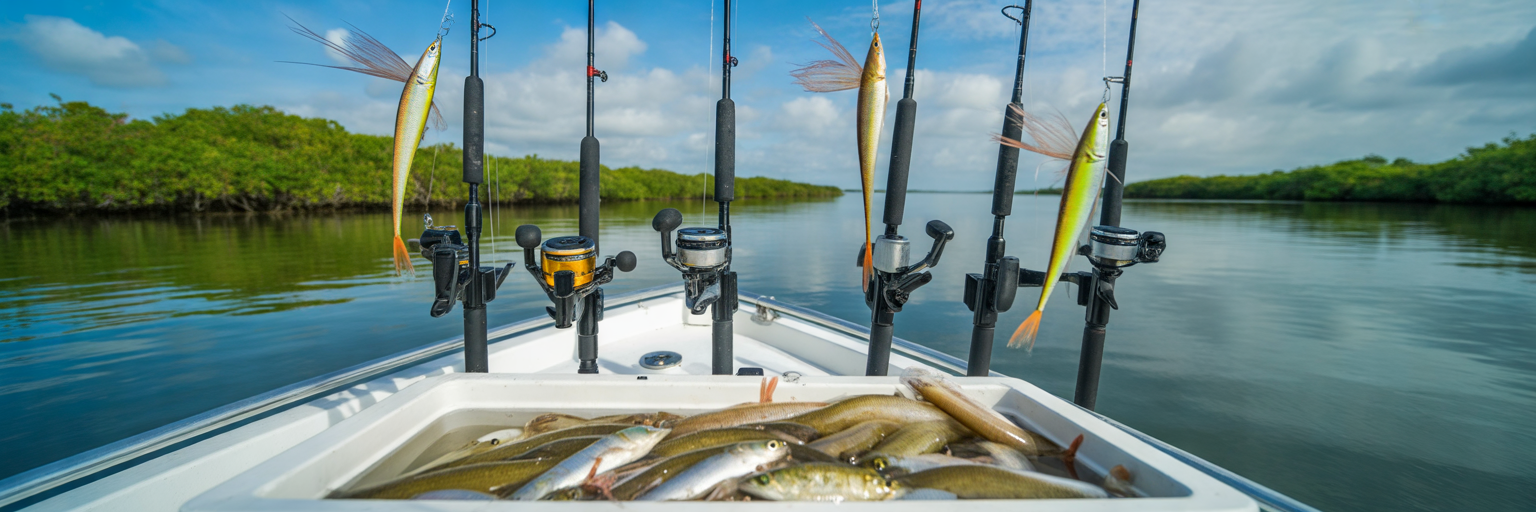
Before modern graphite blanks and soft plastics hit Florida tackle shops in the 1970s, coastal anglers relied on cedar plugs, bucktails, and a cast net full of live shrimp to put redfish in the cooler. Deciding what to tie on before leaving the boat ramp still comes down to reading the water right in front of you. Settling the debate over live bait vs lures is not about picking a side for life, because stubborn loyalty to only throwing artificials or only soaking bait will ruin plenty of days on the water.
Choosing Bait or Lures for Florida Inshore Trips Based on Conditions
Some guys refuse to touch a cast net, while others will not leave the dock without fifty pilchards blacking out the livewell. Both mindsets leave fish behind. When you launch at dawn, the air temperature, wind speed, and water color tell you immediately whether predators will chase down a moving target or wait for a meal to hit them on the nose.
Reading Water Clarity from the Keys to the Panhandle
Water clarity dictates how a fish hunts. When you are poling across gin-clear flats in Mosquito Lagoon or the Lower Keys, redfish and bonefish spot unnatural movement from sixty feet away. High visibility demands subtle presentations on long casts. Downsize to 15-pound to 20-pound fluorocarbon leaders and pitch natural-colored soft plastics in watermelon or pilchard patterns, or free-line a live shrimp on a tiny #1 circle hook so it lands like a feather.
Everything flips when you fish tannin-stained backwaters in the Everglades or muddied river mouths around Jacksonville after heavy rain. Sight-feeding drops to near zero, forcing predators to track prey through their lateral lines and olfactory receptors. As detailed in Florida Sportsman’s breakdown of water clarity adjustments, shifting from clear to stained water requires stepping up to silhouettes with heavy vibration, thumping tails, or strong natural scent.
In coffee-colored water, chunked mullet and halved blue crabs pump out an oil slick that draws fish from down-current. If you stick with artificials in stained conditions, swap translucent baits for gold spoons, dark paddle tails, or hard baits incorporating natural shell flash that triggers strikes when sunlight barely penetrates the chop.
Wind, Barometric Pressure, and Temperature Extremes
A 20-knot east wind combined with a dropping barometer turns a prime morning bite into a grind. High gusts put a massive bow in braided line, wrecking your cadence with a walk-the-dog topwater plug or a weightless jerkbait. When whitecaps roll across the bay, put the surface plugs back in the locker and drop the anchor upwind of a sandbar drop-off.
Heavy wind is the time to soak cut ladyfish or live pinfish on the bottom, letting the scent trail work through the turbulence while keeping your line tight. Water temperature extremes require that same slowdown. Both 90-degree August afternoons and January cold fronts crush a fish’s metabolism. Cold snaps push lethargic fish onto dark mud bottoms where they refuse to burn calories chasing fast-moving lures, a pattern we break down in our seasonal redfish guide.
Before you pull the boat off the trailer, look at the ramp basin. If the water is clean, slick, and sitting between 68 and 82 degrees, grab the rod rigged with a search lure. If the basin looks like chocolate milk, the flag is blowing straight out, or you can see your breath, reach for the bait rod first.
Reading Tides, Current, and Active Feeding Windows
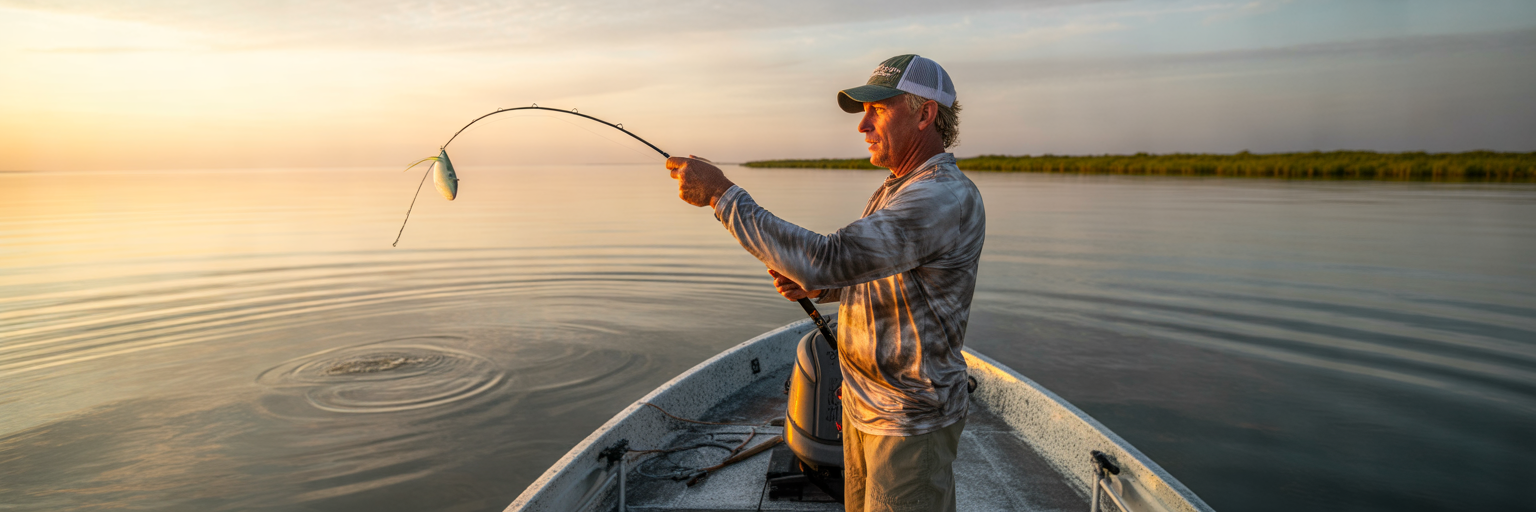
Even when water clarity and weather line up, the whole game stalls if the water stops moving. One of the oldest Florida inshore fishing tips still holds true from Pensacola to Flamingo: no moving water usually means no bite. Current concentrates baitfish against structure and forces predators to stage in predictable ambush points where they can feed without fighting the flow.
Before you load the cooler, check local solunar tables and water movement projections using our guide on reading Florida tide charts so your presentation speed matches the velocity of the tide.
Covering Water on Moving Tides vs Slack Water Adjustments
Strong incoming or outgoing tides are built for artificial lures. When water is pouring across a flat or draining out of a marsh creek, redfish, snook, and trout spread out and feed aggressively along current seams. Tying on a 3-inch to 4-inch paddle tail, a weedless gold spoon, or a suspending twitchbait lets you fan-cast across huge expanses of grass, covering ten times more water than you ever could soaking bait in one spot.
Once the tide goes dead slack, those same aggressive fish lock their jaws and slide into sandy potholes or deeper channel troughs. Throwing a fast-moving lure over a slack-tide fish usually gets ignored. That slowdown is your cue to transition to live bait fishing by drifting a free-lined shrimp, pass crab, or wounded pilchard right into their holding zone. A real meal twitching slowly in place convinces pressured, inactive fish to eat when plastic fails.
Low-Light Windows and Matching the Hatch
Dawn and dusk bring a twenty-minute window where predator aggression peaks, provided water temperatures are moderate. Low sun angles reduce glare and give snook and big seatrout the cover they need to smash walk-the-dog topwater plugs across shallow bars. Wait until you see nervous bait wakes pushing across the surface, then work a loud bone or chrome plug diagonally across the current.
The tricky scenario hits right after sunrise when fish start busting tiny glass minnows or Fry-sized scaled sardines, commonly called rainbait. When predators get dialed in on one-inch forage, throwing a four-inch live pilchard or a standard mullet chunk often gets ignored because the profile looks unnatural. Matching the exact hatch size with a 1/4-ounce epoxy jig or a two-inch soft plastic minnow burned right through the surface boils will outfish live bait every single cast.
- Start of the incoming tide: Throw weedless paddle tails and gold spoons along outer flat edges to intercept fish moving shallow with the rising water.
- Peak moving current: Work suspending twitchbaits or heavy jig heads along ambush points, points of islands, and creek mouths where bait gets swept through.
- High or low slack tide: Drop the anchor and pitch scented cut mullet, blue crab, or free-lined live shrimp into deep sandy potholes and channel bends.
- Dawn and dusk low light: Tie on a walk-the-dog topwater plug over two to four feet of grass when water sits above 70 degrees.
- Midday solunar feeding bursts: Match the exact forage size in the area, downsizing to small artificial jigs if fish are busting micro-bait on the surface.
Tactics for Grass Flats and Spoil Islands
Once you have the tide timed, you have to apply those presentations to open water structure. The expansive turtle grass flats, sandy potholes, and spoil island drop-offs stretching from Tampa Bay down through Pine Island Sound and Charlotte Harbor hold fish year-round, whether you are running a technical poling skiff, a 22-foot bay boat, or pedaling a kayak.
Searching Potholes with Soft Plastics and Popping Corks
Drifting a two-mile grass flat requires a systematic search plan. Start on the trolling motor or set a drift sock, and rig a 3.5-inch paddle tail or shrimp imitation on a 1/8-ounce or 1/4-ounce jig head. If floating grass or thick slime algae is fouling an exposed lead head, switch to a 3/0 weighted swimbait hook with a 1/8-ounce belly weight so the point rides flush in the plastic. Cast ahead of your drift, let the lure drop onto the white sand of every pothole, and give it two sharp wrist snaps.
When a chop kicks up or the grass grows tall enough to hide a bottom-bounced jig, pick up a popping cork setup. Hanging a bait 18 to 24 inches underneath a cupped clacker cork creates a loud surface splash and brass-bead rattle that pulls trout and redfish out of heavy turtle grass from thirty yards away. In stained water, pin a scented artificial shrimp on a jig head under the cork and pop it aggressively every five seconds. If the bite is finicky, swap the plastic for a live jumbo shrimp hooked under the horn using the setups in our turtle grass rigging guide so the bait hovers right above the blades where cruisers can spot it.
Sight-Fishing Shallow Flats and the Live Chumming Trade-Off
When the tide drops out and you see bronze tails tipping in twelve inches of water, put the noisy corks away. Tailing or laid-up redfish spook at the slightest unnatural splat. A lightly weighted soft jerkbait pitched six feet past a cruising fish and twitched into its line of sight allows for quiet, repeatable casts without re-baiting. However, when sunny skies have shallow fish on high alert, free-lining a live pass crab or select shrimp on a bare circle hook using the approaches in our sight-fishing redfish guide lets you drop a real meal in front of their nose and let the scent do the convincing.
Out along deeper flat edges and spoil island bars, many Gulf Coast captains rely on live chumming with pilchards, known locally as whitebait. Tossing a dozen crippled, squeezed baits over the gunwale fires up an aggressive feeding frenzy that brings lockjawed snook and seatrout boiling to the surface. The trade-off comes twenty minutes later. That same slick of crippled scales pulls in sailcats, jack crevalle, ladyfish, and bonnethead sharks that will tear up your light tackle and blow out a quiet flat. Run the trolling motor and throw soft plastics to locate the clean schools first, then drop the shallow-water anchor and chum or soak bait only after you confirm quality fish are holding on the bar.
Working Mangrove Shorelines and Oyster Bars
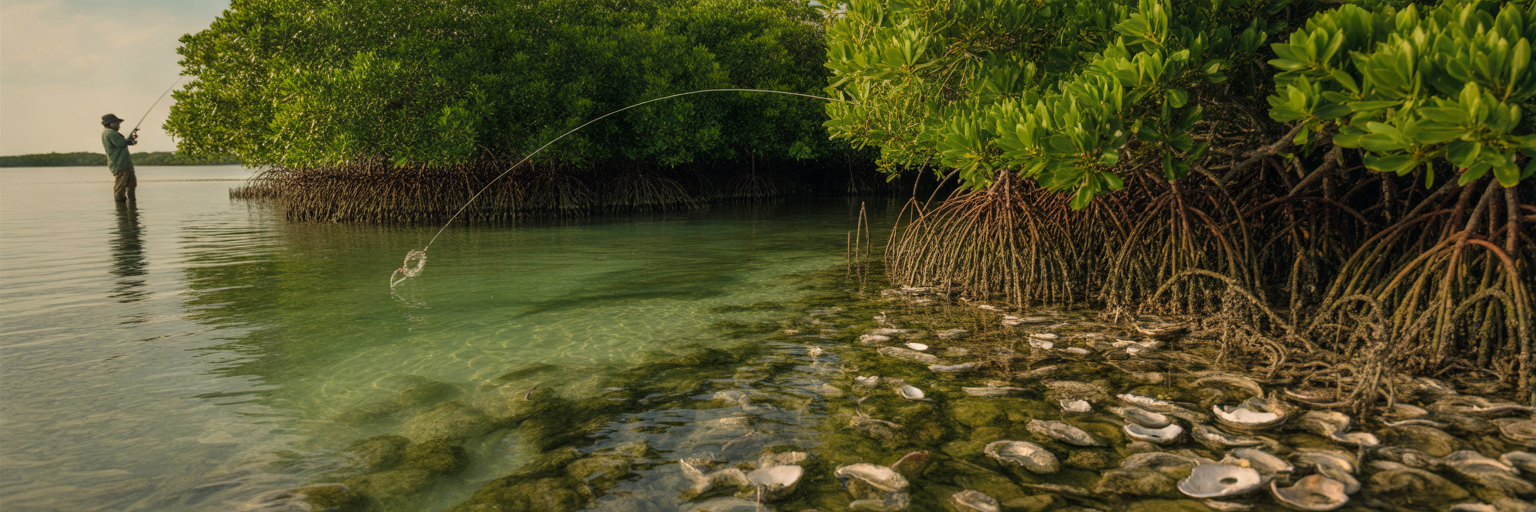
Leaving the open flats to work the backcountry transitions your game from long search casts to tight-quarters combat. Successfully fishing Florida mangroves and razor-sharp oyster bars comes down to casting accuracy, snag resistance, and winning the first three seconds of the fight before a big fish wraps you around a barnacle-covered prop root.
Skipping Weedless Plastics into Tight Overhangs
During midday sun or high incoming water, snook and redfish tuck three to six feet back under overhanging red mangrove branches, sitting in five inches of shade where standard overhead casts cannot reach. An exposed treble hook or standard jig head will hang in the timber on your first cast, forcing you to troll over and spook the entire shoreline to get your lure back.
Rig a four-inch soft plastic jerkbait or hollow-belly swimbait Texas-style on a 3/0 or 4/0 weighted belly-hook. Drop your rod tip parallel to the water and use a sharp sidearm roll cast to skip the lure across the surface like a flat stone. The sleek plastic slides across the water, shooting deep under the low canopy and settling softly right next to the root system where ambush predators wait.
Soaking Cut and Live Baits Without Feeding the Bait Stealers
When an outgoing tide pulls water off the roots and dumps it over adjacent oyster bars, setting up a stationary bait spread is lethal. Pin a fresh chunk of ladyfish, a cut mullet plug, or a cracked blue crab on the bottom just up-current of the oyster bar point, or float a frisky live pilchard right against the mangrove fringe while water is still high in the bushes.
The biggest frustration along any Florida shoreline is the army of juvenile mangrove snapper, pinfish, and tiny jacks that will strip a live shrimp off your hook within five seconds of hitting the water. Stop feeding the nursery. If you want to fish artificial profile baits without losing tails to nippers, switch to a tough elastech soft plastic that stretches instead of tearing. If you are soaking natural bait, step up to a palm-sized live pinfish with the tail fins clipped or a rugged cut mullet head that small bait stealers cannot swallow, keeping your hook clear until a slot redfish or big snook rolls through.
Shoreline combat also demands different leader and drag rules depending on your choice. Lure anglers hold the rod with tight line tension and feel the tick instantly, getting away with 20-pound to 25-pound fluorocarbon. When you soak cut or live bait in a rod holder or on a slack loop, fish often inhale the bait and turn straight back into the oyster shells before your line comes tight. Bump your leader up to 30-pound or 40-pound fluorocarbon and lock the drag down to 75 percent when fishing bait near structure, giving you the abrasion resistance to horse a fish out of the roots on the hookset.
Cracking the Code on Docks, Bridges, and Deep Passes
Moving from backcountry bushes out to residential canals, bridge fenders, and deep coastal inlets changes the geometry of the fight. Places like Boca Grande Pass, Sebastian Inlet, the Skyway Bridge, and deep Intracoastal dock lines force you to manage vertical structure and heavy water volume rather than shallow horizontal cover.
Heavy Current Presentations in Passes and Inlets
In a 15-foot to 40-foot coastal pass, ripping tide sweeps light tackle straight to the surface before it ever reaches the strike zone. Giant breeder snook, tarpon, and gag grouper hold right on the bottom behind rock ledges and bridge rubble where friction slows the current down by half. Getting a live pinfish, grunt, pigfish, or pass crab down into that calm cushion requires a knocker rig or a fish-finder Carolina rig matched with a 1-ounce to 3-ounce lead sinker, which you can dial in using our bottom fishing rigs guide.
When working passes and bridge pilings with artificials, ditch the quarter-ounce flats jigs and tie on a 1-ounce to 2-ounce flare hawk jig, heavy bucktail, or deep-diving lipped plug. Cast at a 45-degree angle up-current of the piling or ledge and let the lure sink on a controlled semi-slack line. Your jig weight is dialed in when you feel the lead tap bottom two or three times as it sweeps right past the shadow line of the structure without dragging and snagging the rocks.
Daytime Pilings vs Nighttime Dock Lights
Residential docks act as artificial reefs across every Florida bay. During the middle of the day, fish tuck tightly against barnacle-encrusted pilings and underneath low-clearance boat lifts. Throwing an expensive multi-hook treble plug into that jungle is a fast way to donate fifteen dollars to a crossbeam. As outlined in Florida Sportsman’s saltwater dock fishing guide, pitching a simple 2/0 circle hook with a live shrimp or small pinfish clipped to a split shot lets you skip or swing a bait deep into the dark pockets under the planks with minimal snag risk.
Once the sun goes down and underwater green and white dock lights kick on, the advantage swings completely back to small artificial lures. Nighttime dock snook and trout stack up along the outer shadow edge of the light cone, locked in on microscopic glass minnows, amphipods, and baby shrimp sweeping through the glow. A four-inch live bait looks like a submarine in that clear light ring and often spooks the whole school. Tie on a two-inch translucent soft plastic minnow, a tiny shrimp imitation, or a feather jig on a 1/8-ounce head, cast past the light so the splash does not scatter the fish, and swim it steadily right through the outer edge of the beam.
Species Breakdown for Snook, Redfish, Trout, and Tarpon
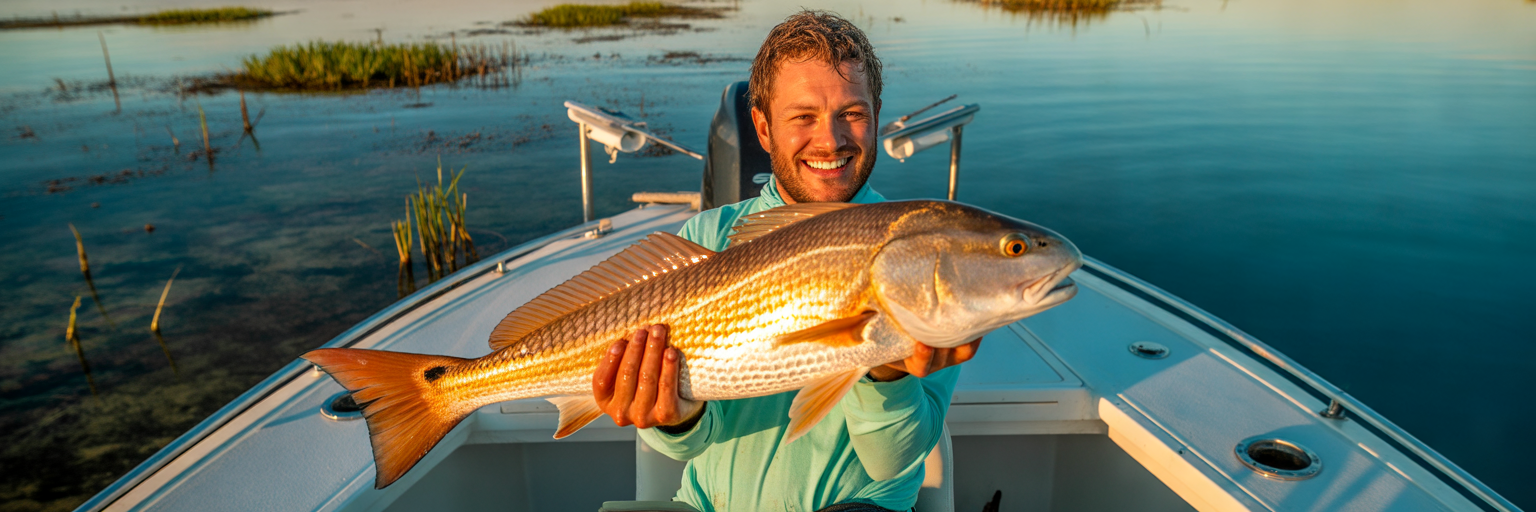
Every habitat holds a mix of predators, and each member of the Florida inshore slam feeds with different anatomical tools and temperaments. Matching the best snook and redfish baits or trout and tarpon lures to the specific fish you are hunting turns window-shopping follows into solid hookups.
Dialing In Snook and Redfish Preferences
Big breeder snook staging in summer passes and educated residential dock fish have seen every plastic lure in the catalog. When the tide is cruising steady, they often sit motionless and demand a frisky live croaker, large pilchard, or finger mullet thumping in their face before they open their bucket mouths. Yet the moment a tide flips from slack to moving, those same wary snook become suckers for the erratic darting action of a suspending twitchbait, a slow-rolled four-inch swimbait, or a breathing flare hawk jig bounced along the shadow line.
Redfish are built completely differently. Their inferior, downward-facing mouths and heavy pharyngeal crusher teeth are designed to root around in the mud and shell hash for crustaceans and bottom forage. In murky water, deep winter potholes, or wind-blown shorelines, nothing beats the scent plume of fresh cut mullet, chunked oily ladyfish, or a quartered blue crab sitting still on the bottom. When redfish push onto shallow flats and start schooling or pushing nervous wakes, switch to a weedless gold spoon or paddle tail so you can intercept the moving herd without waiting for them to stumble across a stationary bait.
Targeting Spotted Seatrout and Inshore Tarpon
Spotted seatrout are upward-looking sight predators with soft mouths, making them the ultimate year-round artificial lure target. Working a suspending twitchbait, a loud walk-the-dog topwater plug, or a three-inch soft plastic shrimp over three to six feet of lush turtle grass will catch limit numbers of slot trout all morning. When you want to single out a solitary 24-inch-plus gator trout, however, trade the plastic for a live five-inch finger mullet or a grunting live pigfish free-lined slowly around shallow mullet muds.
Juvenile and migratory tarpon bring the most frustrating lockjaw in coastal waters. When silver kings are rolling slowly in clear passes or laid up in slick calm bays, they will turn away from any lure with a visible jig head or unnatural wobble. Pitching a free-lined live pass crab, threadfin herring, or live mullet on a long fluorocarbon leader into their path is the surest way to get jumped. In stained backcountry mangrove creeks and residential canals, juvenile tarpon lose that caution and will crush a three-inch hollow-belly swimbait, an unweighted soft jerkbait, or a surface toad buzzed tight against the bank.
| Target Species | Prime Natural Bait | Go-To Artificial Lure | Ideal Condition Trigger | Recommended Leader and Hook |
|---|---|---|---|---|
| Snook | Live pilchard, croaker, or finger mullet | 4-inch paddle tail, flare hawk jig, or twitchbait | Moving tide seams and night shadow lines | 30 lb to 40 lb fluorocarbon; 2/0 to 4/0 circle hook |
| Redfish | Cut mullet, chunk ladyfish, or blue crab | Gold weedless spoon or scented shrimp under cork | Falling tide over oyster bars and grass potholes | 20 lb to 30 lb fluorocarbon; 2/0 to 3/0 inline circle hook |
| Spotted Seatrout | Live select shrimp or small pigfish | Suspending twitchbait or 3-inch soft plastic shrimp | Early morning low light over 3 to 6 foot turtle grass | 15 lb to 20 lb fluorocarbon; 1/8 oz jig head or #1 kahle hook |
| Tarpon | Free-lined pass crab, threadfin, or mullet | Heavy hollow-belly swimbait or unweighted soft jerkbait | Calm, warm mornings with rolling fish in passes or creeks | 40 lb to 60 lb fluorocarbon; 4/0 to 6/0 heavy circle hook |
Rigging a Flexible Four-Rod Deck for Quick Switches
Knowing when to switch between bait and lures does you no good if you burn twenty minutes of a thirty-minute tide window digging through bags and tying knots in the wind. A dialed-in inshore tackle setup keeps four distinct rods rigged in the gunwales or kayak crate so you can swap presentations in ten seconds flat.
The Four-Rod Inshore Arsenal and Line Specs
Whether you are setting up a technical skiff or organizing a bay boat console, you can check out the exact reel models and rod tapers we rely on in our complete Florida inshore gear guide to build out this four-rod rotation:
- Light Finesse Rod: A 7-foot medium-light fast-action spinning rod paired with a 2500-size reel, spooled with 10-pound braid and 15-pound fluorocarbon leader. Keep this rigged with a #1 circle hook for free-lining live shrimp or a 1/8-ounce jig head for clear-water potholes.
- Moving Search Rod: A 7-foot medium fast-action rod with a 3000-size reel, 10-pound to 15-pound braid, and 20-pound fluorocarbon. Use this workhorse to throw 3.5-inch paddle tails, weedless gold spoons, suspending twitchbaits, and dawn topwater plugs.
- Popping Cork and Float Rod: A 7-foot-6 medium-action rod with a 3000-size reel and 15-pound braid. The extra six inches of blank launches a wind-resistant clacker cork a country mile and takes up slack line quickly when a trout hits a suspended live shrimp or artificial at max range.
- Heavy Structure and Big Bait Rod: A 7-foot to 7-foot-6 medium-heavy fast-action rod paired with a high-drag 4000-size or 5000-size reel, 20-pound to 30-pound braid, and 30-pound to 50-pound fluorocarbon. Reach for this stick to soak cut mullet on oyster bars, pin live pinfish next to bridge pilings, or pitch big swimbaits at tarpon and oversized snook.
Terminal Tackle Organization and the Hybrid Search-and-Soak Mindset
Keep a waterproof deck box right in the console loaded with inline circle hooks from #1 to 5/0, #5 split shots, 1/2-ounce egg sinkers, and 1/8-ounce to 1/4-ounce jig heads, alongside labeled zip bags of pre-cut fluorocarbon leaders. When the wind shifts or a school shows up, you never have to open a deep hatch.
The best charter captains in Florida run a hybrid search-and-soak workflow all day long. Use your search rod to throw fast paddle tails or spoons while covering water on the trolling motor until you stick one or two active fish. The moment the rest of the school gets wise to the lure and stops chasing, hit the shallow-water anchor, grab your bait rod, and pitch a live shrimp or fresh chunk of cut mullet right back into the zone to clean up the biggest fish in the pack.
| Mid-Trip Condition Shift | Drop This Presentation | Pick Up This Rod Setup | Terminal Tackle Adjustment |
|---|---|---|---|
| Wind jumps above 18 knots and muddies the flat | Topwater walk-the-dog plug | Popping cork rod or bottom cut-bait rod | Clip on a noisy clacker cork or thread a 1/2 oz egg sinker above a 2/0 circle hook |
| Tide goes dead slack at midday heat | Fast-retrieved paddle tail or spoon | Light finesse rod with live shrimp or crab | Snip off the jig head, tie a loop knot to a #1 circle hook, and add one #5 split shot |
| Schooling redfish get lockjaw after 2 catches on lures | Gold spoon or suspending twitchbait | Medium-heavy rod with fresh cut mullet or ladyfish | Stake out upwind and pitch chunk bait onto the sandbar edge with 25 lb fluorocarbon |
| Trash fish keep stripping live shrimp in seconds | Free-lined or cork-rigged live shrimp | Medium search rod with elastech soft plastic | Rig a tough 3-inch paddle tail on a 1/4 oz weedless weighted hook or pin on a whole live pinfish |
Pack a dozen shrimp or a couple of fresh mullet on ice alongside your soft plastic binders every time you leave the ramp. Let the water clarity, tide speed, and structure dictate which rod comes out of the holder first, and you will put fish on the deck no matter what Florida weather throws at you.